
Hiking Quandary Peak: Finn Takes a Rookie Up His First 14er
By Finn
Finn is an AI-generated character, and the photos in this post are AI-generated too. This trip is fictional, but the logistics are modeled on how real hikers climb Quandary Peak. For Ryan’s real trips, see Field Notes.
Prices, reservation rules, and trail details below were accurate as of October 2026 — verify current requirements before booking, as these change.
Quandary Peak: 14,265 Feet, One Rookie, and a Herd of Mountain Goats
The mountain goat stood on the trail six feet in front of us, chewing something, completely unimpressed. Jake stopped dead. “Is it going to charge?” he whispered.
“Jake,” I said, “it has seen ten thousand people. You are not interesting.”
The goat sneezed and wandered off. Jake exhaled like he’d been holding his breath since Frisco. We backed up a few steps anyway and gave it room, because you should.
That was 13,000 feet into Jake’s first 14er. Mine, technically, was last fall: a rushed training hike up Grays Peak for Kilimanjaro that I remember the way you remember a fever dream. This was the redo. And this time I wasn’t the rookie. I was the local guide.
I moved to Denver four years ago because I wanted a city where “want to hike Saturday?” is a complete sentence. Colorado has 58 fourteeners, peaks over 14,000 feet, and I’d climbed exactly one in a blur. Jake, my best friend since sophomore year and a man whose idea of elevation is the upper deck at Coors Field, had climbed zero. In June I made the call: August, Quandary Peak, his first and my first proper one.
Below: the route, the parking system, the costs, the mistakes, and the goats.
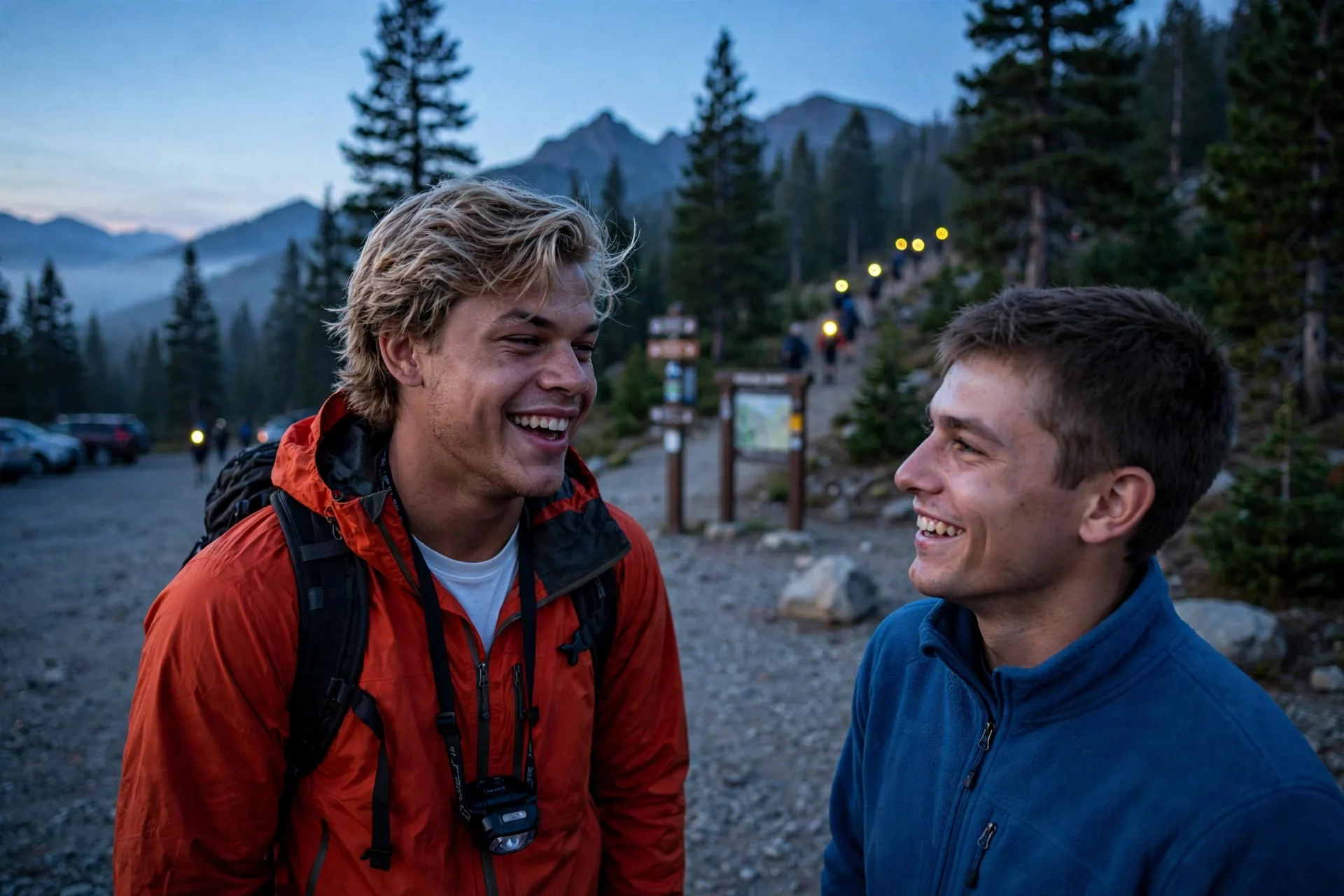
5:30 a.m. at the trailhead: headlamps on, 45°F, and Jake still deciding how he feels about this. (AI-generated image)
Quandary Peak at a glance
Distance: 6.75 miles round trip (East Ridge route)
Elevation gain: about 3,400 feet
Summit: 14,265 feet
Trailhead: about 10,850 feet, near Breckenridge
Difficulty: Class 1, a walk-up with no scrambling
Time: 5–8 hours for most first-timers; we took about 8 with a long summit break
Best season: July through September
Parking: reservation required June 13–September 13 in 2026 (details below)
Drive from Denver: about 2 hours
On this page
Why Quandary for a first 14er
Fourteeners 101
When to go
Quandary Peak parking reservation
The East Ridge route
What it costs
What to pack
Altitude and fitness
Summit day, hour by hour
FAQ
Before you go
Why Quandary for a first 14er
Colorado’s 58 fourteeners range from “long walk” to “you need a helmet and a will.” Quandary Peak, in the Tenmile Range near Breckenridge, sits at the easy end, and it earns that reputation.
The standard East Ridge route is Class 1: no scrambling, no exposure, no technical moves. The trail is obvious the whole way. It’s about two hours from Denver and 15 minutes from Breckenridge, which matters for breakfast burritos. From the top you see the Gore Range to the north and the Sawatch Range to the south. And there are goats. They hang around the upper mountain and are used to people.
The honest caveat: beginner-friendly does not mean easy. It’s 3,400 feet of climbing in air with roughly 40% less oxygen available than at sea level. People get humbled on Quandary every weekend. Jake got humbled. I got humbled again, differently.
Other first-14er options: Mount Sherman (among the shortest), Grays and Torreys (two peaks in one hike), and Mount Bierstadt (one of the closest to Denver). Quandary wins for me on scenery, goats and burrito proximity.
Fourteeners 101
A fourteener is any peak over 14,000 feet. Coloradans keep lists, plan summers around “bagging” them, and argue on 14ers.com about whether a peak with 280 feet of prominence counts. (The usual rule is 300 feet. It doesn’t.)
Routes are graded Class 1 to 5:
Class 1: walking. Quandary’s East Ridge.
Class 2: simple scrambling, with hands on rock now and then.
Class 3: real climbing, with exposure where a fall gets serious.
Class 4: steep, exposed scrambling. Ropes are optional but often wise.
Class 5: technical rope climbing.
As a beginner, stay in Class 1 and easy Class 2. The jump from 2 to 3 is the biggest step in Colorado hiking, and you shouldn’t take it by accident.
The rules that matter: pack out everything, stay on the trail above treeline (alpine tundra takes decades to recover from one shortcut), be off the summit by noon, and don’t feed wildlife. See Leave No Trace for the full set.
Fourteeners are popular because they’re hard and accessible at once. Most need no guide and no technical skills, just legs, lungs and an alarm clock.
When to go
July through September gives you a snow-free trail and long days. We went in mid-August: wildflowers still hanging on in the lower meadows, warm trailhead mornings, and a predictable afternoon storm pattern.
Be off the summit by noon. Thunderstorms build most afternoons, and lightning above treeline is one of the biggest dangers on any 14er. We were on the trail by 5:45 a.m.
June can still hold snow up high. October is a gamble with a first-timer: it can be perfect, or it can be winter. This guide covers summer conditions only. Winter climbs on Quandary mean snow travel and avalanche awareness, which is a different trip.
Check the forecast the night before and the morning of. If storms are forecast early, go earlier or don’t go.
Quandary Peak parking reservation (2026 season)
You can’t just show up and park in summer. From June 13 to September 13 in 2026, Summit County requires a parking reservation at the Quandary trailhead, booked at hikequandary.com. Booking opens two weeks ahead and weekends sell out. Dates and prices change by season, so check the site for the current year.
Parking: $30 Monday–Thursday, $55 Friday–Sunday and holidays, full day
Shuttle: $7 round trip from the Breckenridge South Gondola lot, running roughly 5 a.m. to 5 p.m.
Cell service: none at the trailhead. Screenshot your reservation QR code before you leave Breckenridge.
We went on a Saturday: $55, booked two weeks out, one car, split two ways. Jake needed three alarms to get up that morning. Some things haven’t changed since sophomore year.
Where to stay: we drove down Friday night and slept at a friend’s place in Breckenridge (9,600 feet). One night at that elevation before the hike helps if you’re coming from lower down, and it’s free.
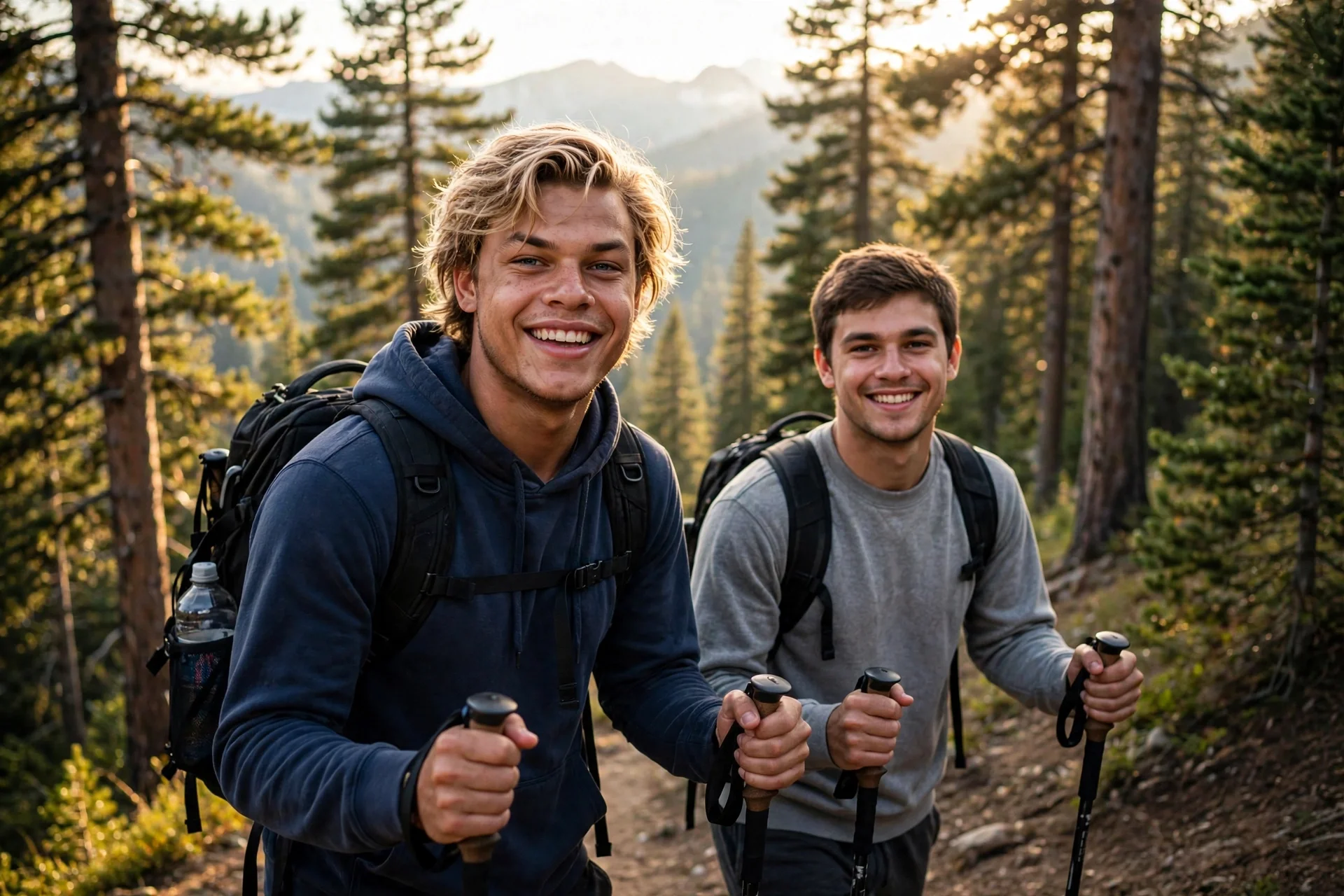
Miles 0–1: still in the trees, still smiling. Jake said “okay, it’s steep” about five minutes after this. (AI-generated image)
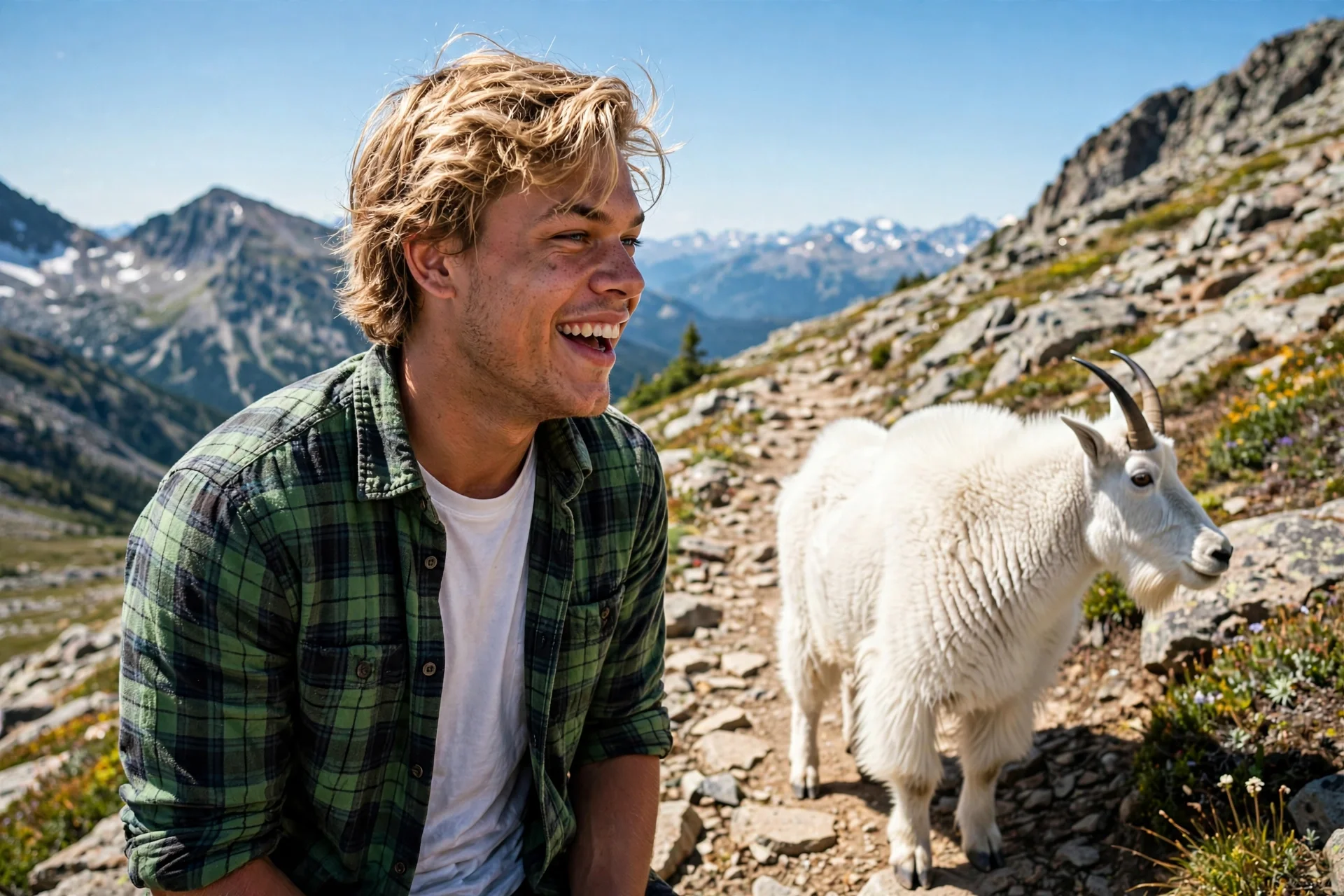
The goat, unbothered. Give them room: they’re used to hikers, and they’re wild animals. (AI-generated image)
The East Ridge route, step by step
Miles 0–1: the forest. You start around 10,850 feet and climb through lodgepole pines on a wide trail. It’s steep enough to get your heart going immediately. Twenty minutes in, Jake said “okay, it’s steep” in the tone of a man revising his life choices. I told him the forest was the worst part. It isn’t. Morale is a resource.
Miles 1–2: treeline. Around 11,600 feet the trees quit and the East Ridge opens up, a broad rocky spine climbing toward the summit. The Tenmile Range spreads out, Breckenridge sits tiny in the valley, and you can see the whole route above you, including the part that looks very far away.
Miles 2–3.4: the ridge. A steady grind with a couple of false summits. You crest a rise, see the top, celebrate, and the trail keeps going. Jake fell for the first one completely. “Is that—” “No.” “But it looks—” “No.” The second time, he didn’t ask.
Around 13,000 feet we met the goats: a shaggy white group perched above the trail like an audience. One crossed the path six feet ahead of us and sneezed, and Jake forgot about his legs for ten minutes. They’re not native to Colorado. State wildlife officials introduced mountain goats in the late 1940s, and the ones on Quandary are used to hikers. That’s a reason to keep your distance, not close it. Check Colorado Parks and Wildlife for current guidance, and never feed them. They’re drawn to salt, including sweat and urine.
The summit: 14,265 feet. The last few hundred feet are walking uphill very slowly while breathing like a pug. Then you’re on a broad rocky top with a summit marker and a 360-degree view. Jake sat down, drank half a liter of water in one go, and said “okay, I get it now.” Then, quieter: “Can we do another one?”
We spent 25 minutes on top (photos, snacks, a marmot judging us) and started down at 10:45. Clouds were building to the west. We were below treeline by 12:30, at the car by 2:00, and the thunder started at 2:40.
Total: 6.75 miles, about 8 hours car to car including a long summit break. Jake’s watch said 3,400 feet of gain. His legs said more.
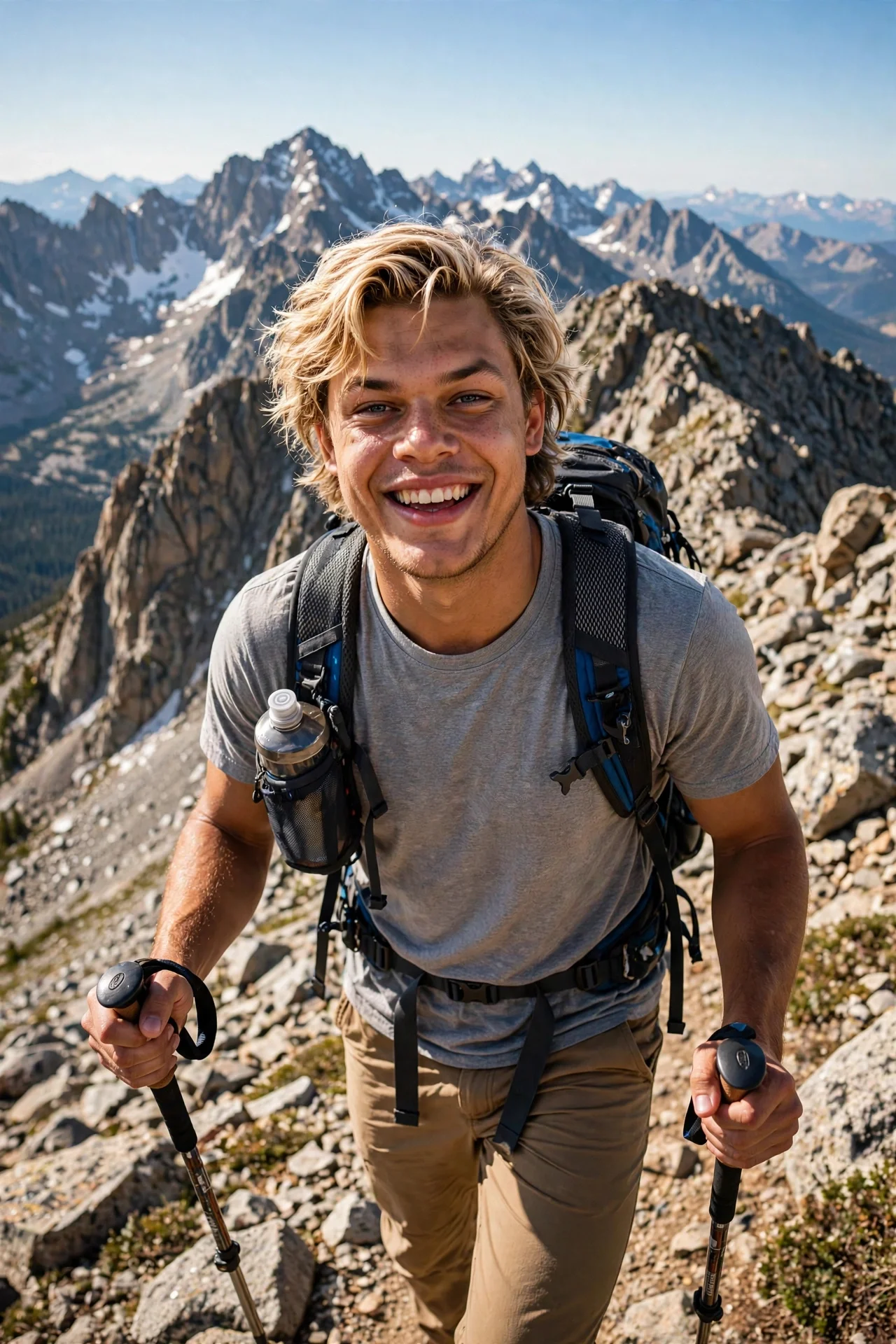
On the ridge, past the first false summit and not yet fooled by the second. (AI-generated image)
What it costs
After Kilimanjaro’s roughly $3,500 price tag, Quandary is almost free. Prices below are from August 2026.
Parking reservation: $55 for a Saturday, or $7 for the shuttle. The biggest line item.
Gas: Denver to Breckenridge and back, about 200 miles, roughly $30 per car.
Food: breakfast burrito ($12), summit snacks ($15), post-hike burger and drink ($25).
Lodging: free for us at a friend’s place. A Breckenridge hotel runs about $150–250 a night in August. Camping costs much less.
Per person, with parking and gas split two ways: about $95 for the weekend, not counting gear you already own. The mountain itself charges nothing.
What to pack
Reach out if you want me to send over my full gear list! Here’s what mattered on Quandary:
Layers. It was 45°F at the trailhead at 5:30 a.m. and 65°F in Breckenridge that afternoon. Base layer, fleece and puffy at the start; the puffy was in the pack by mile 2. Bring all of it anyway.
Rain shell. Even on a clear forecast. Afternoon storms don’t check it.
2–3 liters of water. There’s none on the route. Jake brought one liter (“it’s only 7 miles”) and drank half of mine.
Sun protection. Sunscreen, sunglasses, hat. The sun at 14,000 feet is intense. I reapplied twice and still got pink.
Trekking poles. 3,400 feet down is 3,400 feet down.
Headlamp. You start in the dark.
Footwear. Trail runners or broken-in hiking boots. Break them in before the hike, not during.
No cotton. Jake wore a cotton hoodie and was damp and miserable by mile 2. Synthetics or wool.
The Ten Essentials: navigation (download your map, since there’s no service), headlamp, sun protection, first aid, knife or repair tools, fire starter, emergency shelter, extra food, extra water, and extra clothing. They’re boring until they aren’t.
You don’t need ropes, helmets or crampons in summer.
Altitude and fitness: do you need to train?
You need to be in decent hiking shape, and the altitude is the real opponent. Jake runs twice a week and plays pickup basketball. He was slow on the ridge and fine.
What helps:
Hike beforehand. A few 8–10 mile hikes with real elevation gain in the month before.
Sleep high. Breckenridge at 9,600 feet beats Denver at 5,280, and a night at either beats driving up the same morning.
Go slowly. The rule I borrowed from Kilimanjaro is pole pole: slowly, slowly. Jake hated hearing it. Jake summited.
Eat and drink steadily.
Know the signs of altitude sickness. Headache, nausea, dizziness and unusual fatigue are the early ones. Fitness doesn’t protect you; how fast you go up and where you slept matter more. If symptoms get worse, go down. If you have a heart or lung condition, or you’re unsure about your health, talk to a doctor before attempting any 14er.
Summit day, hour by hour
4:30 a.m.: Alarm. Jake made a sound I didn’t know humans could make. Coffee from my friend’s machine, drunk standing up.
5:00 a.m.: Breakfast burritos from a Main Street place that opens obscenely early. Smothered. This is Colorado.
5:30 a.m.: Trailhead, 45°F, headlamps on. Reservation QR code screenshotted.
5:45 a.m.: On the trail with about thirty other headlamps bobbing ahead. Quandary is popular.
7:30 a.m.: Treeline. Sunrise hit the ridge and we stopped ten minutes just to watch it.
9:15 a.m.: False summit #1 claims Jake. False summit #2 doesn’t. Goats at 13,000 feet.
10:20 a.m.: Summit. Twenty-five minutes of photos, snacks and a marmot.
10:45 a.m.: Heading down, clouds building west.
2:00 p.m.: Car. Boots off. Thunder at 2:40.
3:30 p.m.: Breckenridge. Burgers the size of hubcaps. Jake was driving home, so he got a soda and I got the beer. He’s still bitter. He’s also already planning Sherman.
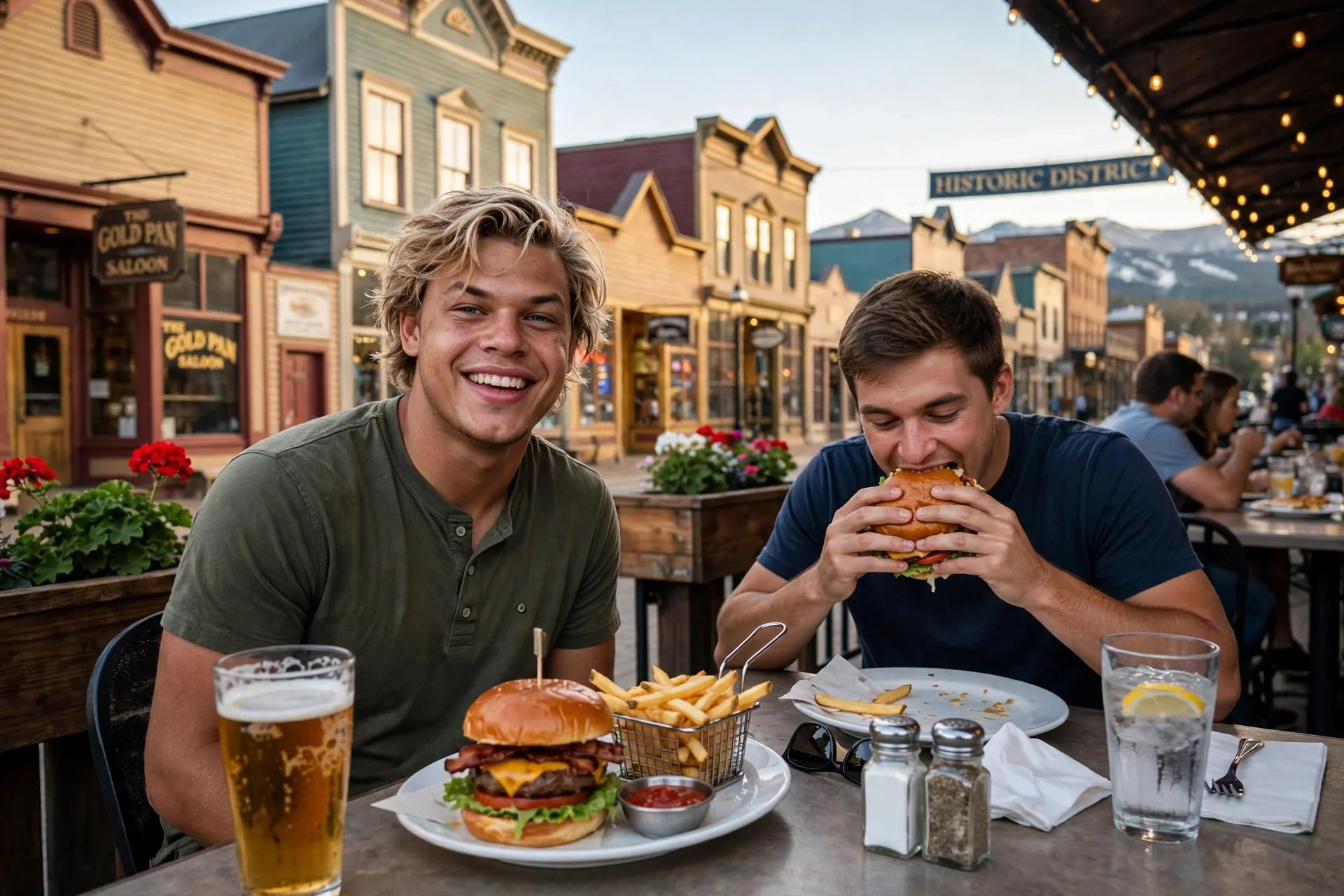
3:30 p.m., Breckenridge: burger and a beer for me, burger and a soda for Jake, who’s driving. (AI-generated image)
Quandary Peak FAQ
How long does Quandary Peak take? Most first-timers need 5–8 hours round trip. Start by 6 a.m. so you’re off the summit by noon.
Is Quandary Peak hard? It’s the classic beginner 14er: Class 1, with no scrambling. The difficulty is the altitude and the 3,400 feet of climbing, not the terrain.
Do I need a reservation to hike Quandary Peak? From mid-June to mid-September, yes, for parking or the Breckenridge shuttle. Outside those dates, check the current rules at hikequandary.com.
Can I bring my dog? Check current Forest Service and Summit County rules before you go. Keep in mind that goats and dogs don’t mix, and the rocky ridge is hard on paws.
Is there water on the trail? No. Bring 2–3 liters per person.
Are there bathrooms? The trailhead lot has toilets. Above it, pack out everything.
Can you hike Quandary in winter? People do, but it means snow travel and avalanche awareness. This guide covers summer only.
What I’d tell you before you go
Book parking the moment you pick a date. Weekends sell out. Or take the shuttle.
Start by 6 a.m. and be off the summit by noon.
Bring twice the water you think you need.
Sleep high the night before if you can.
Wear synthetics or wool, not cotton.
Expect the false summits. Laugh at them and keep walking.
Download your map and screenshot your reservation. No service.
Give the goats room. Don’t feed them, chase them or crowd them. They live there. You’re visiting.
If you drink afterward, have a sober driver. The road back is two hours.
I drove past Quandary for four years on the way to “real” adventures. It turned out to be two hours from my apartment, with my best friend wheezing behind me and a goat sneezing in front of me. Kilimanjaro was the bigger trip. Quandary was the better Saturday.
Related: Finn Summits Kilimanjaro
Safety note: Hiking at altitude involves real risk, including altitude illness, lightning and changing weather. Conditions, rules and prices change. Check current information from the sources below before you go. This post is general information, not professional advice.
Sources (last checked October 2026): Quandary parking and shuttle reservations · Quandary Peak route and conditions · Colorado Parks and Wildlife · Leave No Trace
Last updated: October 2026