
Summiting Mount Kilimanjaro
By Finn
Finn is an AI-generated character, and the photos in this post are AI-generated too. This trip is fictional, but the logistics are modeled on how real climbers book and complete the route. For Ryan's real trips, see Field Notes.
Prices, park fees, and visa rules below were accurate as of October 2026 — verify current requirements before booking, as these change.
Finn Summits Kilimanjaro: 8 Days, 5,895 Meters, and the Coldest Night of My Life
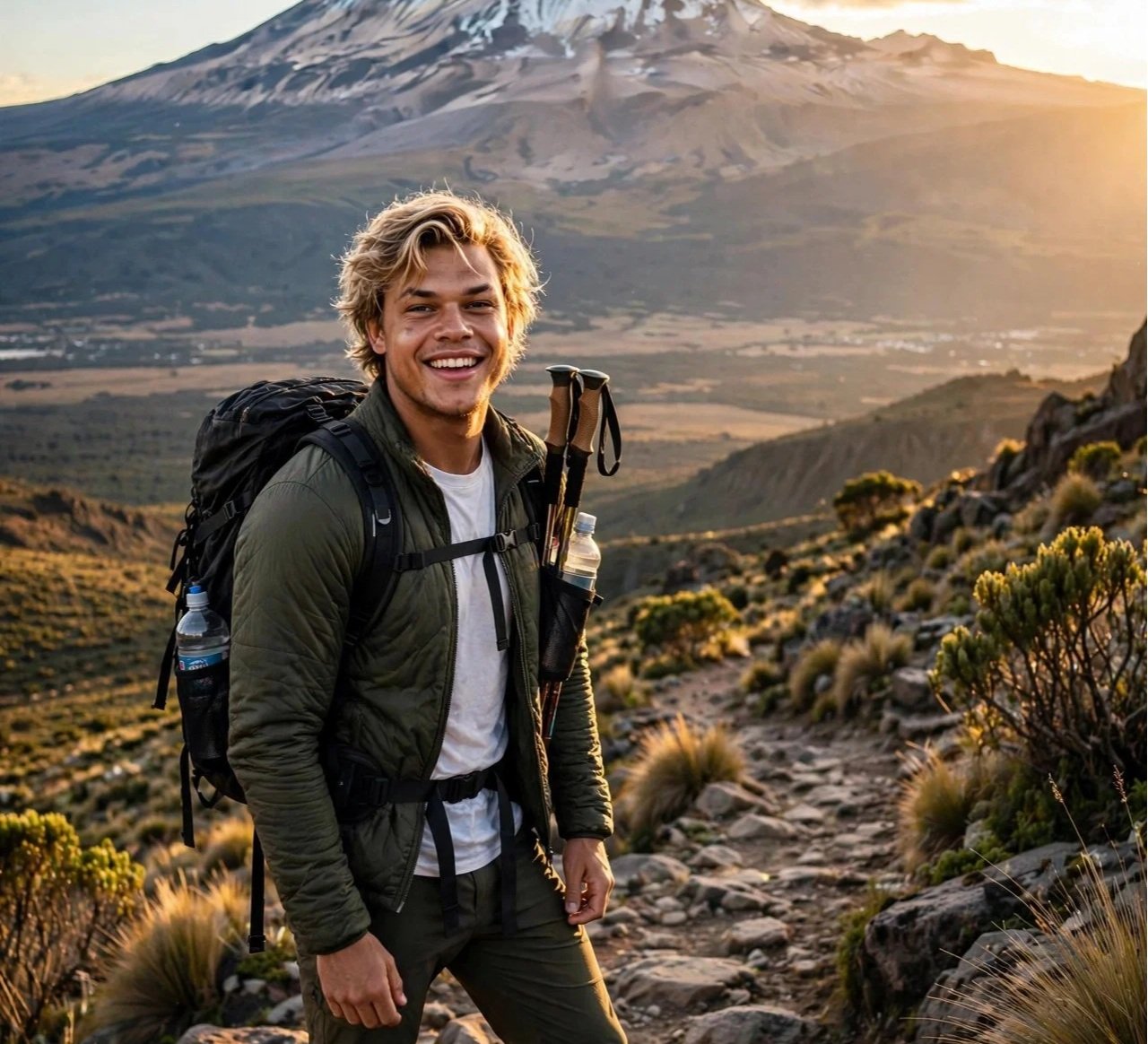
Me, pretending the altitude wasn't already winning. (Photo: AI-generated, like its subject.)
The sun came up at Stella Point, 5,756 meters, and I cried a little. I was wearing everything I owned. Two of my toes had stopped reporting in an hour earlier. Two hours before that, I had told my guide I was done.
Kilimanjaro is the tallest free-standing mountain on Earth and the highest point in Africa. You don't need ropes or technical skills. You need a plan, a decent engine, and the patience to walk slower than you want to. Here's the plan, start to finish.
At 4:40 a.m. on summit night, I stopped on the trail and bent over my poles. I'd paid about $3,000 to be there, and I seriously considered turning around. Then the sky started to go gray. Here's the plan, the costs, and the mistakes that got me to the top.
I hope you enjoy!
When to go
There are two dry windows: roughly January through mid-March, and June through October. I picked late January. The days are clear, the summit is cold but stable, and trails are quieter than July and August. Avoid the long rains from late March through May, when trails turn to mud and visibility drops. Check the moon too. Many groups time summit night around a full moon so you can see the glacier without a headlamp.
Choosing an operator
You can't climb Kilimanjaro on your own. Park rules require a licensed operator and a registered guide. The cheapest quote is rarely the best one. Low prices usually mean underpaid porters, thin food, and a short itinerary with lower summit odds.
I vetted operators on four things:
Porter welfare. I only considered operators who are partners of the Kilimanjaro Porters Assistance Project (KPAP), which monitors wages and loads.
Itinerary length. 7 to 9 days. Five-day Marangu climbs have the lowest success rates because acclimatization is rushed.
Safety protocol. Daily pulse oximeter and symptom checks, plus oxygen and a rescue plan on the mountain.
Group size and staffing. Small groups with a lead guide plus assistant guides.
I booked about seven months out with a Moshi-based operator on a scheduled group departure. My group was six climbers, three guides, a cook, and a porter crew of around twenty. That ratio surprises people. Porters carry tents, food, water, and your duffel.
What it costs
My all-in price for the climb was about $3,500, which is typical for a reputable 8-day group trek. Park fees are the same for every operator, so they're the one fair comparison point between quotes:
Conservation fee: $70 per person, per day
Camping fee: $50 per person, per night
Rescue fee: $20, once
Forest fee: $10 per person, once. Crew entry and vehicle fees are small and usually folded into the operator's quote.
18% VAT on top
For my 8-day trek, that's roughly $1,100 per climber with VAT, before your operator pays a single guide. If a quote lands far under that, ask what's being cut.
Budget separately for flights, gear rentals, visa, vaccines, insurance, hotel nights, and tips. My group followed a pooled tip guideline for the crew, handed over in cash at the end of the climb. Expect roughly $250-$350 per climber for the full trek, split across guides, cook, and porters. One comfort upgrade worth knowing about: a private toilet tent, usually around $150 for the trek.
Approvals and paperwork
There's no permit you apply for yourself. Your operator handles park permits and registration, and you send them your passport details in advance. You still need:
A Tanzanian visa. US citizens pay $100 for a multiple-entry tourist visa. I applied online ahead of time. It's also available on arrival at Kilimanjaro International Airport, which works but adds a line. Bring cash in small US-dollar bills for the visa line and crew tips because ATMs in Moshi can be unreliable, and nobody can break a hundred on the mountain.
A passport valid for at least six months, with blank pages.
Yellow fever certificate, but only if you arrive from or transit through a yellow-fever country. Flying in from the US or Europe, you generally don't need one. Routing through risk countries changes that. Kenya and Ethiopia are both on the list, and a layover longer than 12 hours also counts, so check your exact routing, including any Addis Ababa connection, before you fly.
Travel insurance that explicitly covers trekking to 6,000 meters and evacuation. Read the fine print, because many standard policies cap out at lower altitudes.
Health prep
Four to six weeks out I saw a travel clinic and my regular doctor. I got up-to-date on routine vaccines plus hepatitis A and typhoid, picked up malaria prophylaxis for the low-altitude days around Moshi, and discussed acetazolamide (Diamox) for altitude. Whether to take it is a conversation with your own doctor. Know the warning signs of altitude sickness — headache, nausea, dizziness, unusual fatigue. The rule is simple: never ascend with symptoms, and the only real cure is going down. Tell your guide immediately if something feels off; that’s what they’re there for.

Pre-trip clinic visit, four to six weeks out. (AI-generated image)
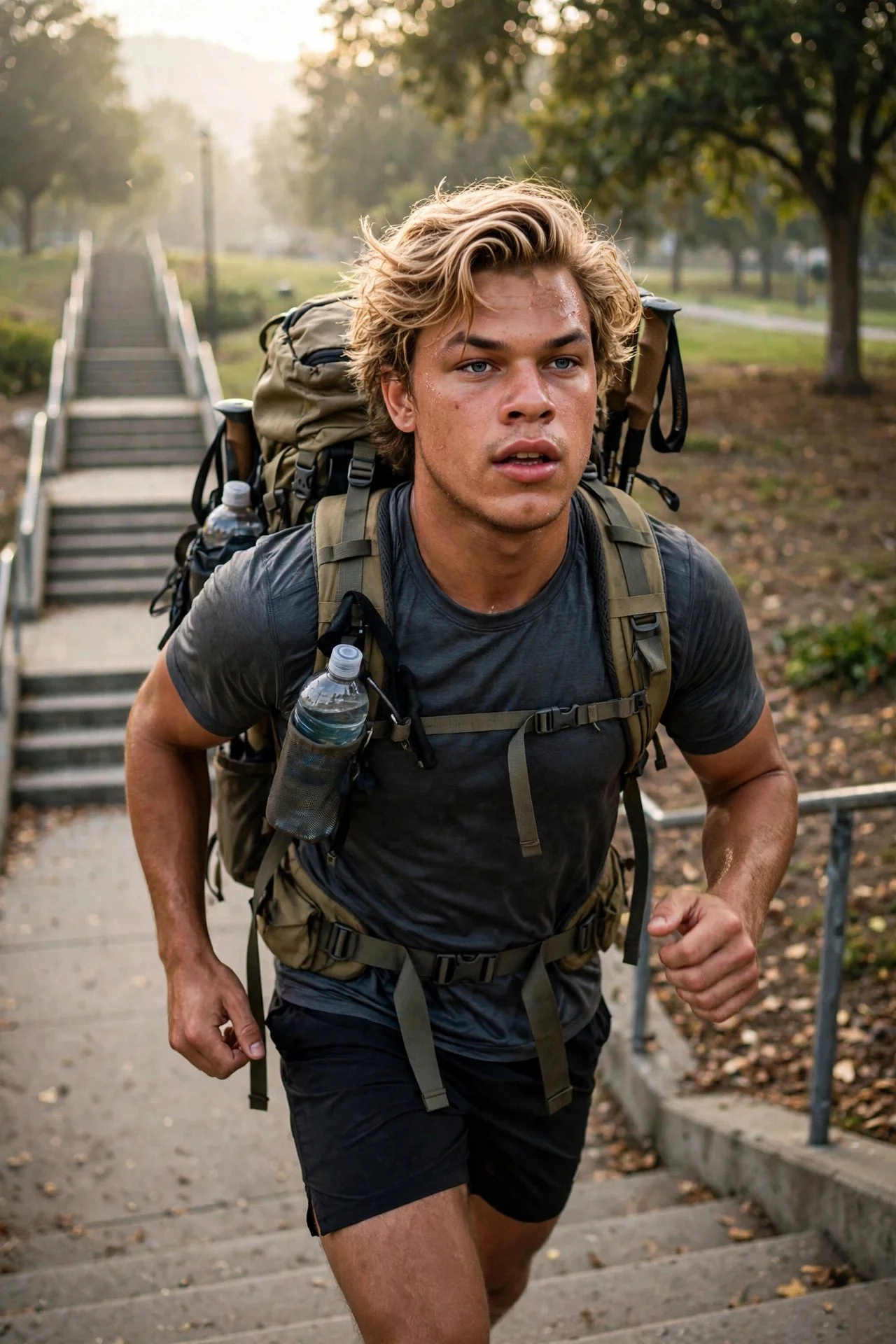
Weekend loaded-pack hikes, building to 6–8 hours. (AI-generated image)
Training
Kilimanjaro is a hiking challenge, not a climbing one. I trained for four months:
Hill and stair work with a loaded pack, 3 to 4 days a week
A long hike every weekend, building toward 6 to 8 hours back-to-back on Saturday and Sunday
One altitude test run, a Colorado 14er, to see how my body handled thin air
Fitness helps, but it doesn't predict who gets altitude sickness. Pace and acclimatization do.
Getting there
I flew into Kilimanjaro International Airport (JRO), which sits between Moshi and Arusha. From the US, most routes connect through Amsterdam, Doha, Istanbul, or Addis Ababa. I arrived two days early to absorb jet lag and a night in a Moshi hotel, where the guides ran a gear check and handed out rentals. Don't skip that buffer. Airlines lose bags, and you can't replace a summit-night parka at a gas station.
The route: Lemosho, 8 days
I chose Lemosho because it's long and gradual, with a built-in "climb high, sleep low" day.
Day 1: Registration at Londorossi Gate, then a drive to the trailhead. Hike through rainforest to Mti Mkubwa camp (about 2,800 m).
Day 2: Up onto the Shira Plateau (3,500 m). The rainforest gives way to open moorland.
Day 3: Across the plateau to Shira 2 (3,850 m).
Day 4: Climb to Lava Tower (4,600 m), then drop to Barranco camp (3,900 m). This is the "climb high, sleep low" day that does the most work for acclimatization.
Day 5: Scramble up the Barranco Wall, then on to Karanga (about 4,000 m).
Day 6: A short push to Barafu camp (4,673 m). Eat, hydrate, and try to sleep by early evening. This is where Day 2 caught up with me. I had a headache and no appetite, and my guide rechecked my oxygen twice. He didn't mention my pace. He didn't have to. By 9 p.m. my numbers were up and the headache had faded after food and water. He cleared me. If he hadn't, I wouldn't have gone.
Day 7: Summit night. Up at 11 p.m., on the trail by midnight, then six to eight hours of switchbacks in the dark. Stella Point (5,756 m) arrives near sunrise, followed by Uhuru Peak (5,895 m). Then you walk straight down to Mweka camp. Plan for 12 to 16 hours on your feet.
Day 8: Mweka Gate, certificates, and a very long shower.
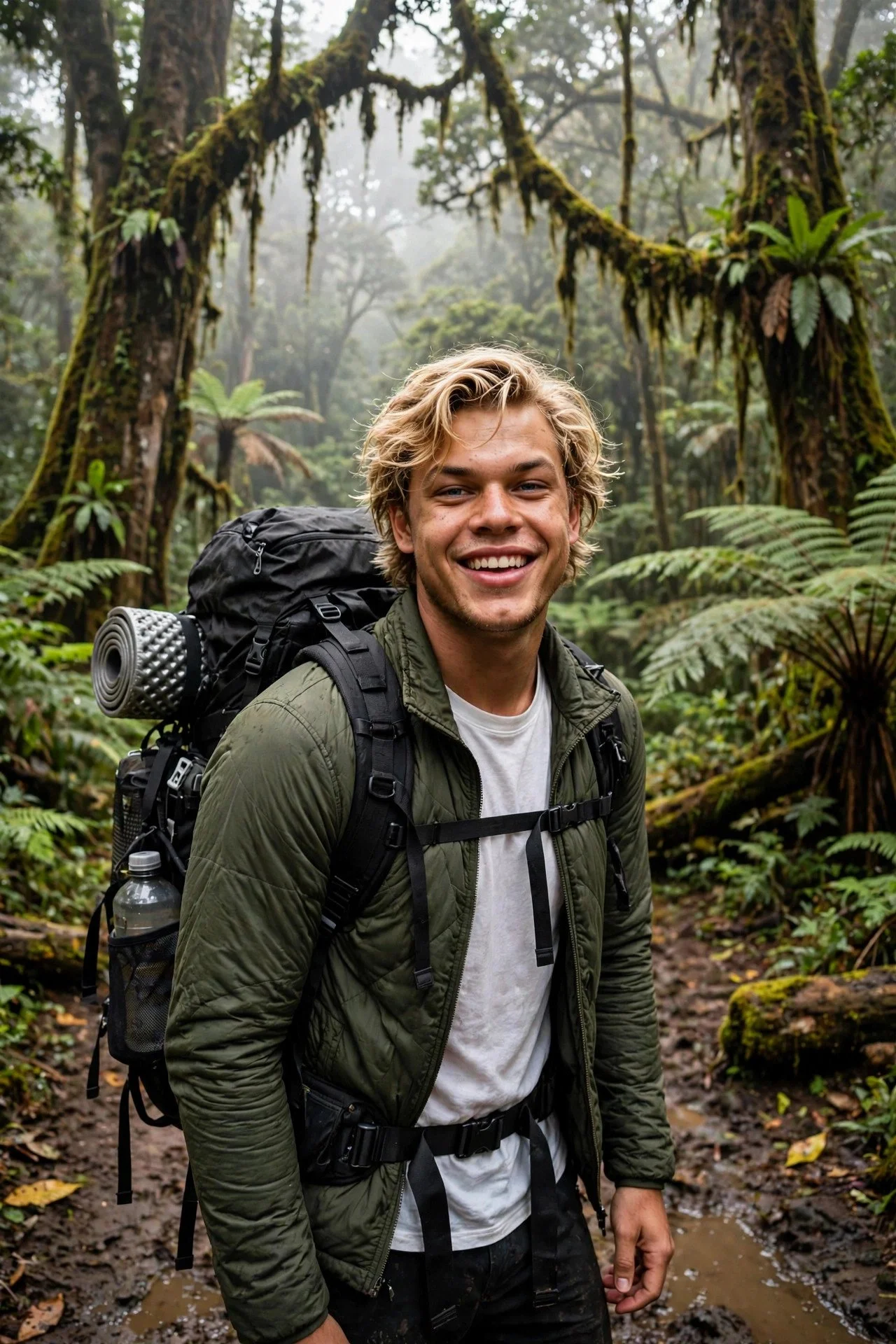
Day 1: misty rainforest on the way to Mti Mkubwa camp, about 2,800 m. (AI-generated image)
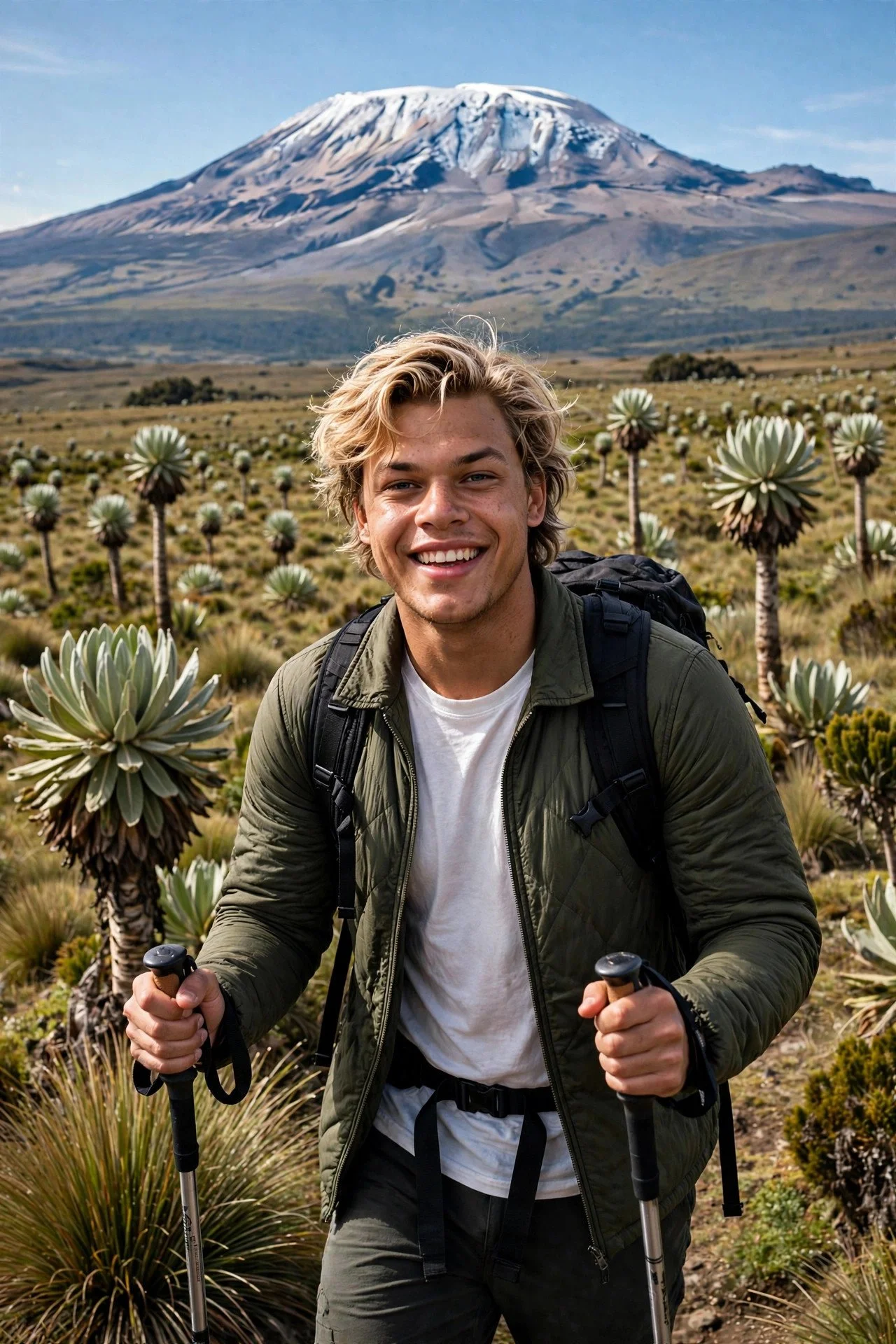
Days 2–3: across the Shira Plateau, 3,500–3,850 m, with Kibo ahead. (AI-generated image)
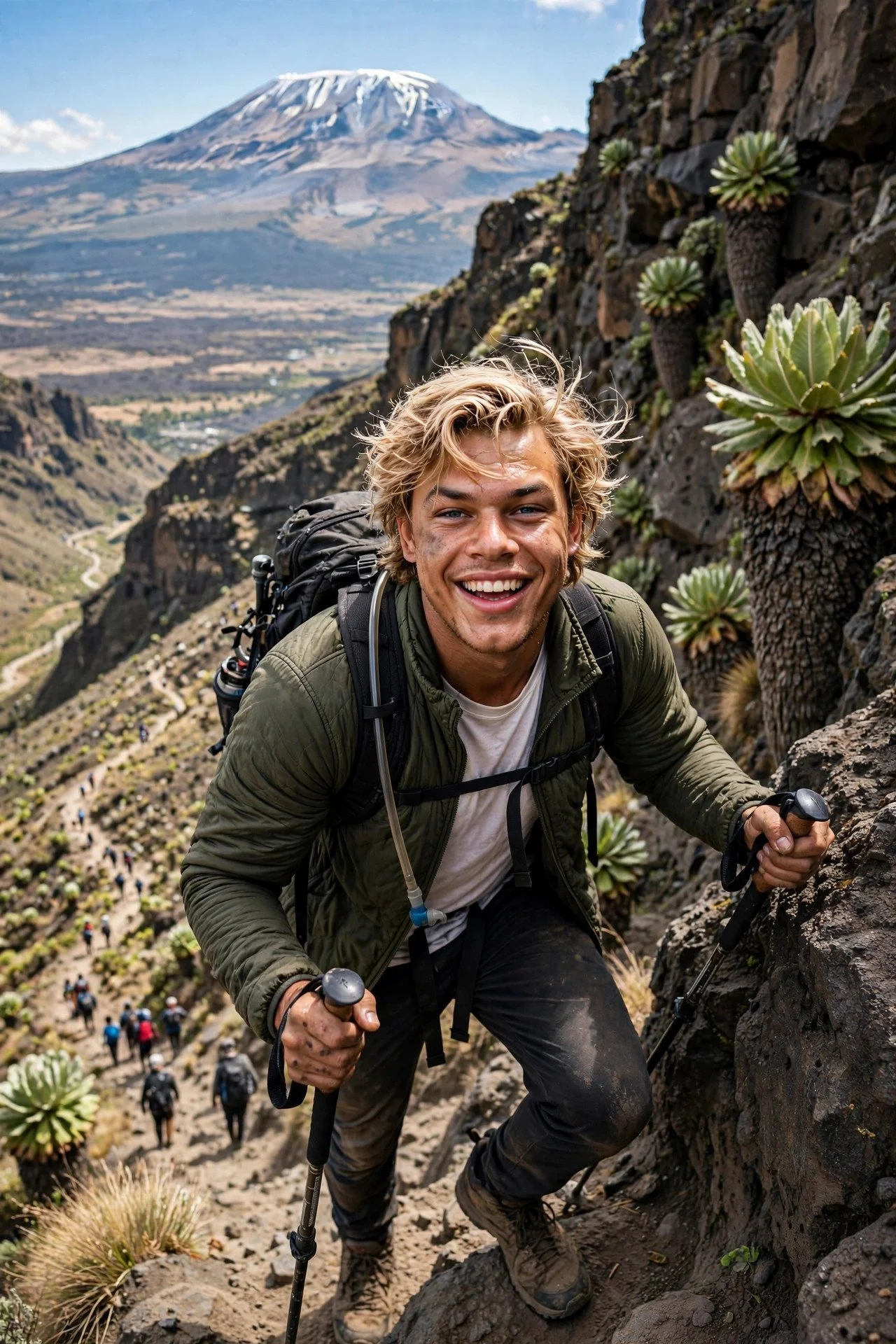
Day 5: scrambling up the Barranco Wall. (AI-generated image)
“The guides repeat one phrase all week: pole pole (slowly, slowly).”
I ignored it on Day 2, felt great, and learned it was advice on Day 6.
Summit night
We left Barafu at midnight in a line of headlamps. It was cold from the first step and about -10°C with wind by the top. I wore four layers on top, two on the legs, a down parka, and liner gloves under big mittens.
For the first hour I counted steps. Then I stopped, because the number made it worse. By 3 a.m. my water hose had frozen solid, so I carried bottles upside down in my pack, which keeps the lid end from freezing first. Two toes went numb for about an hour.
At Stella Point the sun came up over the ice fields, and I cried a little. By Uhuru Peak, I was just happy to stand still.
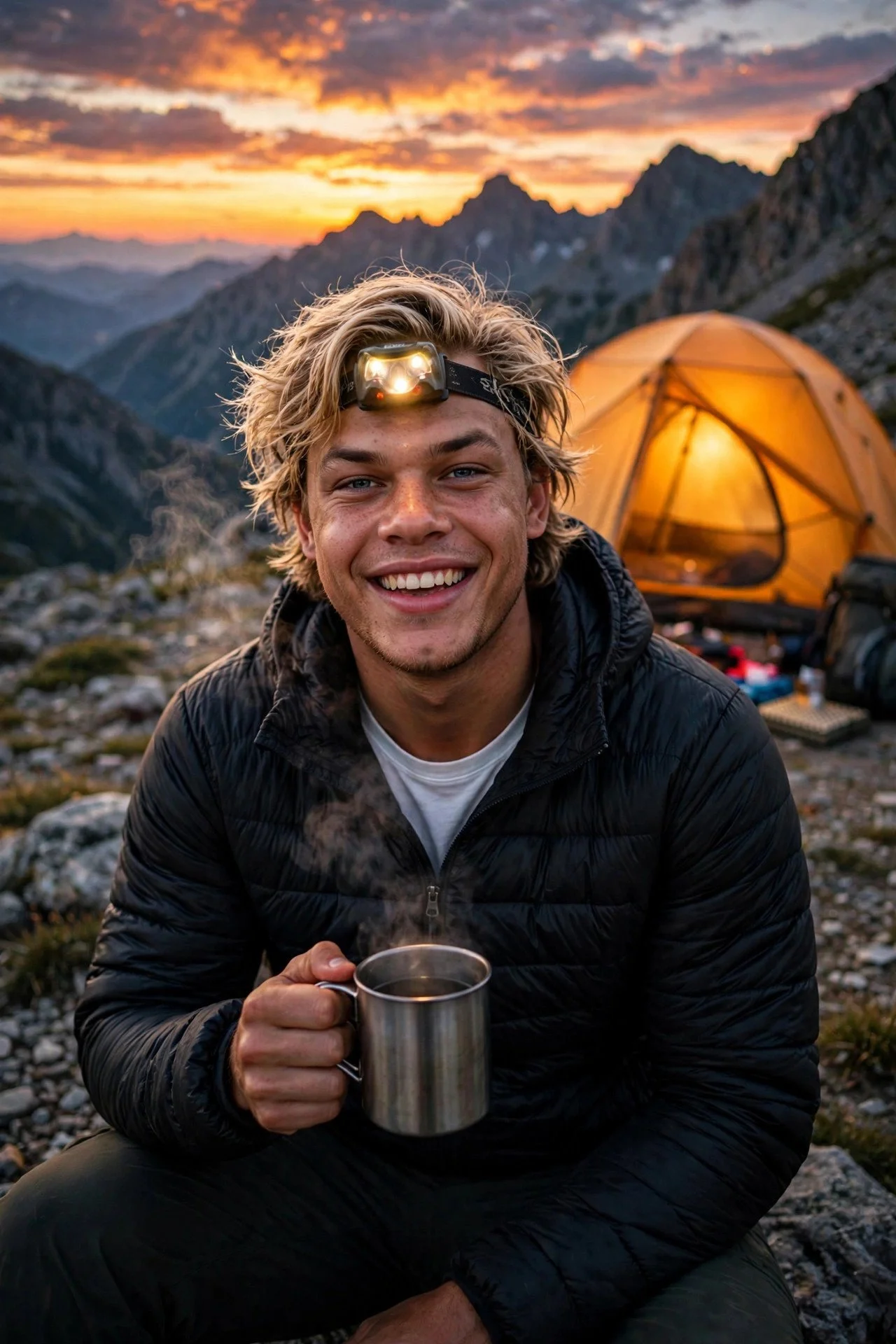
Day 6: Barafu camp, 4,673 m. Hot drink, early night, midnight start. (AI-generated image)
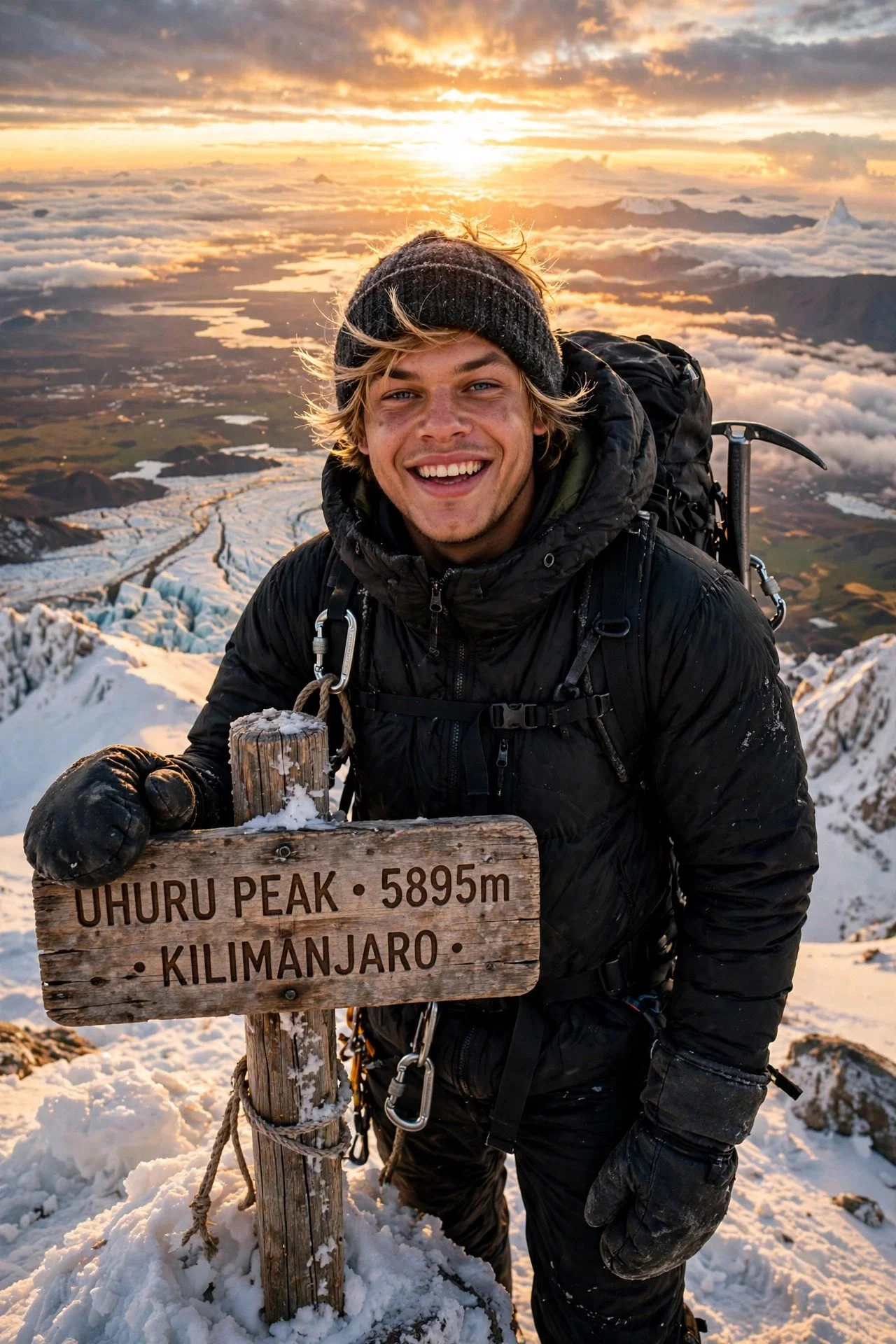
Uhuru Peak, 5,895 m. Worth every frozen toe. (AI-generated image)
What I'd tell you before you book
Choose the longer itinerary. Extra days are the cheapest altitude insurance you can buy.
Vet the operator more than the route.
Break in your boots months before the trip.
Pack for cold, not for Africa. Everyone gets this wrong.
Tip your crew generously. They carried everything, including your good mood.
Respect the 15 kg duffel limit. The porters carry everything — pack like it.
Sources, last checked October 2026: Kilimanjaro park fees (TANAPA), Tanzania visa (Tanzania Immigration Services), yellow fever and travel health (CDC), Porters (KPAP).