Toronto, Canada
Bradley and I took Ludo to Canada. Let me say that again, because it still delights me: our dog now has international travel credentials. Getting Ludo across the border required a CDC dog import form, which we treated with the full solemnity of a passport application — photo check, paperwork review, dramatic stamp of approval (okay, there was no stamp, but there should have been). Somewhere between the form and the flight, Ludo became, officially, an international traveling dog. He handled it with the dignity of a creature who has no idea what any of those words mean.
Five days in Toronto, in the middle of summer, with weather so cooperative it felt staged. We ate our way through half the world's cuisines, watched Ed Sheeran hold a stadium in the palm of one hand, took a boat around the islands, rode a different boat directly into the mist of Niagara Falls, toured a castle that isn't quite a castle, wandered a whiskey district and a chaotic market that couldn't be more different from each other, and learned — genuinely learned — how a muddy little colonial outpost turned into the fastest-growing big city in North America. Grab a coffee (or something stronger) and settle in.
Into the Mist: Niagara Falls and Niagara-on-the-Lake
I'm putting this first because it deserves first, and because I nearly forgot it entirely, which tells you something about how packed these five days were. Niagara Falls is about 90 minutes from Toronto, and it is one of those places you assume will be a letdown because you've seen the postcards — and then you stand in front of it and your brain quietly files the postcards under "inadequate."
The numbers help, a little. The Horseshoe Falls — the big Canadian one — drops 57 meters over a crest 670 meters wide, with something like 2,800 tons of water going over every second. The falls were carved about 12,000 years ago at the end of the last ice age, which means they've been doing this since before anyone had a word for it.
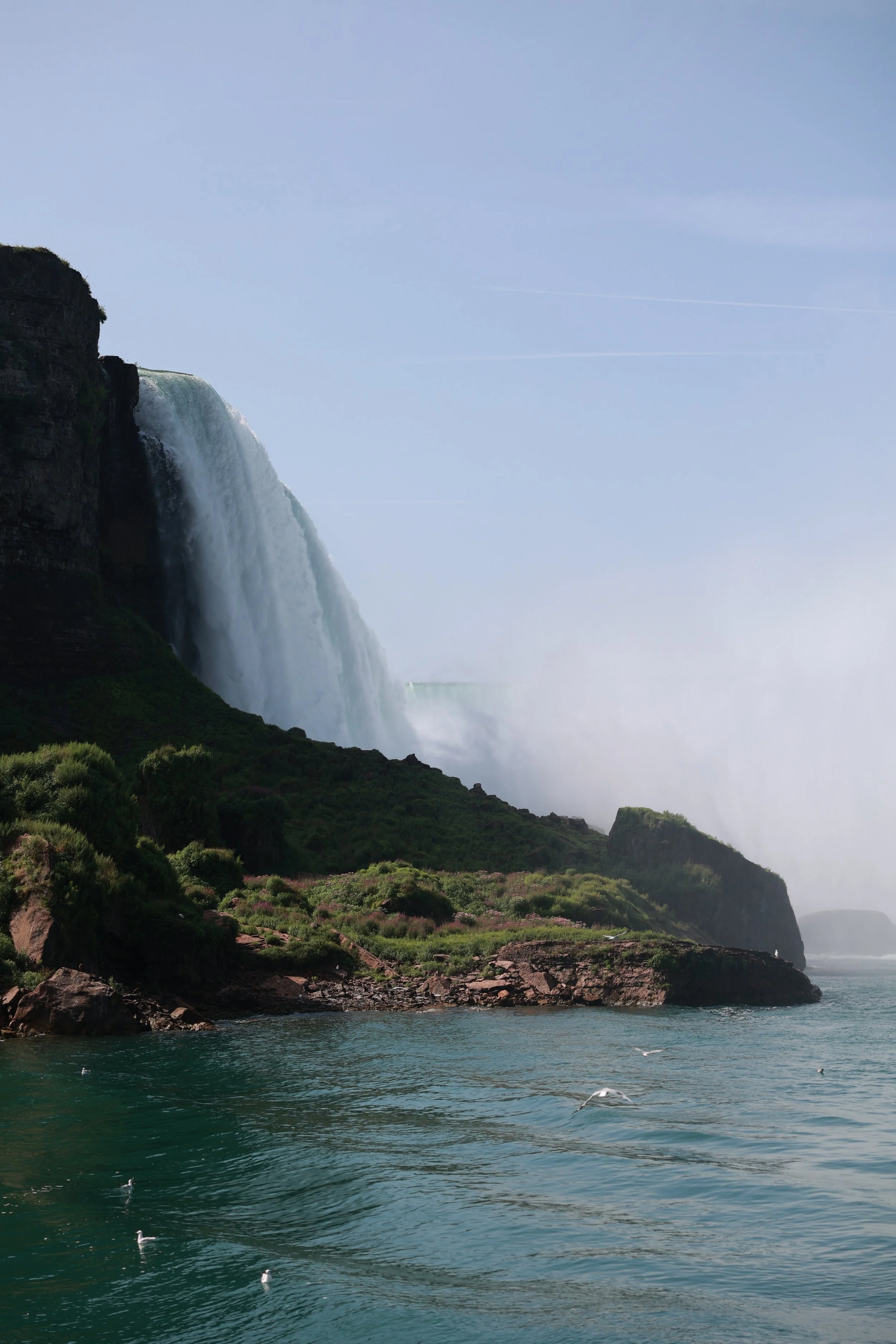
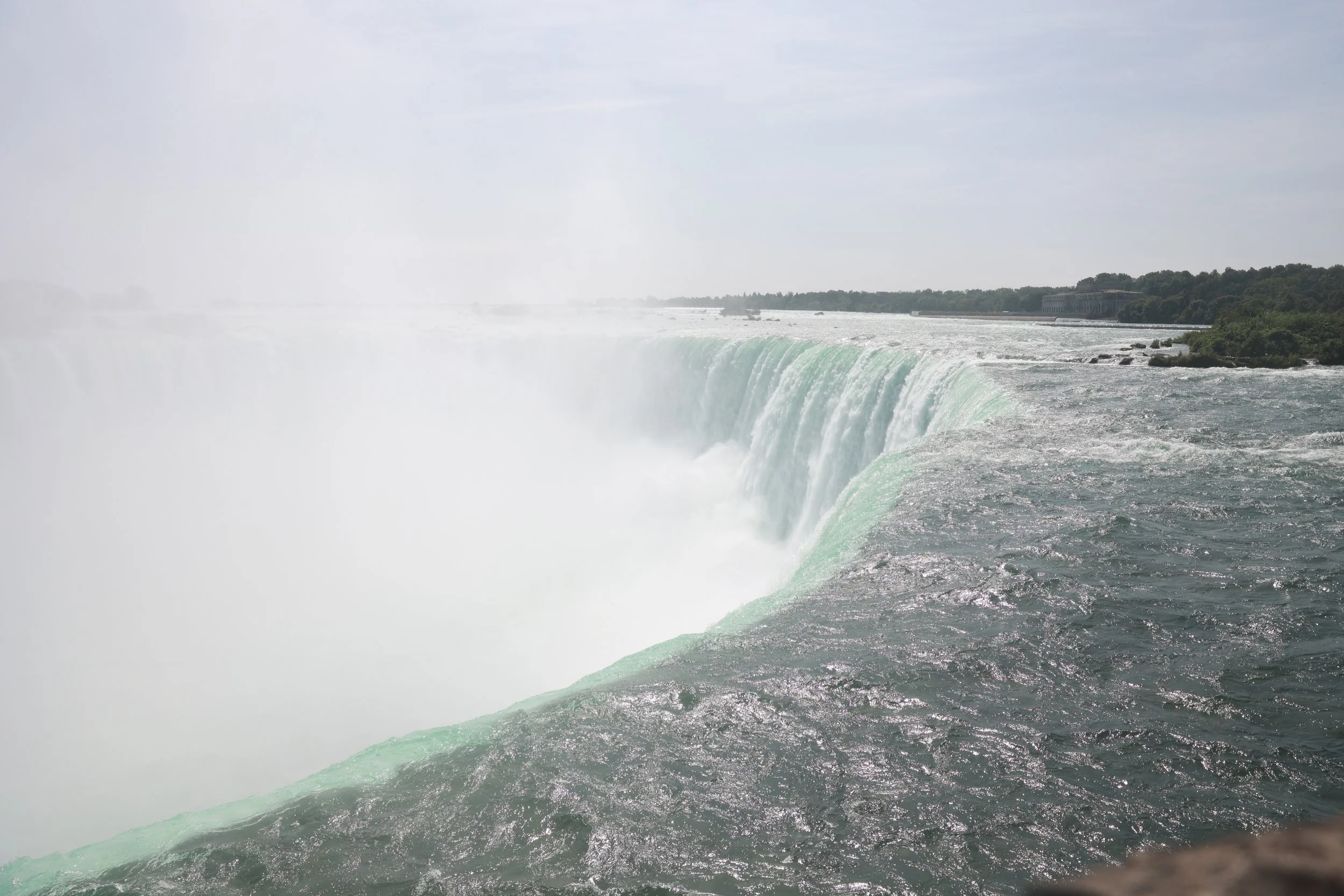
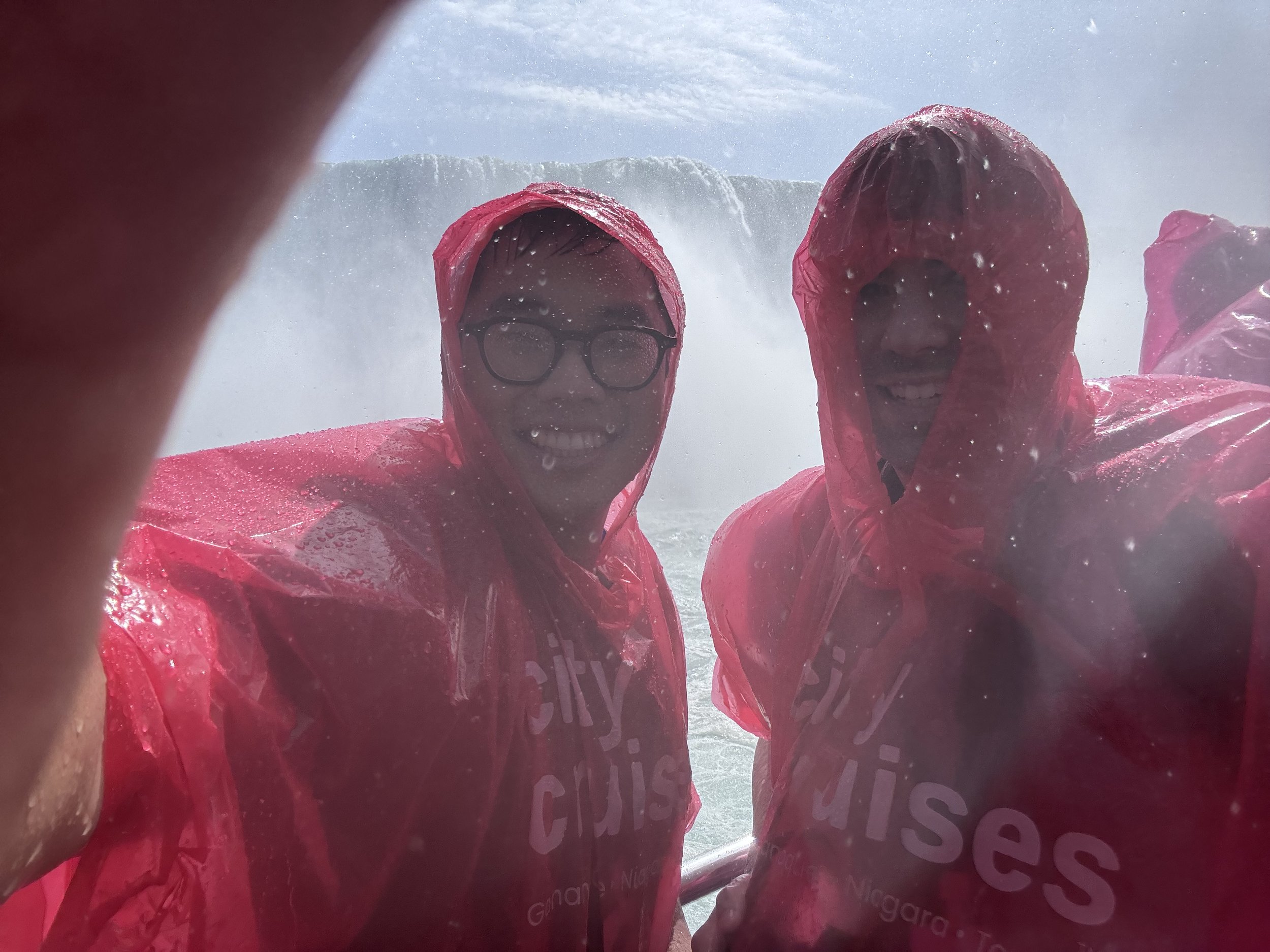
We did it the correct way: Hornblower's Voyage to the Falls, the Canadian-side boat tour, which hands you a red poncho and drives you straight into the spray. (The American boats wear blue. There is a whole cross-border poncho rivalry and I am firmly Team Red.) You approach the curtain of water, the mist swallows the boat, everyone screams a little, and your phone — held aloft in a death grip inside a poncho — captures the single wettest selfie of your life. Bradley and I have never looked happier or more drowned.
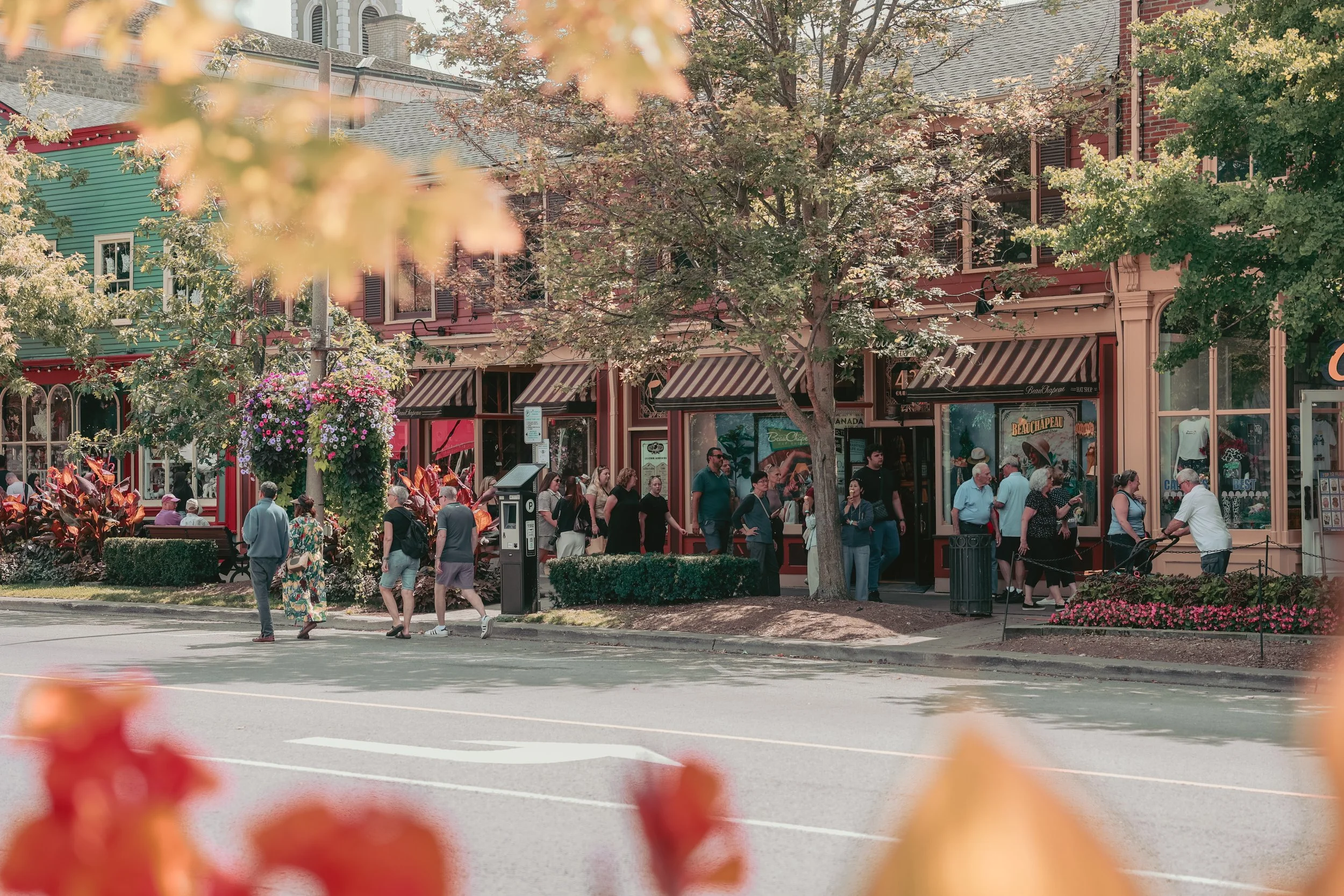
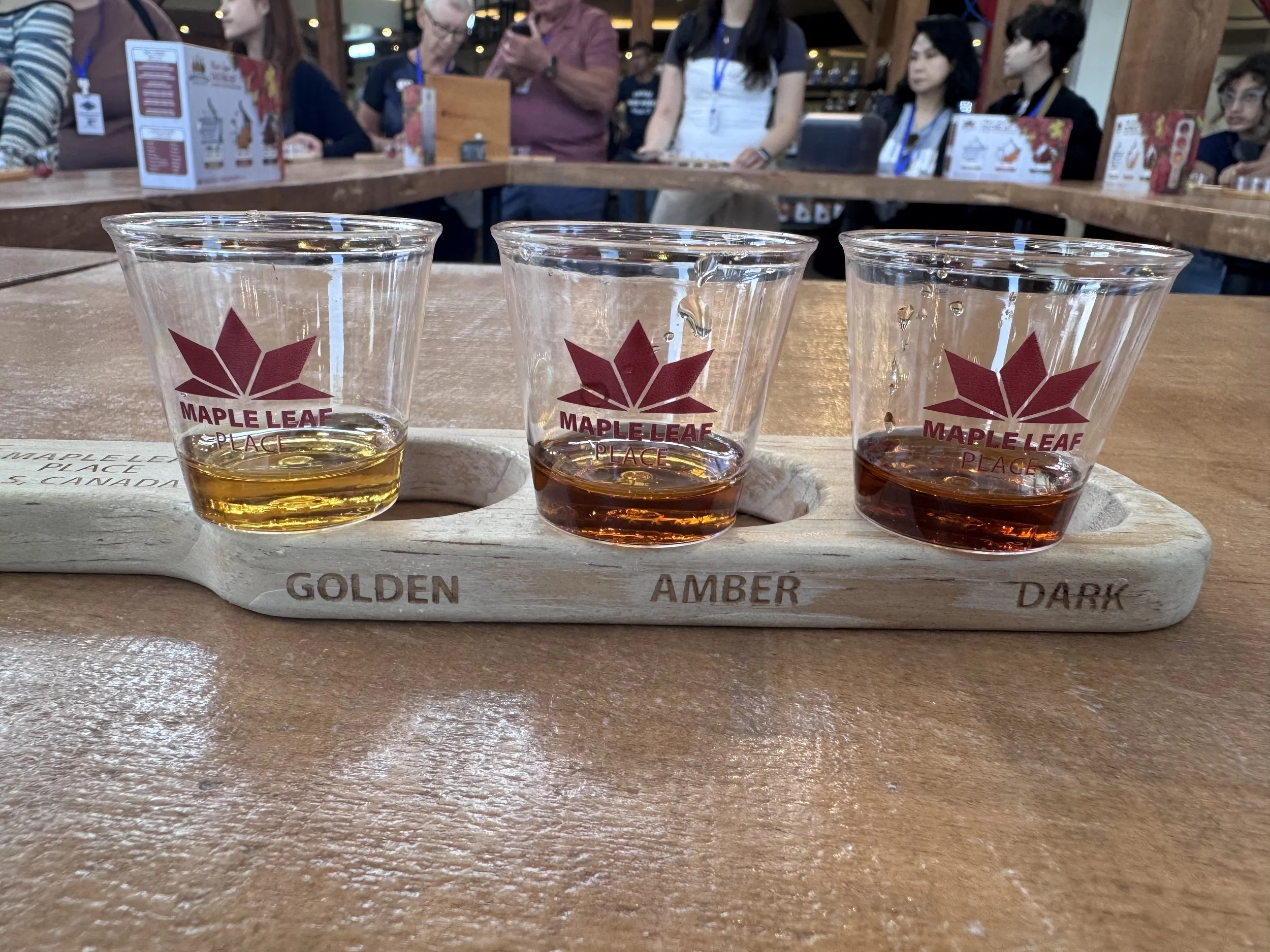
On the way back we stopped in Niagara-on-the-Lake, and I need you to understand how aggressively picturesque this town is. Flower baskets on every lamppost, heritage storefronts in heritage colors, a main street — Queen Street — that looks like a film set for "charming small town, please." It was the first capital of Upper Canada back in the 1790s (when it was called Newark), it got burned down in the War of 1812 and rebuilt itself prettier, and today it's the gateway to Niagara wine country — icewine especially, the stuff Canada took from a frozen-grape accident and turned into an art form — and home to the Shaw Festival theatre. We wandered, we window-shopped, we ate something with maple in it because when in Ontario. If Toronto is the global city sprinting into the future, Niagara-on-the-Lake is the deep breath twenty minutes down the road.
Fort York: Where We Slept, and Where Toronto Fought
We stayed in the Fort York neighborhood, which turned out to be less "hotel district" and more "history lesson with condos." Fort York was established in 1793 by Lieutenant Governor John Graves Simcoe as the military garrison for the brand-new town of York — Toronto's original, far less marketable name. The fort's big moment came twenty years later, during the War of 1812, in the Battle of York on April 27, 1813. American forces landed west of the town, the outnumbered British and their allies retreated, and on the way out, the British garrison blew up their own Grand Magazine — a stone powder store — in an explosion so massive it killed the American commander, Brigadier General Zebulon Pike, along with hundreds of his men. The Americans took the town anyway, then burned the parliament buildings on their way out. That particular act of arson, historians generally agree, was still on everyone's mind a year later when the British returned the favor in Washington. Fort York is now a National Historic Site of Canada, and walking its grounds — blockhouses, the stone magazine, the parade square — you can feel how young this country still is. This all happened two centuries ago. By European standards, that's practically last Tuesday.
Staying there also gave us a front-row seat to Toronto's identity, which is worth a quick detour, because it's the key to the whole city. Canada started French: Jacques Cartier planted the flag for France in 1535, and Samuel de Champlain founded Quebec City in 1608. It stayed French for over two centuries, until the Seven Years' War, when Britain took Quebec at the Battle of the Plains of Abraham in 1759 and France formally handed over New France in the Treaty of Paris in 1763. Here's the part that surprises Americans: Canada never fought a war of independence. No revolution, no dramatic breakup. Instead, it negotiated its way out over 150 years — Confederation in 1867 created the Dominion of Canada, and full constitutional independence didn't arrive until the Constitution Act of 1982, when Canada finally patriated its constitution from Britain. Polite to the very end. And it shows: Toronto feels like a city that absorbed French flair, British institutions, and then invited the entire rest of the planet to move in.
The Islands by Boat
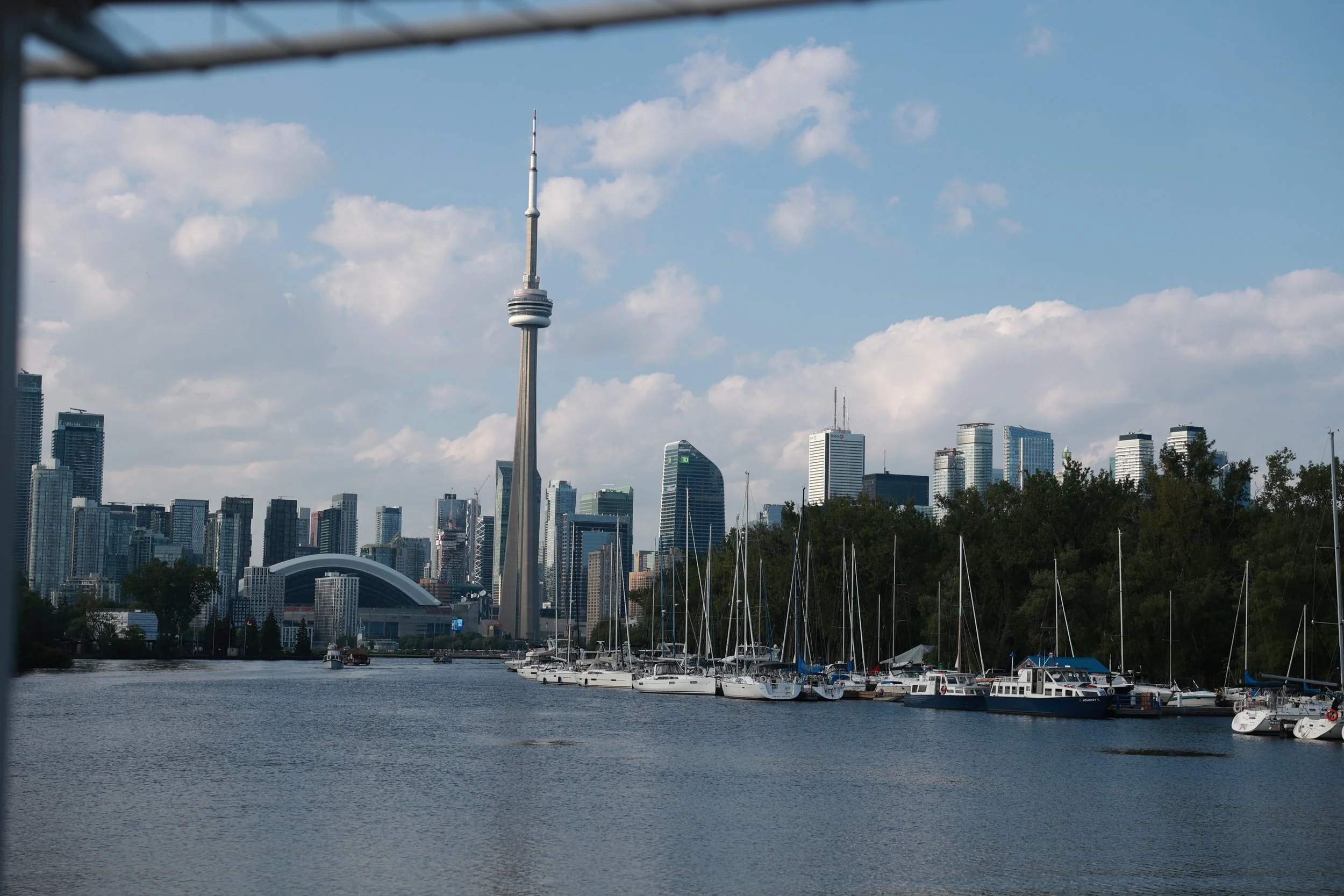
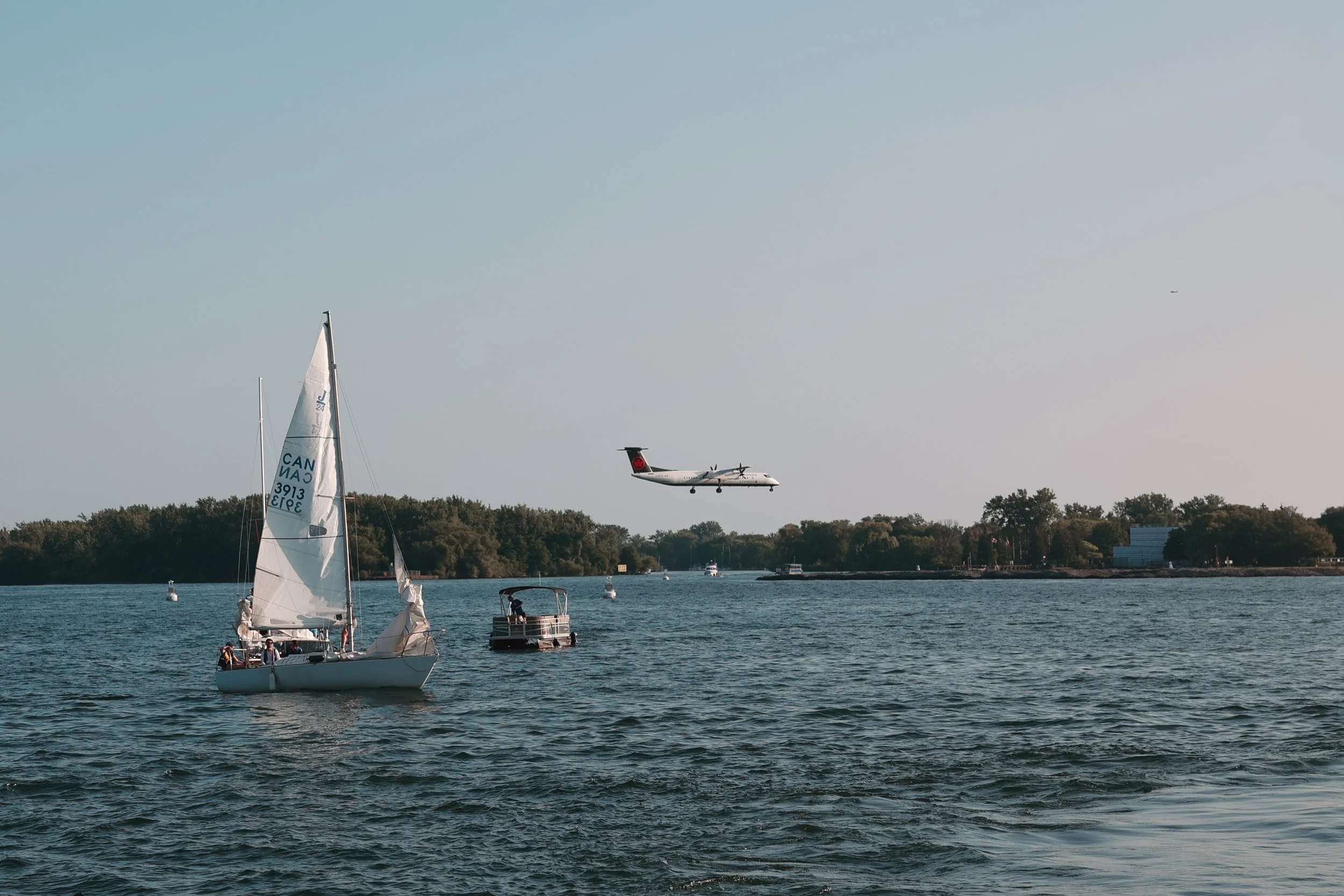
One of our best afternoons was a boat ride through the Toronto Islands — a chain of fifteen small islands sitting just offshore, all connected by boardwalks and bridges, and almost entirely car-free. From the water, the skyline does all the talking: the CN Tower dead center, the financial district's glass boxes crowding the shore, and behind it all a city that has doubled down on vertical growth for thirty years running. Our guide ran through the basics — the islands were once a peninsula until a violent storm in 1858 carved out the gap, and the name "Toronto" itself comes from the Mohawk word tkaronto, meaning "where there are trees standing in the water," which is exactly what you'd see here if you squinted past the condos. There's something grounding about learning that the city's name is older than the city by about ten thousand years. We came back sun-warmed and a little smug about the photos.
The Tower We Didn't Climb
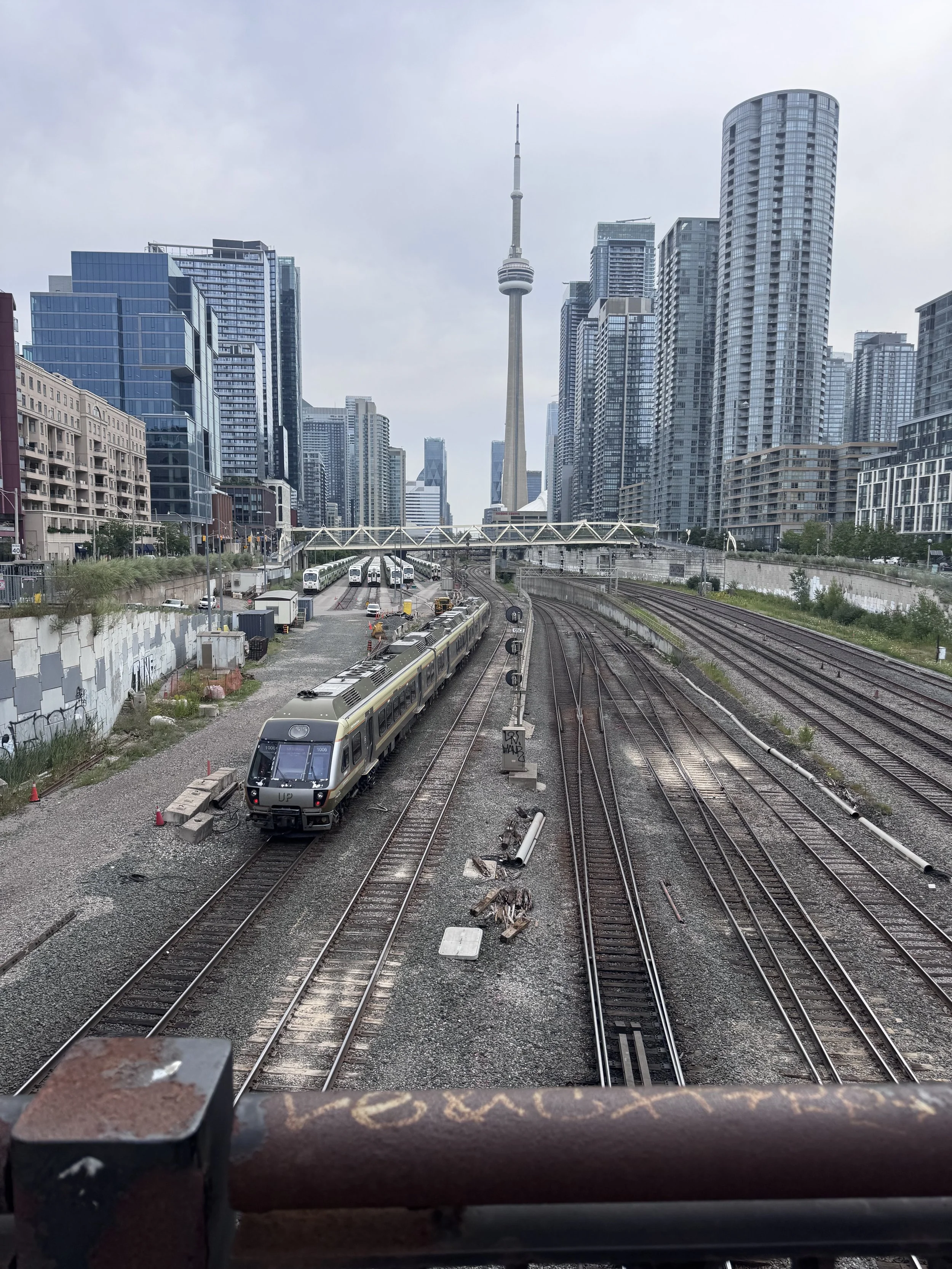
Let's address the elephant on the skyline. The CN Tower: 553.3 meters of concrete and ambition, completed in 1976 after three years of construction by Canadian National Railway. For 32 years it was the world's tallest free-standing structure on land — the Burj Khalifa finally took the title in 2007 — and it's still the tallest in the Western Hemisphere. The facts are irresistible: 1,776 steps to the top (there's an annual charity climb; I watched a video of it and got winded), a Glass Floor installed in 1994 that lets you stand on 2.5 inches of glass 342 meters above the sidewalk, the SkyPod at 447 meters, and the EdgeWalk, a hands-free walk around the outside of the main pod at 356 meters — the highest of its kind in the world. The tower gets struck by lightning around 75 times a year and just shrugs it off, which is the most Canadian thing I've ever heard about a building.
We did not go up it. The line was, to use the technical term, absolutely unhinged, and we had not planned ahead — a failure I will own completely, because every post on this blog eventually contains a confession and this is mine. We stood at the base, craned our necks, took the photo everyone takes, and added it to the top of the "next time" list. Learn from us: book tickets online, go early, and don't assume you can wing a 553-metre tower in July.
Casa Loma: Toronto's Almost-Castle
Casa Loma is the kind of place that makes you do a double take: a full-blown Gothic Revival castle, sitting on a hill in the middle of Toronto, looking like it got lost on the way to the Rhine. It was built between 1911 and 1914 for Sir Henry Pellatt, a financier who made a fortune in electricity and decided what he really needed was a 98-room house with secret passages. The architect, E.J. Lennox, also designed Toronto's Old City Hall — the man had range. The details are delicious: an 800-foot underground tunnel connecting the castle to the stables and carriage house, hidden panels and passageways throughout, five acres of gardens, and a price tag of about $3.5 million in 1914 money. Pellatt's timing was terrible — the war, rising taxes, and some bad business luck wiped him out, and in 1924 the city seized Casa Loma for unpaid taxes. Since then it's been a hotel, a nightclub, a top-secret WWII research station (sonar, allegedly — the castle keeps its secrets), and a film set for everything from X-Men to Chicago. Now it's a museum, and wandering it feels like touring the world's most extravagant cautionary tale about lifestyle inflation. Ten out of ten, would overextend again.
Cobblestones and Chaos: The Distillery District and Kensington Market
Two neighborhoods, same trip, completely different Toronto.
We started at the Distillery District, which is one of those places that sounds like a marketing pitch until you're standing in it. Thirteen acres, more than forty Victorian-era industrial buildings, ten cobblestone streets, and the whole thing is car-free — the largest and best-preserved collection of Victorian industrial architecture in North America, and it shows in every brick. It started in 1832 as the Gooderham & Worts distillery, founded by two brothers-in-law, and by the 1860s it had become the largest distillery in the British Empire, cranking out over two million gallons of whiskey a year. There's a genuinely grim footnote buried in there too: James Worts, one of the founders, lost his wife in childbirth and was so undone by it that he took his own life not long after — his name was actually dropped from the company for a while before his son restored it. Locals will tell you his ghost still haunts the place, and the district is, unofficially, one of Toronto's official haunted sites. Cheerful history aside, distilling continued here for over 150 years until the last of it shut down in 1990, and the site sat abandoned — mostly used as a film backdrop — until a major restoration reopened it in 2003 as the gallery-and-boutique-lined enclave it is now. We wandered the old brick lanes, ducked into a few galleries, and took approximately the number of photos you'd expect from a district practically engineered for exactly that.
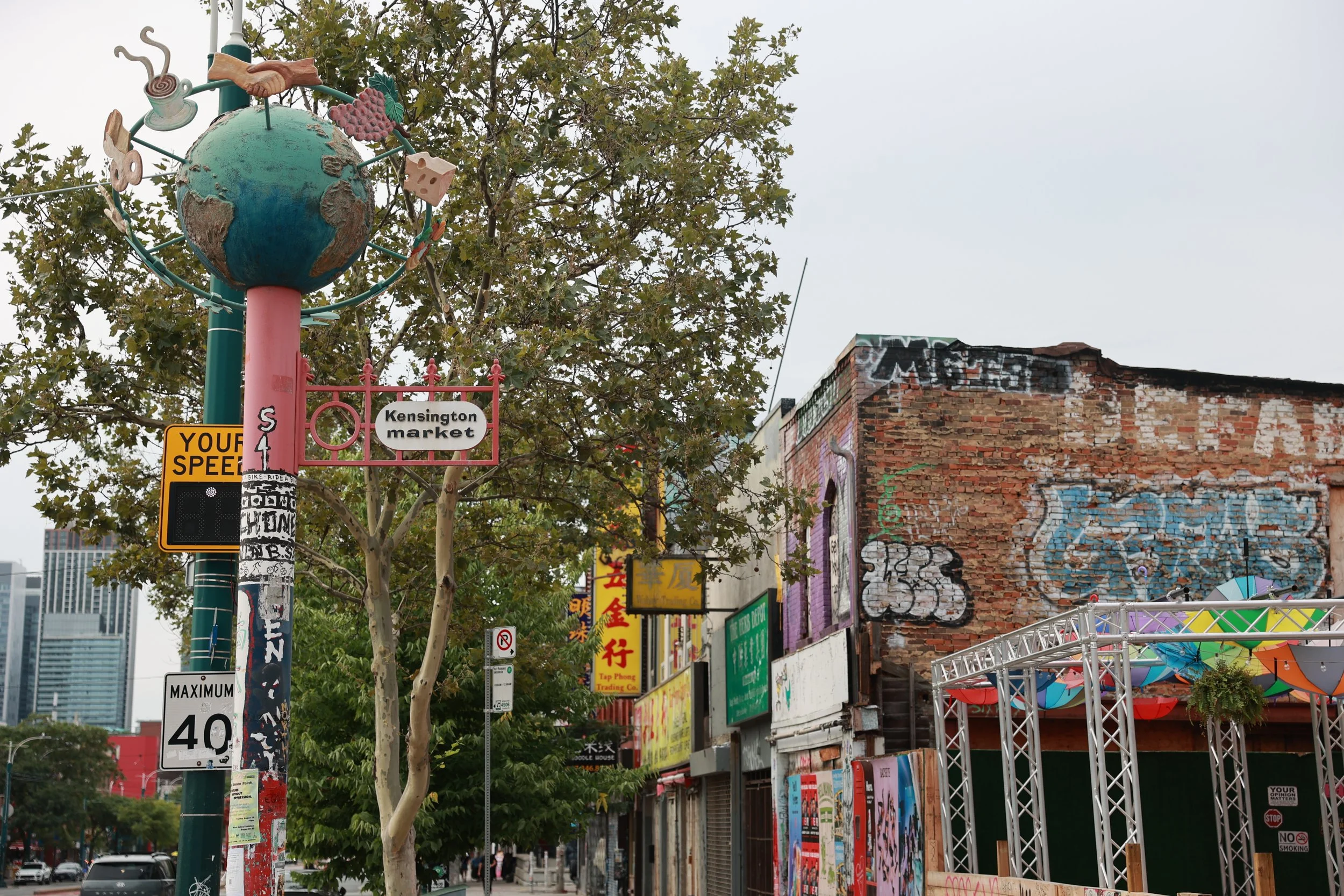
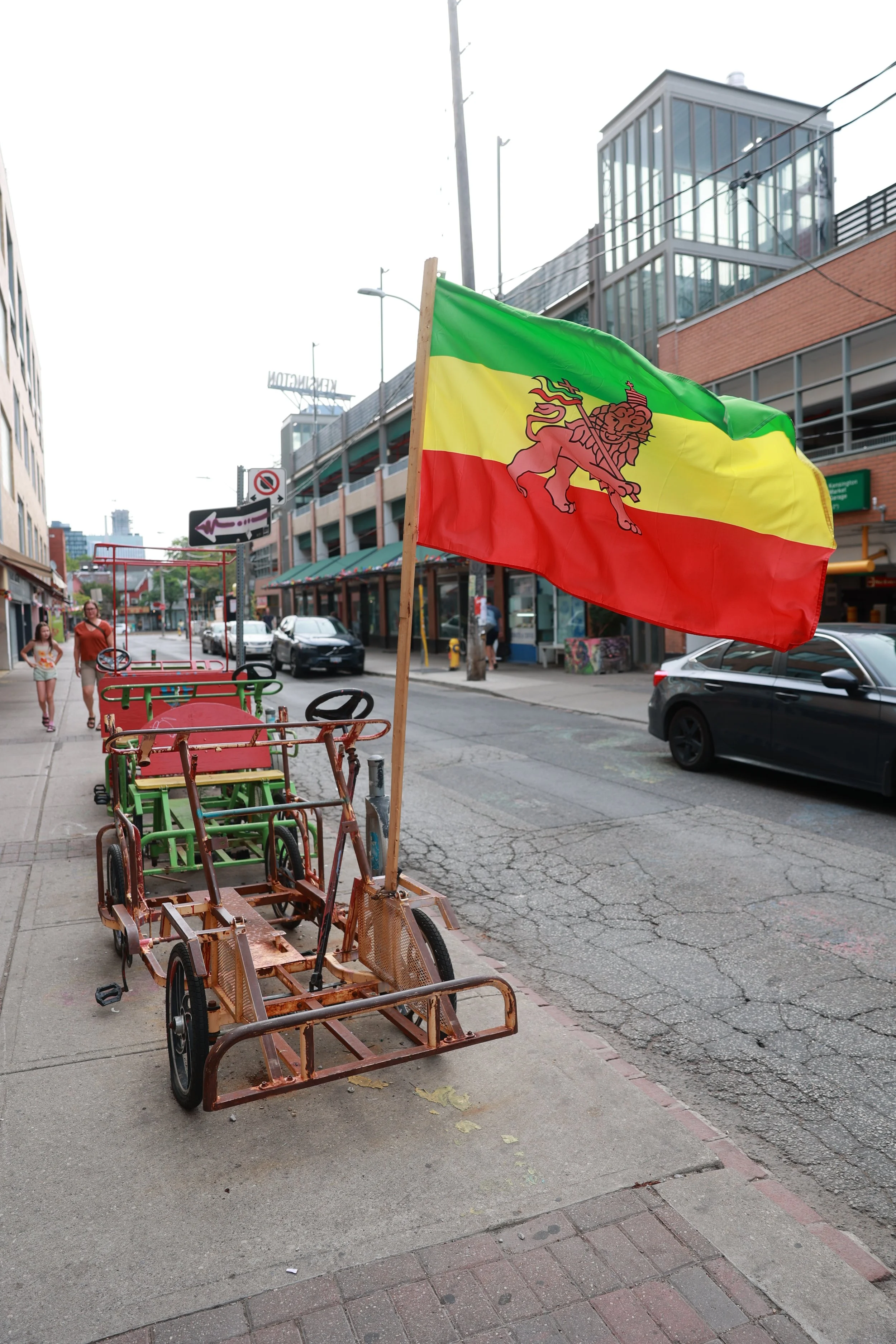
Then, total tonal whiplash: Kensington Market. If the Distillery District is curated, Kensington is the opposite on purpose — narrow, chaotic, covered in murals, and proud of it. The land was originally bought up in 1815 by a wealthy landowner named George Taylor Denison, but the neighborhood's real identity started taking shape in the early 1900s, when it became known as "the Jewish Market" — families ran pushcarts out front of their own homes, and by the 1920s about 80% of Toronto's Jewish population lived right here. Wave after wave of immigration followed — Portuguese and Italian families in the '50s and '60s, then Caribbean, Latin American, and Southeast Asian communities through the rest of the century — and each one left a layer that never quite got paved over by the next. The market has also made a habit of fighting off anything that smells like a chain; they famously ran off a Nike store trying to move in, and the place was designated a National Historic Site in 2006, in part for exactly that stubbornness. On the last Sunday of the month in summer, they close it to cars entirely and the whole neighborhood turns into one giant street party. We didn't time it that well, but even on a regular afternoon it delivered — vintage shops stacked floor to ceiling, a wall of murals around every corner, and the kind of food smells that make you abandon whatever plan you had for lunch.
One Man, One Guitar, 50,000 People: Ed Sheeran at the Rogers Centre
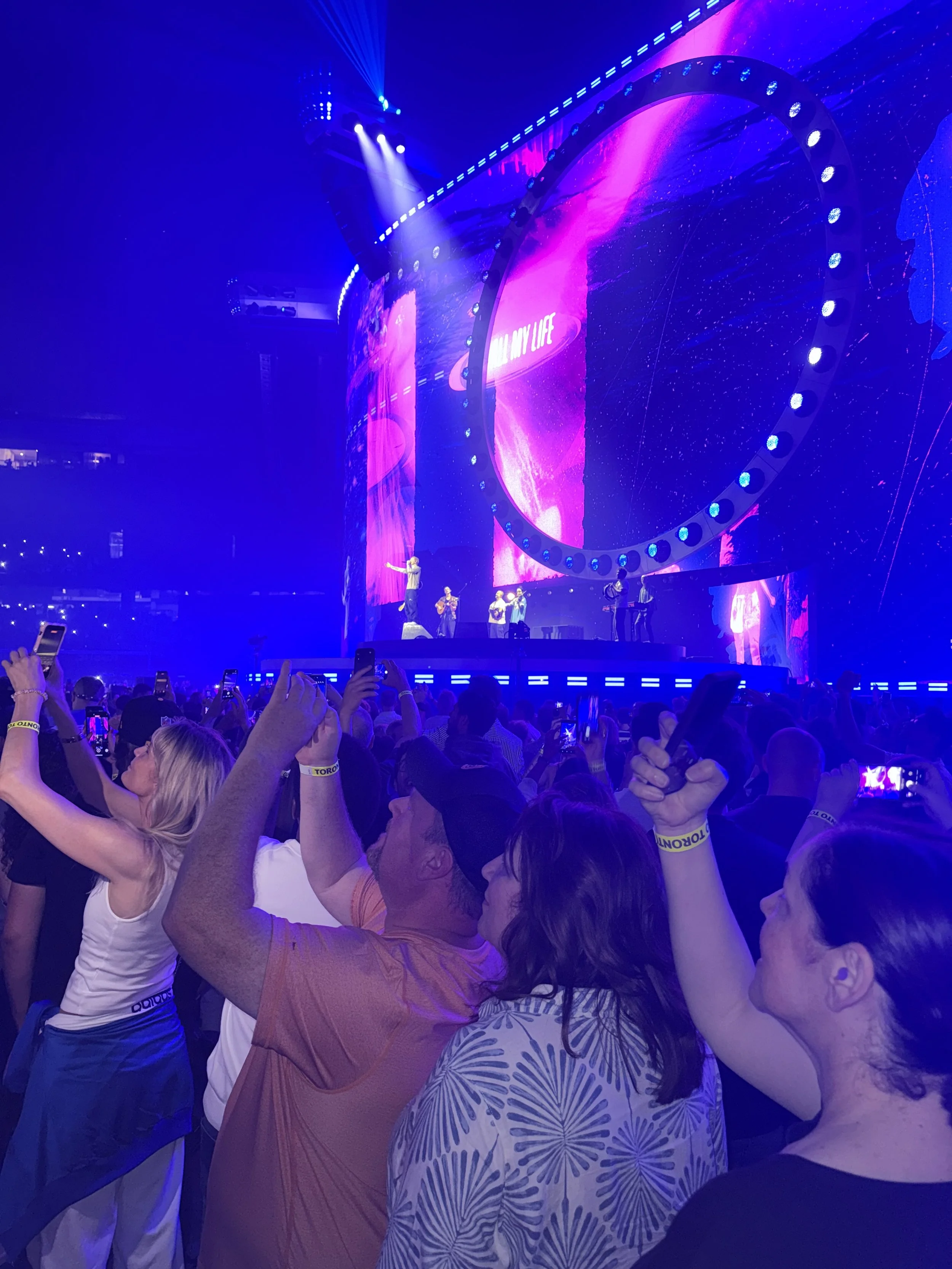
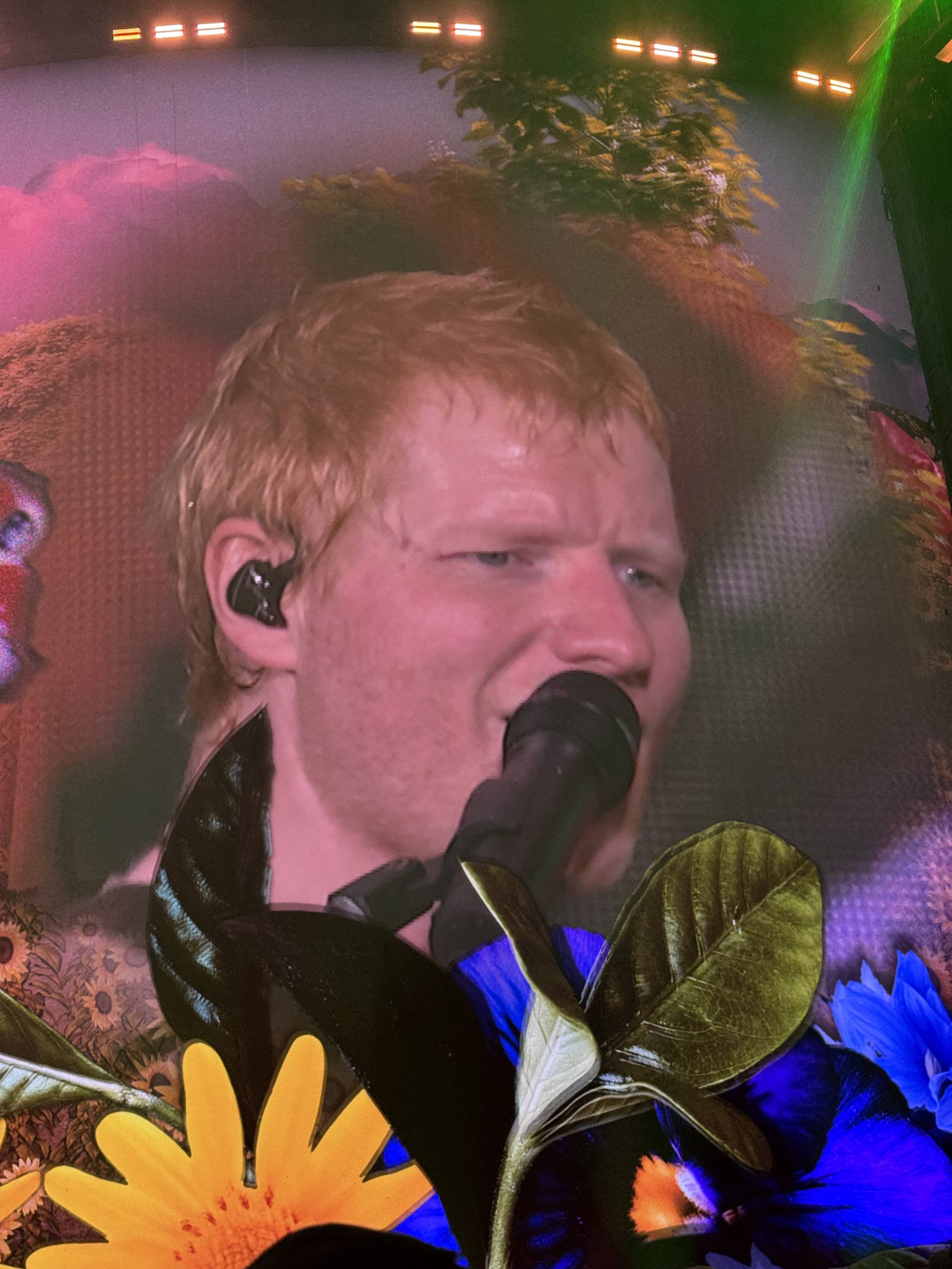
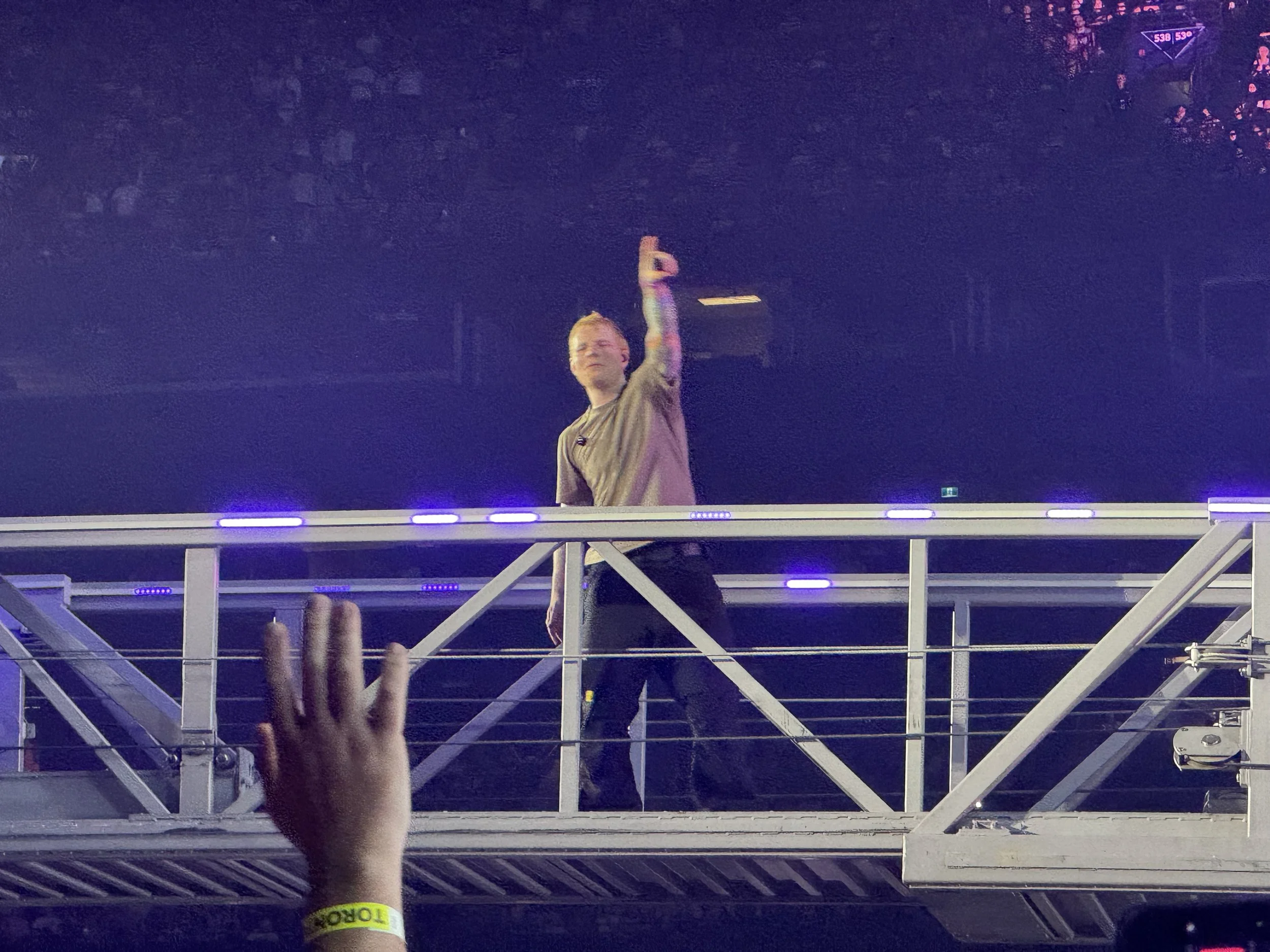
The centerpiece of the trip, and I don't say that lightly in a city with a castle, was Ed Sheeran at the Rogers Centre. The venue deserves its own paragraph: opened in 1989 as the SkyDome, it was the first stadium on earth with a fully retractable motorized roof — twenty minutes from open sky to indoors, a genuine engineering marvel at the time. It's home to the Toronto Blue Jays, it's hosted everything from WrestleMania to the Grey Cup, and Rogers bought the naming rights in 2005, which is why your concert ticket says Rogers Centre and your dad still calls it the SkyDome.
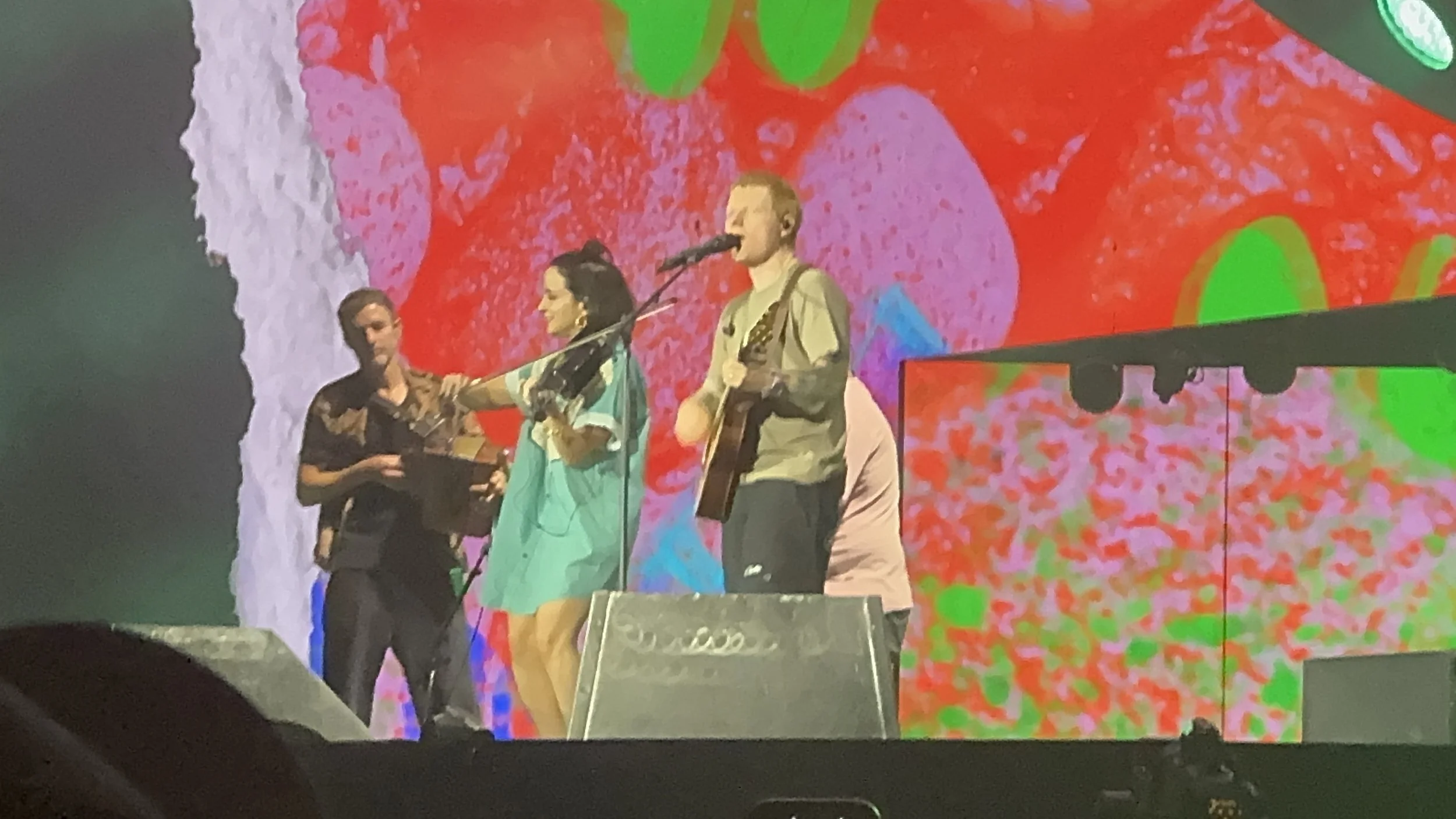
But the night belonged to Sheeran, and here's the thing about seeing him live: it's one man, one guitar, and a loop pedal, in front of 50,000 people, and it never feels small. He's famously personable on stage — the whole show is stitched together with stories about where the songs came from, the people they're about, the messy real-life stuff that turned into choruses the entire stadium knows by heart. There's no pyro, no dancers, no spectacle to hide behind, just a guy telling you the truth about his life in three-minute increments and looping it until the building shakes. It's the most intimate arena show I've ever seen, which sounds like a contradiction until you've been in the room. We left hoarse and happy, which is the correct way to leave any concert.
Eating Our Way Through the World's Food Court
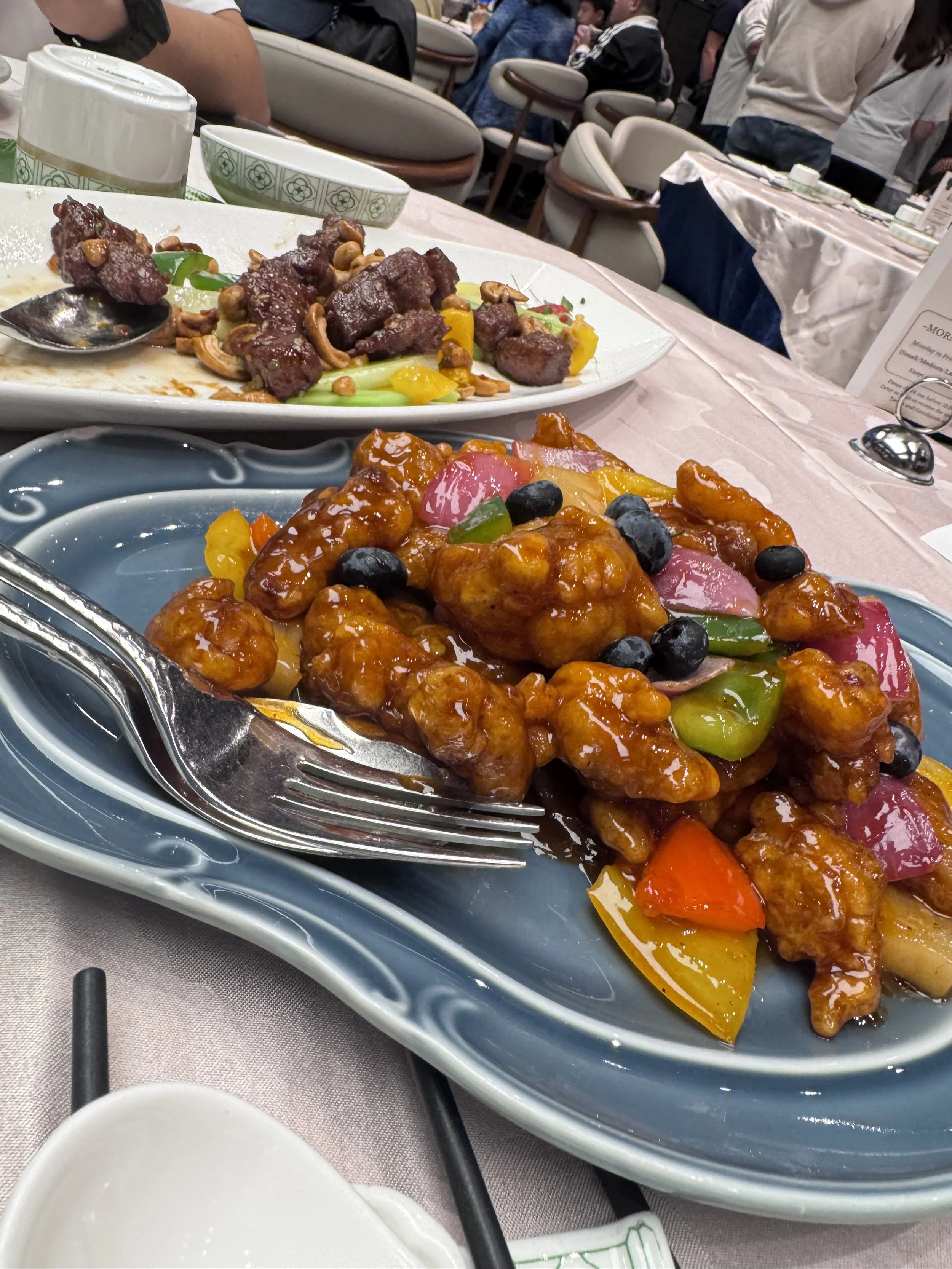
Toronto's pitch to the world is simple: come hungry, and come curious. Over half the city's residents were born outside Canada, representing more than 200 ethnic origins — it's routinely cited as one of the most multicultural cities on the planet, and you can taste it on every block. We treated the five days as a personal food tour, because if you've read the San Juan or Colombia posts, you already know that's non-negotiable wherever we land.
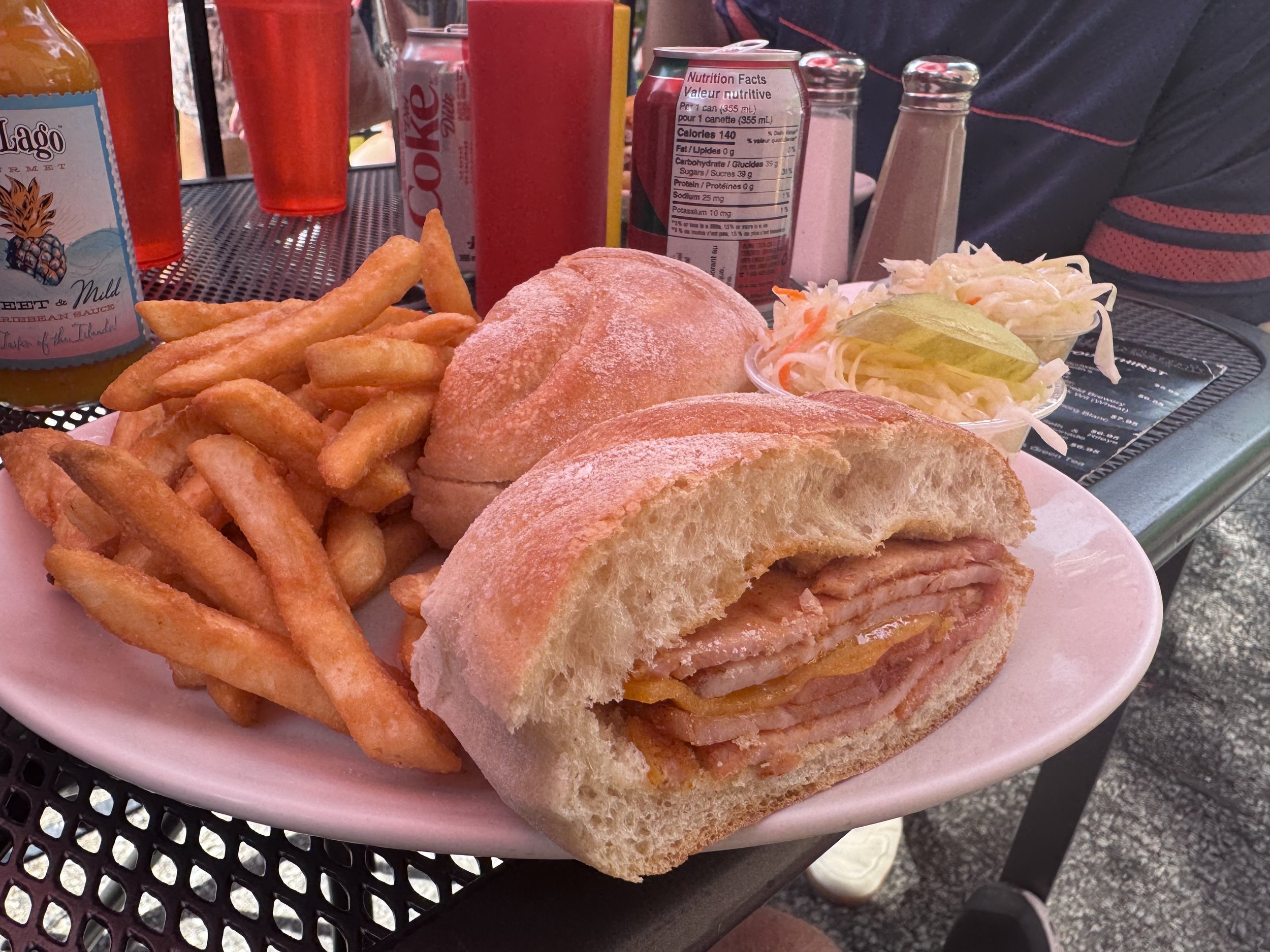
The ramen run took us to Ramen Isshin, a tiny, beloved spot where the tonkotsu broth tastes like someone simmered it with genuine love and a complete disregard for your schedule — rich, porky, eighteen-hours-in-the-making depth, with noodles that actually fight back. Then the hot pot night: Morals Village, the all-you-can-eat institution, where you build your own broth, pile the table with thin-sliced meats and vegetables, and cook everything yourself while pretending you know what you're doing. Between the two of us, Bradley is the disciplined hot pot strategist and I am the chaos agent who drops everything in at once and fishes it out with confidence I haven't earned. Both approaches produced excellent dinners. Somewhere in between we also worked through dumplings, jerk chicken, and a taco al pastor that made me briefly emotional.
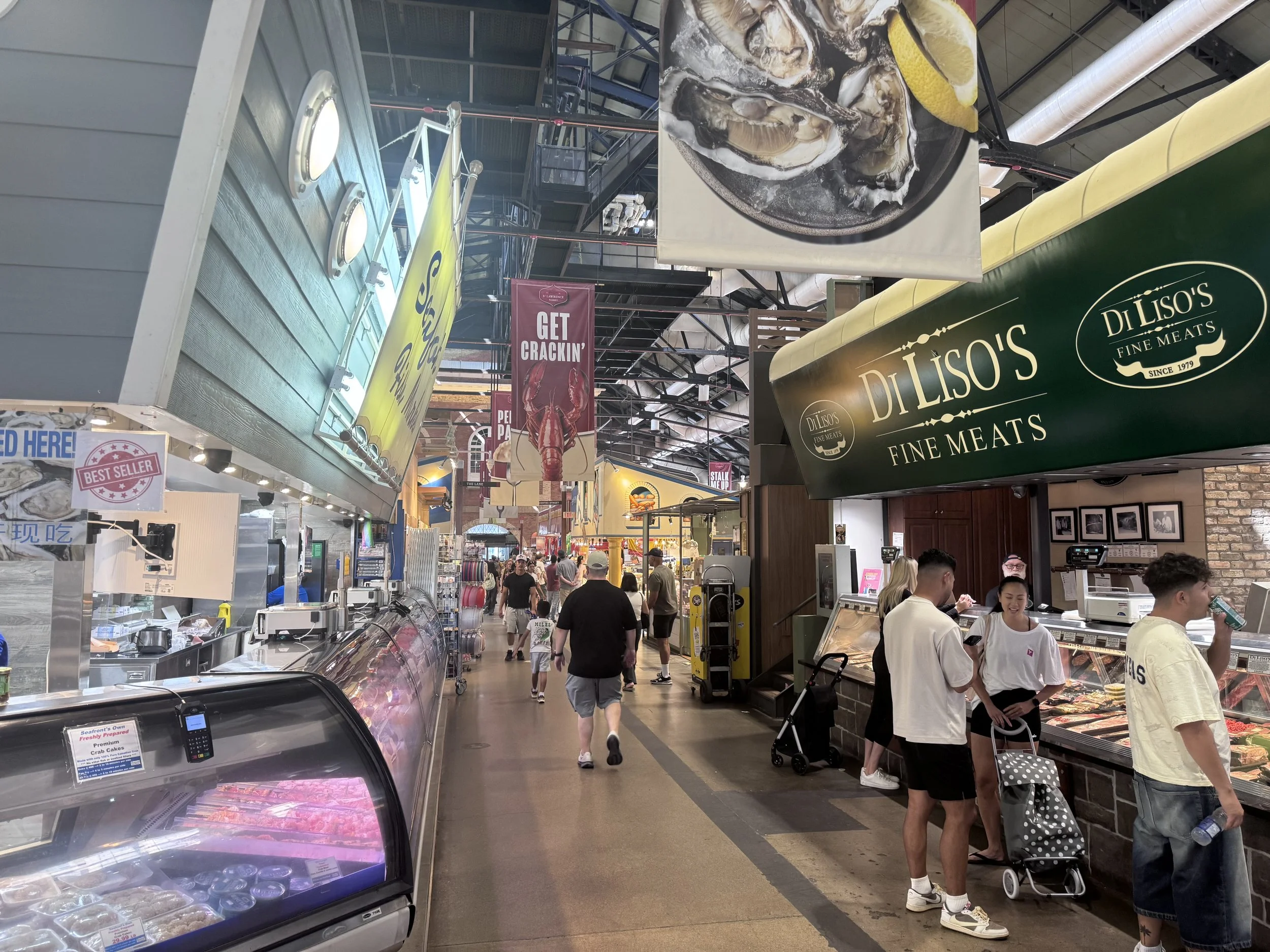
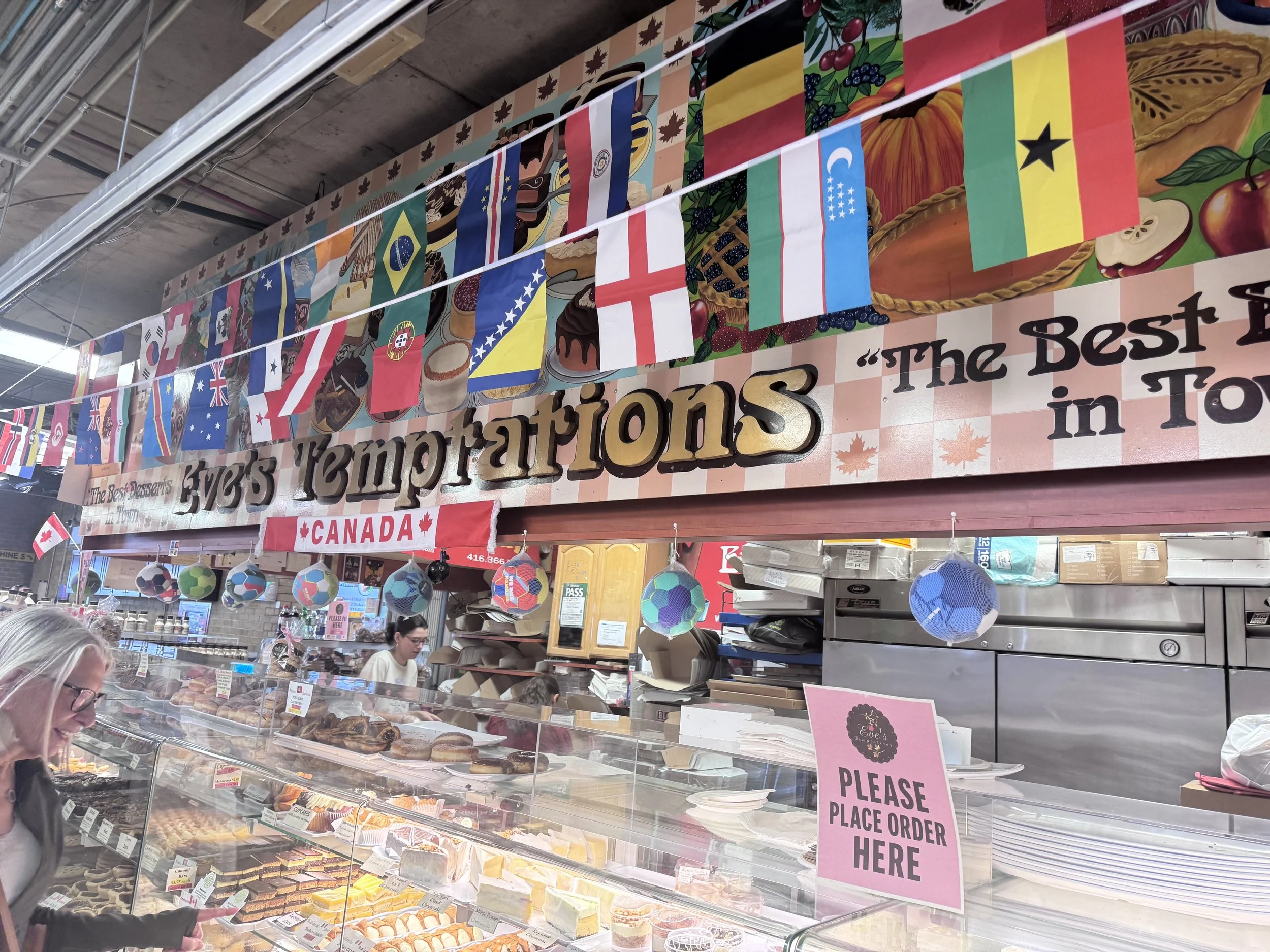
We also did the required pilgrimage to St. Lawrence Market — operating in some form since 1803, and the kind of place where you walk in hungry and walk out with a bag you didn't plan on. The dessert stalls alone could end marriages. Eve's Temptations, under a canopy of international flags, was doing a brisk trade in exactly the kind of pastries you tell yourself you'll "just look at."
Toronto doesn't do "best restaurant in the city" — it does "best hundred restaurants, one per cuisine, good luck choosing."
Shopping for a Wedding in Little India
One of our missions was shopping for Indian attire for a friend's wedding, and Toronto turned out to be the perfect place for it — which makes sense when you learn the city has one of the largest South Asian communities outside the subcontinent. We spent an afternoon in the Gerrard India Bazaar, one of North America's oldest South Asian markets, wandering shops stacked floor to ceiling with sherwanis, kurtas, and fabrics in colors that don't exist in my wardrobe. What struck me, standing in a sari shop on Gerrard Street while a streetcar rattled past outside, is that this isn't a "Little India" tucked away as a novelty — it's one of dozens of cultural neighborhoods layered across the city, from Koreatown to Little Portugal to Chinatown, each one fully itself and fully Toronto at the same time. Truly a global city isn't a slogan here; it's just Tuesday.
Fluffy Paws: Ludo's Five-Star Vacation
While we were doing the human things — museums, concerts, hot pot — Ludo was living his best life at Fluffy Paws, a doggy daycare that I can only describe as a resort that happens to allow dogs rather than the other way around. Playgroups, rest time, humans who sent us updates that made us slightly jealous: Ludo came home each evening happily exhausted, which is the single best review a dog can give. Between the CDC paperwork on the way in and the daycare on the ground, our twenty-pound Cavapoo is now better traveled and better rested than most adults I know. International traveling dog. Very exciting. Extremely official. (The form said so.)
What We Missed (So You Don't Have To)
Five days, and we still left a list. Toronto rewards the return trip:
The CN Tower, properly. Book tickets online in advance, go early or at sunset, and don't be us. The EdgeWalk is there if your courage (and your wallet) can handle 356 meters of hands-free.
The Royal Ontario Museum. Dinosaurs, Ice Age mammals, and a jagged glass Daniel Libeskind addition crashing into a century-old heritage facade — somehow we ran out of days before we ran out of list.
A Blue Jays game at the Rogers Centre. We saw the dome full of Sheeran fans; next time I want to see it full of baseball fans, roof open, summer night.
Final Thoughts
Toronto snuck up on me. I expected a nice, clean, polite Canadian city — and it is those things — but I didn't expect the scale of it, or the speed. This is a city that went from colonial garrison town to global metropolis in about two centuries, and it's still visibly mid-sprint: cranes on the skyline, new neighborhoods rising around old forts, half the world moving in and opening restaurants. What stayed with me wasn't any single sight — it was the feeling of a place that decided, collectively, that everyone belongs here. The French built it, the British renamed it, and the world moved in and made it sing. Sometimes literally, with a loop pedal, in a domed stadium, in front of 50,000 people.
We came home with wedding attire, concert hoarseness, a phone full of waterfall mist and skyline shots, and a dog with a passport. Hard to beat.
Photos from the whole trip are up in the gallery: the mist at Niagara Falls, postcard-perfect Niagara-on-the-Lake, the islands, the almost-castle, the cobblestones of the Distillery District, the murals of Kensington Market, and Ludo living his best international life. If Toronto's on your list — or if you've been and we missed your favorite spot — I'd genuinely love to hear about it in the comments. And if anyone knows the trick to getting up the CN Tower without the line: asking for all of us.
Thanks for reading my blog on Toronto! Drop me a note if you're ready to go!