
Jordan
A Tribute to Jordan: Eight Days in the Most Underrated Country on Earth
Here's a true story: I picked Jordan by throwing a dart at a map on my wall. That's the honest explanation for how I ended up on my second-ever Intrepid group trip, eight days deep in a country I knew almost nothing about going in. It turned out to be one of the luckiest throws I've ever made. Jordan might be the most underrated destination on the planet, and I've been thinking about it a lot these past few months, for reasons that have nothing to do with nostalgia.
I'm writing this now because Jordan, and the wider Middle East, is going through a period of real instability. While travel to Jordan is largely unaffected, the conflict ongoing in the wider region is no doubt weighing on the minds of many in the country. That's a hard thing to sit with, because everyone I met in my eight days there was warm, generous, and proud of their country. This post is part travelogue, part tribute, and part time capsule: a record of a beautiful place as it was, with the hope that more people get to see it again once the region finds calmer footing.
Amman: Where Empires Stack on Top of Each Other
I started the trip in Amman, and had a small-world moment on the very first night. Two friends, Matt and one of his travel buddies, happened to be in the city at the same time. We grabbed dinner together, then walked to a coffee stand afterward where I had my first-ever Turkish coffee. A word of warning if you ever find yourself doing the same: do not drink Turkish coffee if you have any plans to sleep that night. I found out the hard way, wide awake at 2 a.m. in the morning!
This was my first time in the Middle East, and I'll admit I carried some of the hesitancy you'd expect from an American who came of age in the post-9/11 world, the kind of low-grade unease the news cycle plants in you without you fully realizing it. Jordan dismantled that hesitancy fast.
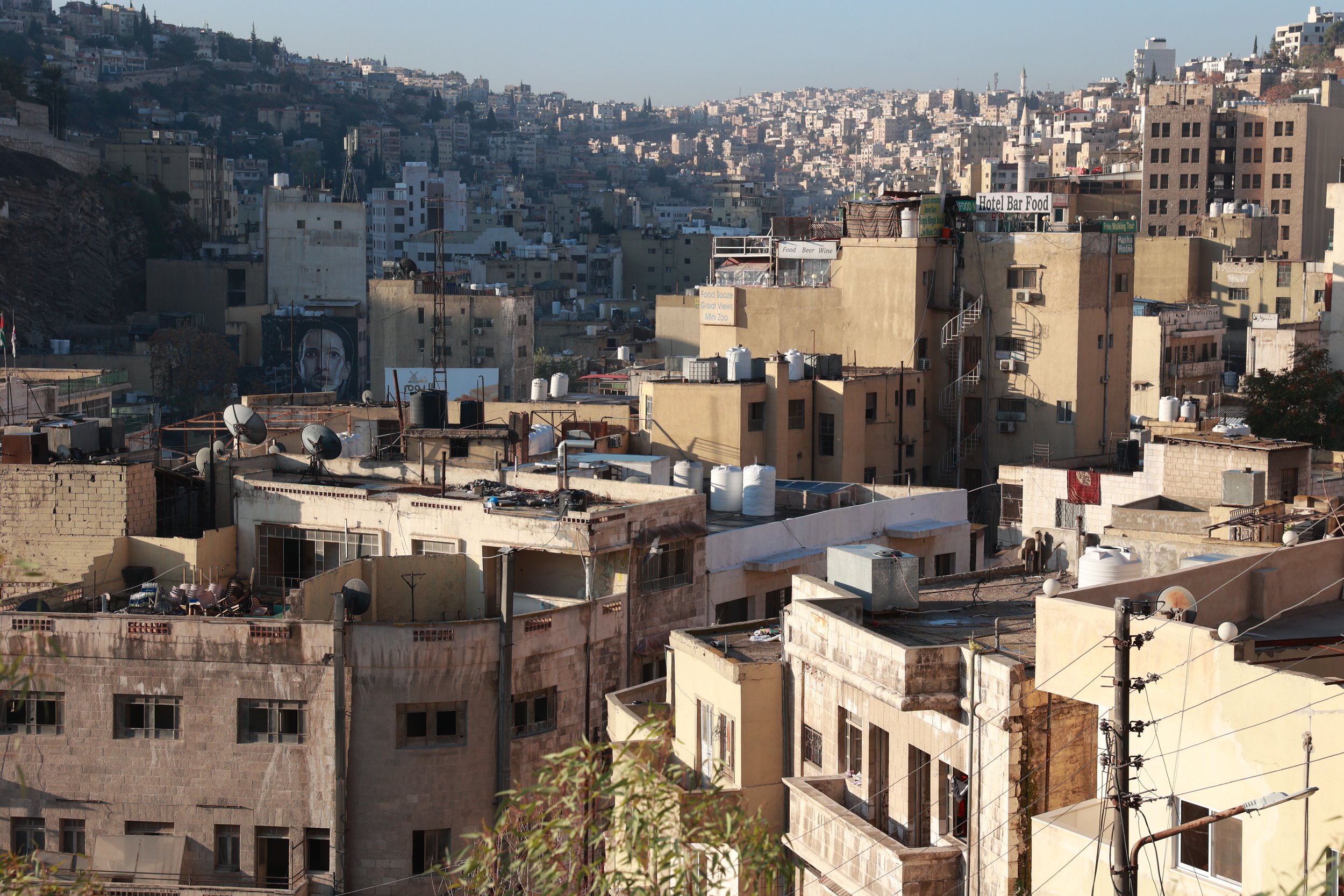
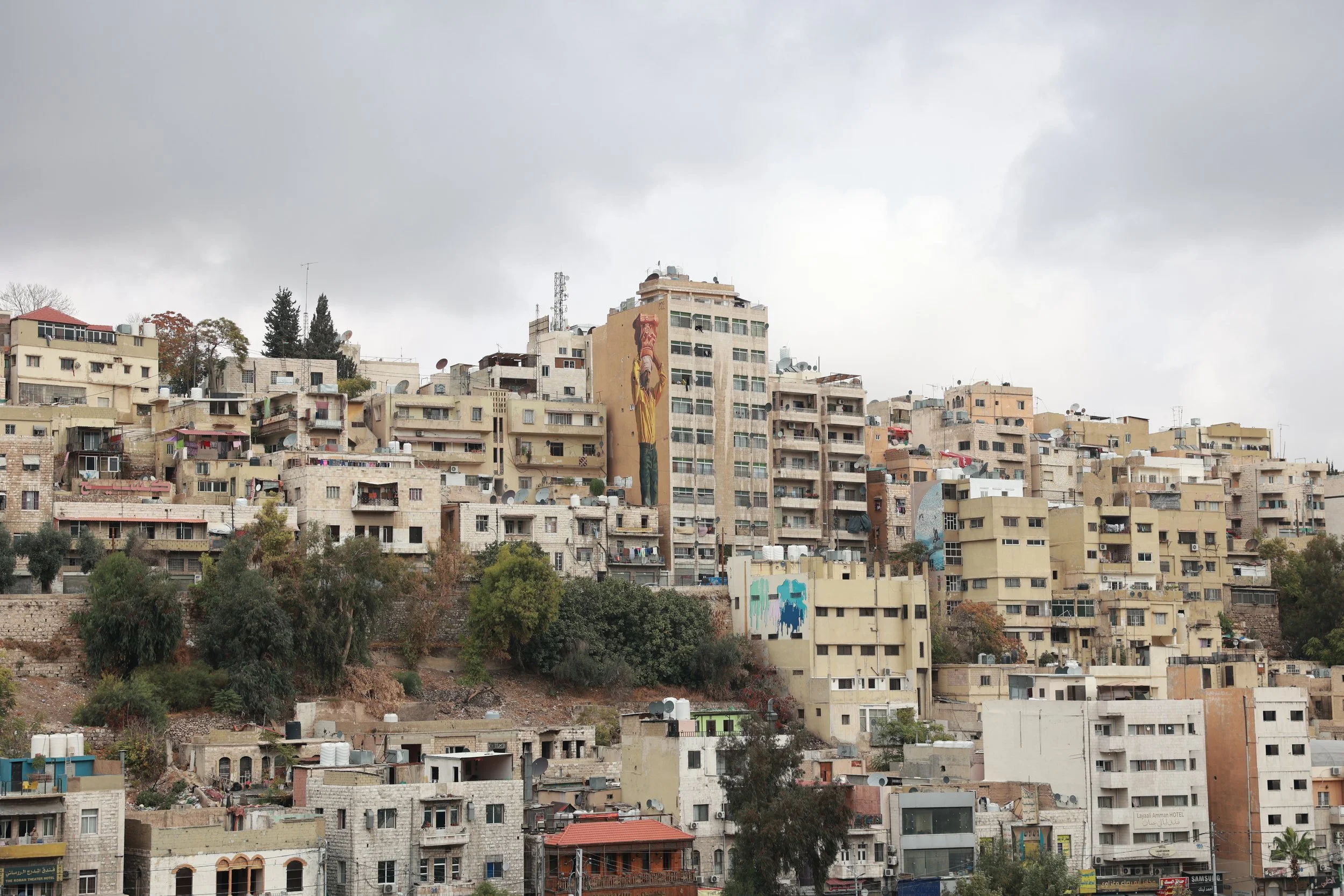
Amman spilling across the hills — a city sometimes called 'the White City,' since a municipal law requires nearly every building to be faced in local limestone. Look closer and you'll spot the water tanks lining every rooftop, a fixture of daily life in a country that's among the most water-scarce on Earth.
Every morning in Amman I was woken up by the call to prayer, or adhan, echoing out over the city from loudspeakers mounted on minarets across every neighborhood. It's the Islamic call summoning Muslims to prayer, recited five times a day by a muezzin, starting before sunrise and running through the evening. The exact timing shifts slightly day to day since it's tied to the sun's position rather than the clock, and the words themselves affirm the core beliefs of Islam, opening with "God is greatest" and moving into the declaration that there is no god but God. It caught me off guard the first morning, but by the end of the trip I looked forward to it. There's something grounding about a whole city pausing, more or less at once, five times a day.
You can't spend time in Amman without noticing how much history is stacked, quite literally, on top of itself. The centerpiece of the city is the Amman Citadel, sitting on Jabal al-Qal'a, one of the seven hills the ancient city was built across. The hill has been occupied off and on since the Neolithic period, thousands of years before anything I actually walked through was built. What survives today is mostly three civilizations layered on top of each other: Roman, Byzantine, and early Islamic.
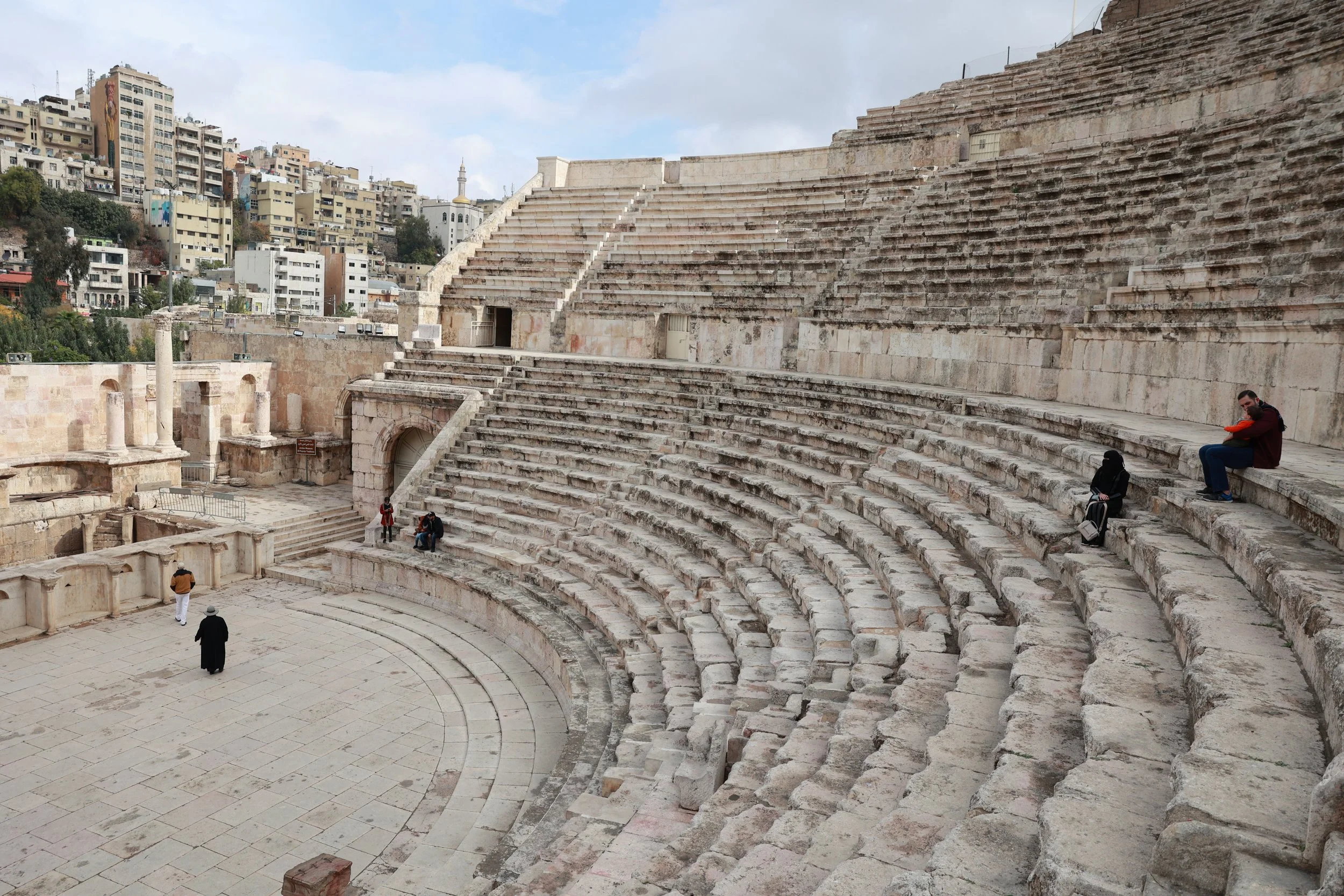
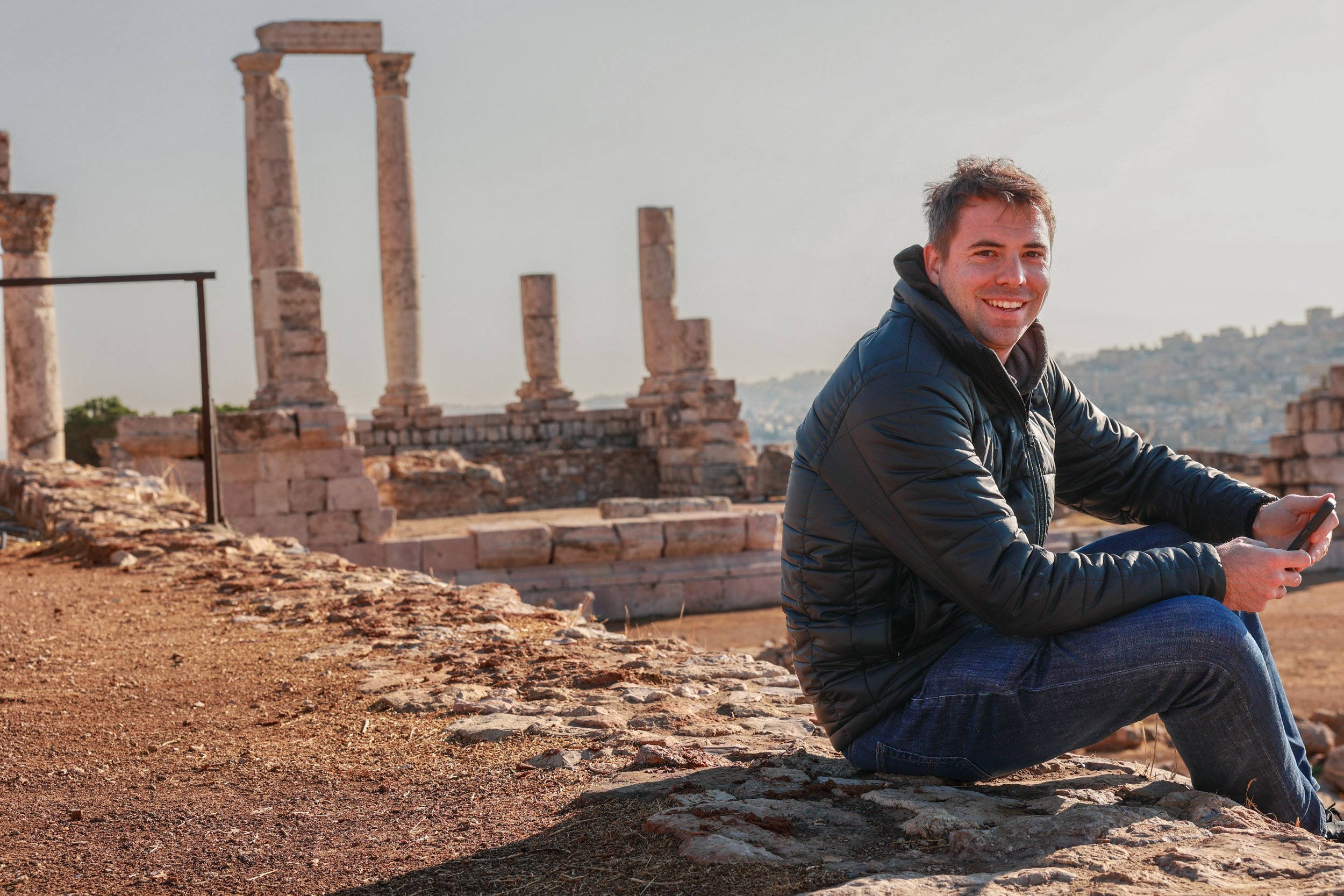
The Romans left the Temple of Hercules, built around 162–166 AD. What remains are two towering columns and, famously, a set of giant stone fingers, believed to be the last surviving piece of a colossal statue of Hercules that once stood at the site. The Byzantines followed with a 6th-century church, of which you can still make out floor mosaics and column bases. Then, after Muslim armies took the region around 630 AD and the city was renamed from Philadelphia to Amman, the Umayyad dynasty built a sprawling palace complex on the same hilltop around 720 AD: a mosque, a market, a bathhouse, residential quarters, and a large cistern engineered to catch and store rainwater in a place that doesn't get much of it. That palace lasted only a few decades before an earthquake in 749 AD leveled it, along with much of what the Romans and Byzantines had built before it. Amman went quiet for a long stretch after that.
Standing on that hill, looking at a Roman temple and an Islamic palace built on the same stones, is about as good a crash course in this region's layered history as you'll get in an afternoon.
Dinner with Ahmad
The second night in Amman, I booked an experience through Airbnb that turned into one of the most meaningful few hours of the entire trip. I knew going in that the evening would end with dinner at my guide's home, so I actually did some homework beforehand, answering questions like “How does a meal like this typically go? Do I use my hands or a fork? Do the men and women eat separately?” Some of what I read turned out to be accurate. Most of it, I learned once I got there, depends entirely on the family.
My guide, Ahmad, spent the first part of the evening walking me through the history and the cultural and religious dynamics of the city, including something I hadn't fully understood before: the size and significance of the Palestinian community in Jordanian society. Estimates vary depending on how it's measured, but by most accounts something close to half of Jordan's population is of Palestinian origin, a legacy of displacement following the wars of 1948 and 1967. In Amman specifically, that share runs even higher. It's not a footnote in Jordanian life. It shapes the culture and the politics of the country in ways I only started to grasp that night.
After the tour, we caught an old city bus out to the neighborhoods outside Amman. This bus was dark, worn, and thick with the smell of cigarette smoke. It’s the kind of bus that's clearly seen a lot of years. His mother had made a delicious mansaf-style chicken and rice meal. Mansaf is traditionally a lamb dish with fermented yogurt sauce over rice, but chicken versions are common too. It was, honestly, one of the best meals of the trip, and I made sure to say so more than once that night.
There was plenty of it. It could feed way more than the two of us plus his parents and sister at the table. And my research was to soon to be validated. At dinner, my plate was NEVER allowed to stay empty. At this dinner table, you finish, they ask if you're still hungry, you say yes out of politeness, and they smile and give you more. Then it repeats. And eventually you say “no thank you, I'm full.” And before you know it, the next portion somehow comes back bigger.
Ahmad mentioned that his family and a handful of their neighbors, aunts, uncles, and close friends, took informal turns cooking throughout the week. Dinner and leftovers moved back and forth between four or five houses this way. I'm not sure how widespread that specific arrangement is across Jordan versus something particular to Ahmad's own street. But the spirit behind it — generosity and hospitality as a baseline way of treating your neighbors — is something you feel everywhere in this country. It was one of the warmest things I encountered on the whole trip.
Into the Desert: Wadi Rum
After a few days in Amman, I met up with the rest of my Intrepid group: a family from Texas, a couple of sisters from the UK, two guys from France, and a Jordanian-born guide running the whole show. The next morning we were off.
First stop: Wadi Rum. We drove to the edge of the desert and were transferred into a series of jeeps to head deep into the desert. I noticed almost right away that our driver had a photo of Saddam Hussein hanging from his rearview mirror. Growing up in the U.S. in the early 2000s, that name comes loaded with a very specific narrative, so seeing his photo displayed like that gave me pause. But it was a good moment to sit with rather than react to. Ahmad had already given me some of that context the night before: Saddam is remembered very differently by different people across the region, shaped by their own history with him, their politics, and their view of him as a protector. That's not a case for one view over another, but instead a fact of how history works. The story any of us grow up with is one version, built from where we happen to be standing. Moments like this are why I like to travel. It gives us a chance to see firsthand how other perspectives take shape. You feel like you begin to understand the innerworkings of the world much better than any textbook could teach you. In this case, the same figure can be remembered as a monster by one group and, rightly or wrongly, as a defender by another.
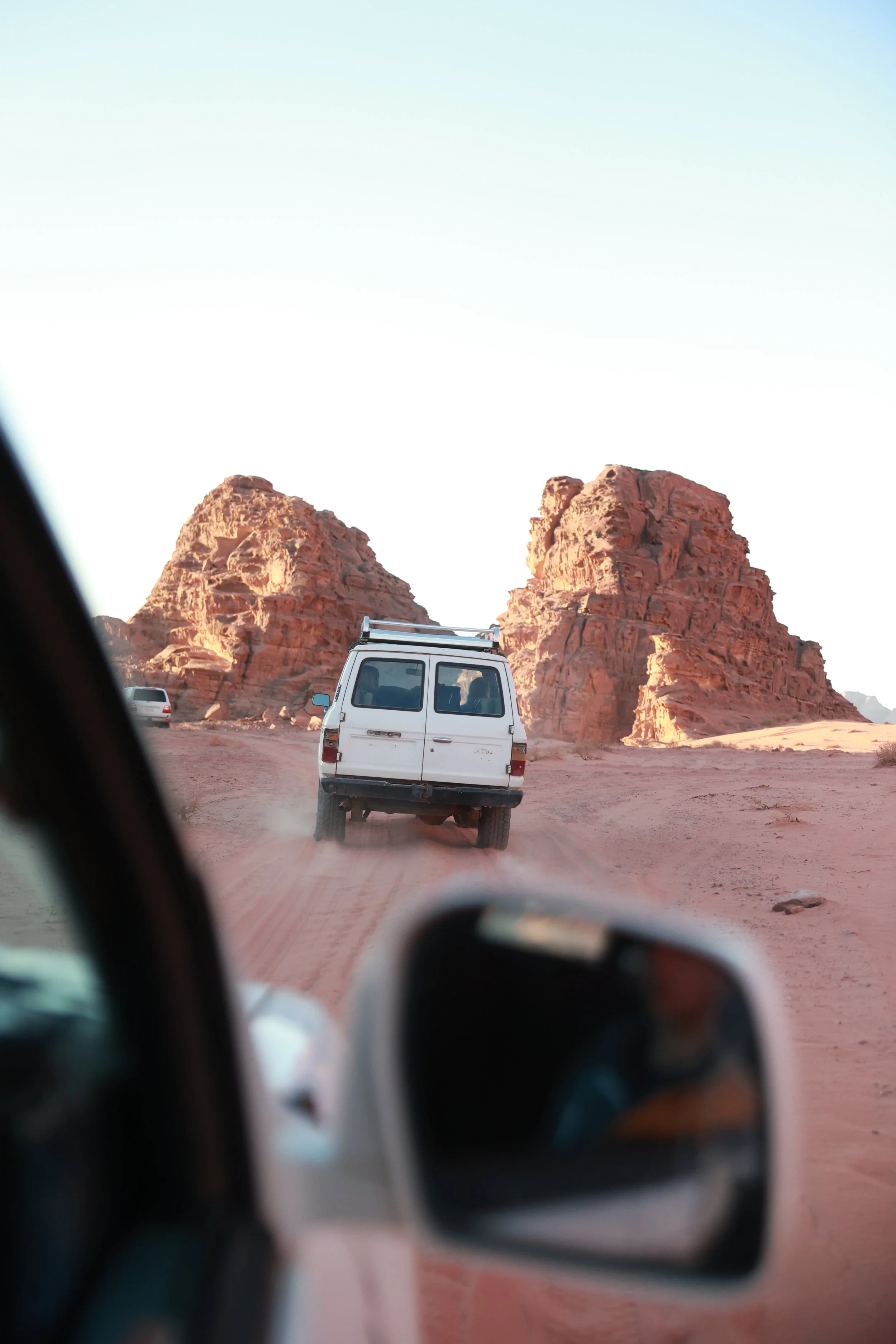
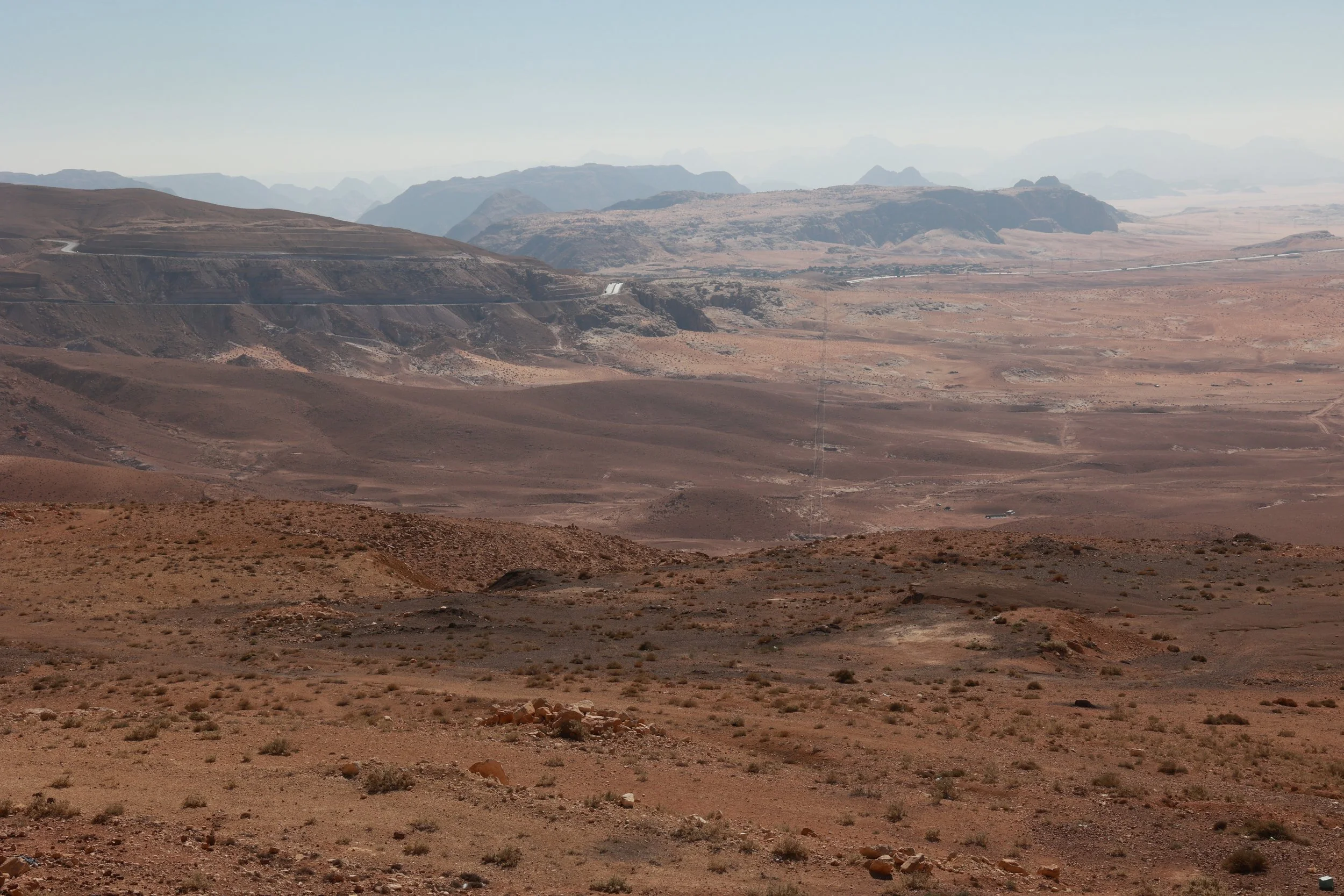
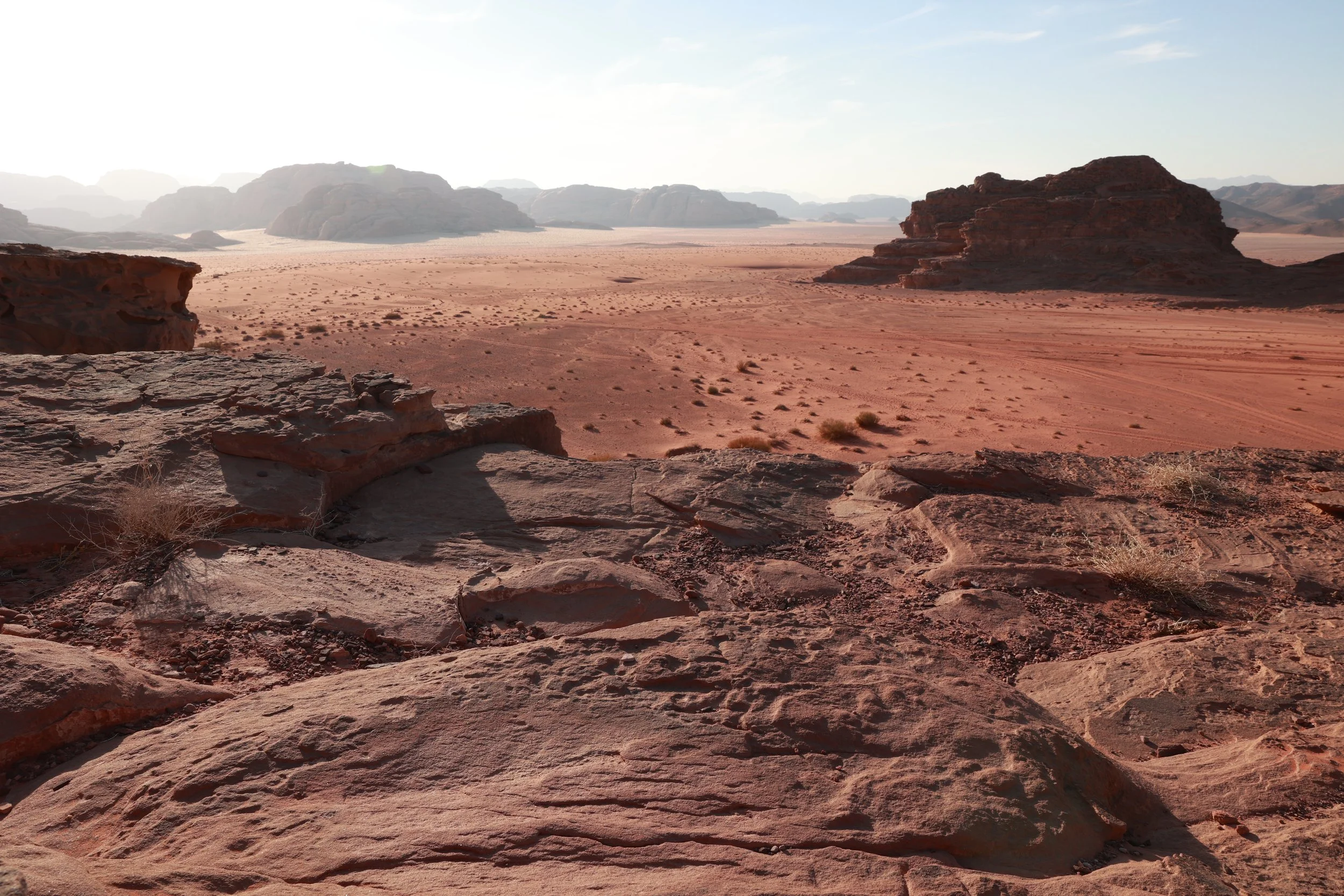
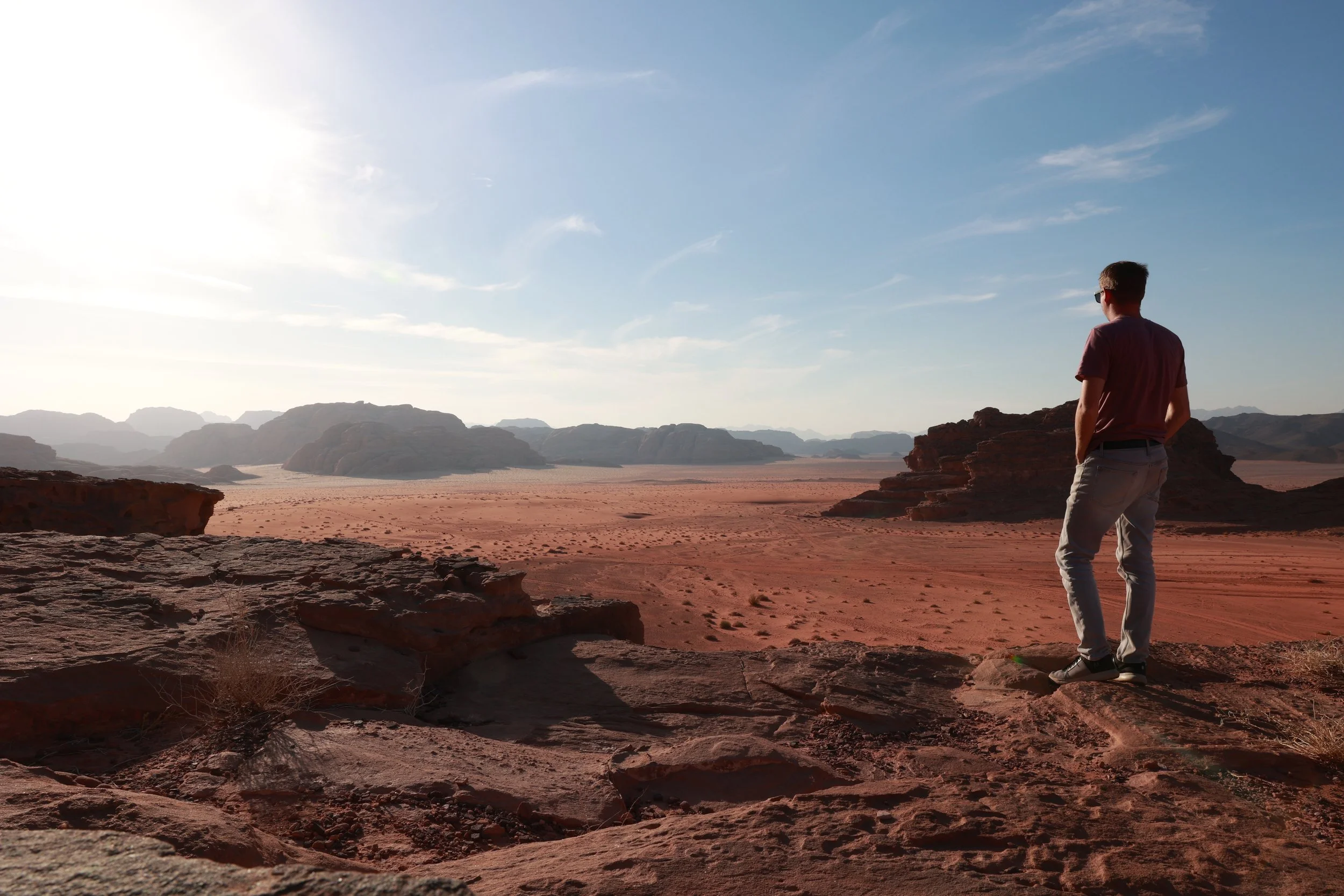
Now back to the desert. It was UNREAL! Red, enormous and quiet in a way that's hard to describe until you've stood in it. After about thirty minutes of open sand, we arrived at a cluster of tents run by a local Zalabia tribe. This was camp for the night. There was an almost constant rotation of tea the entire evening, small glasses, strong and sweet, handed to us again and again around the fire. In Bedouin culture, tea isn't just a drink, it's the whole ritual of hospitality. Turning it down is considered rude, since accepting it is how you accept the welcome being offered. By the end of the night I'd lost count of how many glasses I'd had.
Dinner that night was cooked using a method called zarb: meat and vegetables placed on metal racks, lowered into a pit dug into the sand and lined with hot coals, then sealed underground and left to cook for hours. It works almost like a natural pressure cooker, the trapped heat slow-cooking everything until it falls apart. The whole camp gathers around when it's finally unveiled at dusk. It rivaled Ahmad’s family dinner as the best meal of the entire trip.
Petra: A Different Kind of Beautiful
Wadi Rum was strange and otherworldly. Petra is something else entirely: not stranger, just staggeringly beautiful in its own right. We spent two full days hiking through it, and that's still not enough. You could spend four or five and not see everything.
Petra was built more than two thousand years ago by the Nabataeans, an Arab trading civilization that controlled the caravan routes moving frankincense, spices, and silk between southern Arabia, Africa, and the Mediterranean world. What survives today is largely a city of tombs, more than 600 facades carved directly into the sandstone cliffs, though it's a common misconception that all of them were burial sites. Many were actually living quarters or elaborate dining halls cut into the rock.
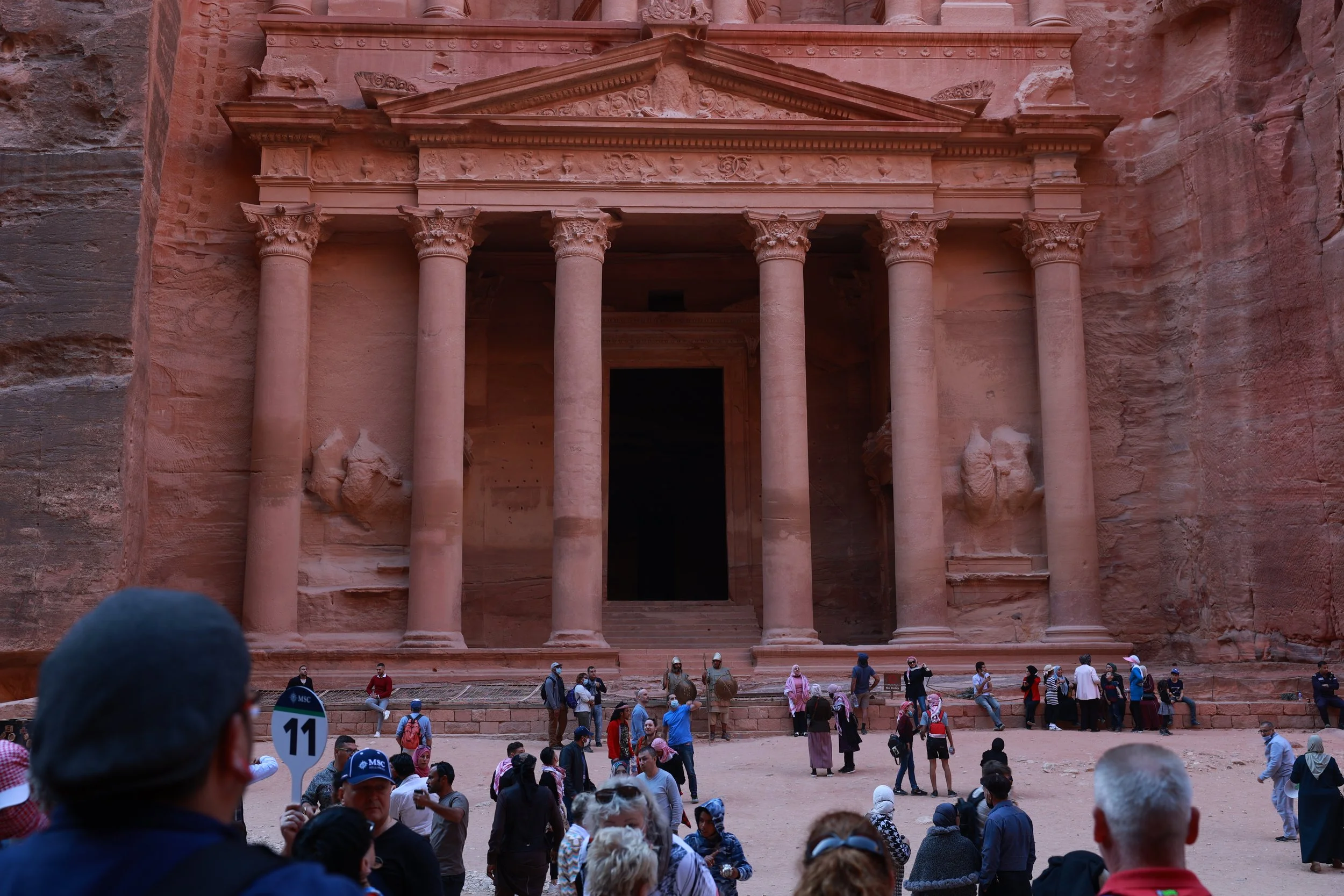
You walk in through the Siq, a narrow canyon that winds for over a kilometer with sheer rock walls rising on either side. Then it opens up all at once and you're standing in front of the Treasury, Al-Khazneh, likely the most photographed structure in the Middle East. It's nearly 40 meters tall, carved straight into rose-colored sandstone. Despite the name, it was never actually a treasury. Historians believe it was built as a mausoleum for a Nabataean king, likely Aretas IV, sometime in the 1st century AD, and only picked up the "Treasury" nickname centuries later from local Bedouins who thought treasure might be hidden inside one of its upper urns. The facade blends Greek, Roman, and Egyptian influences, which tells you a lot about how connected and cosmopolitan the Nabataeans were for a civilization based out of a desert canyon.
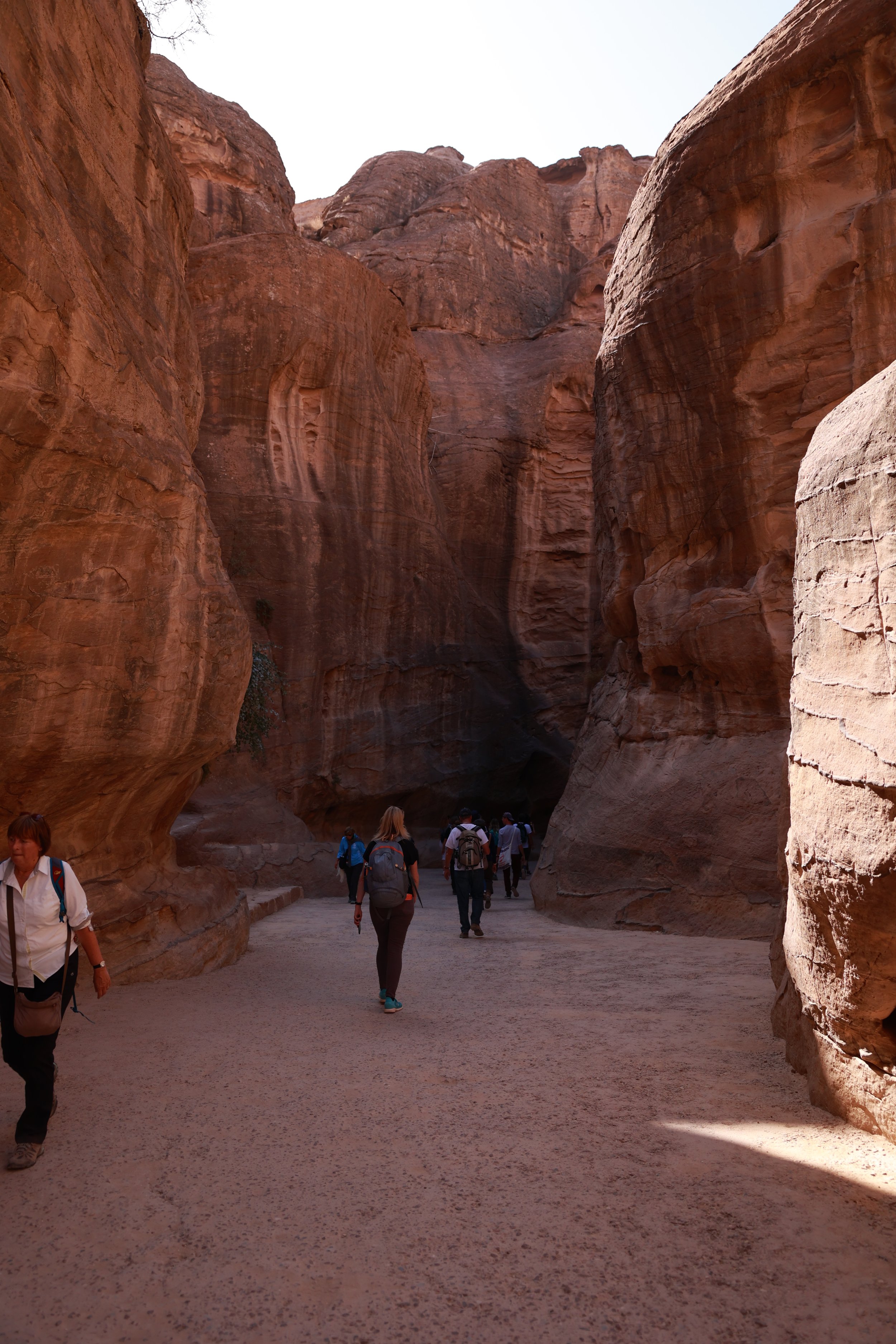
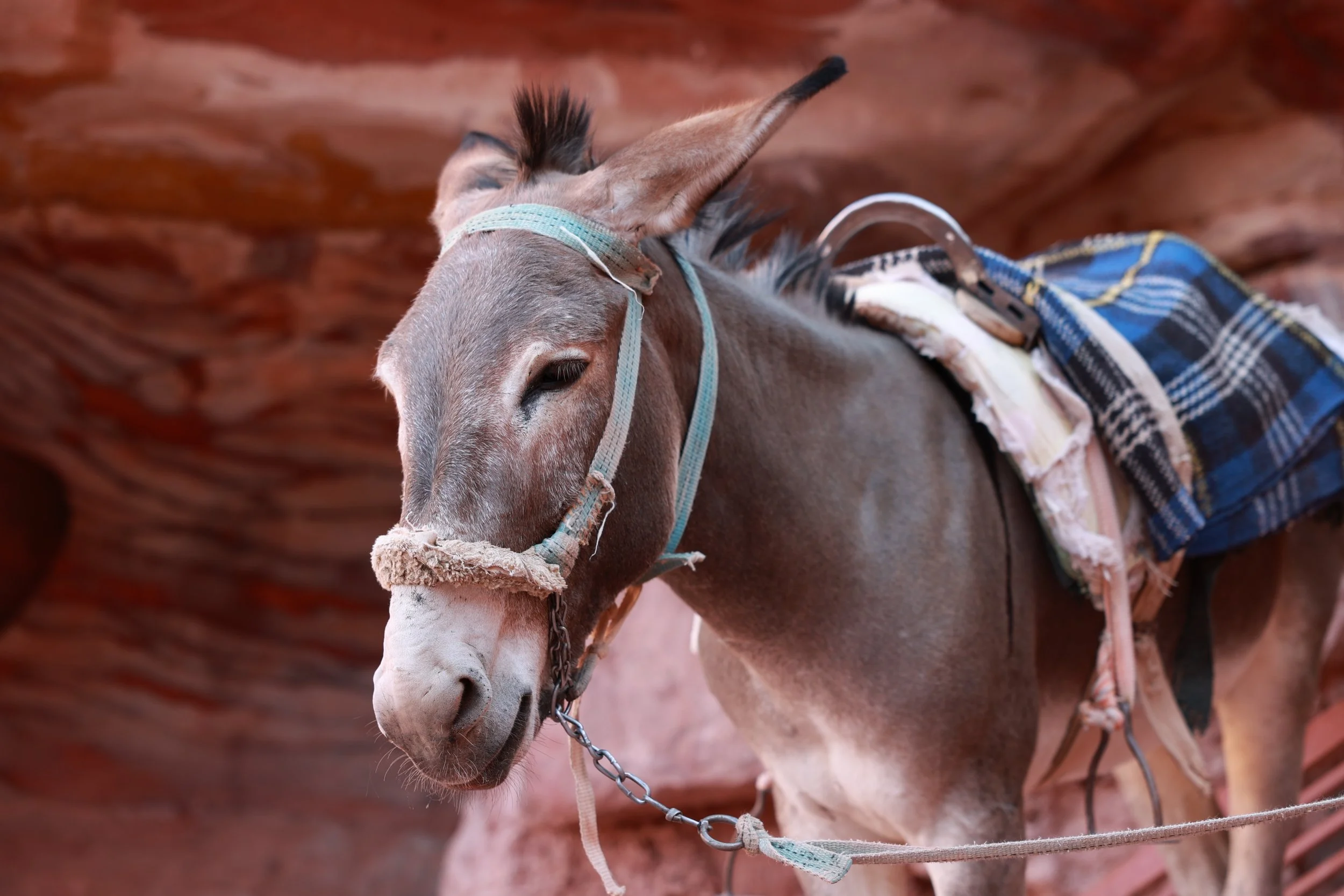
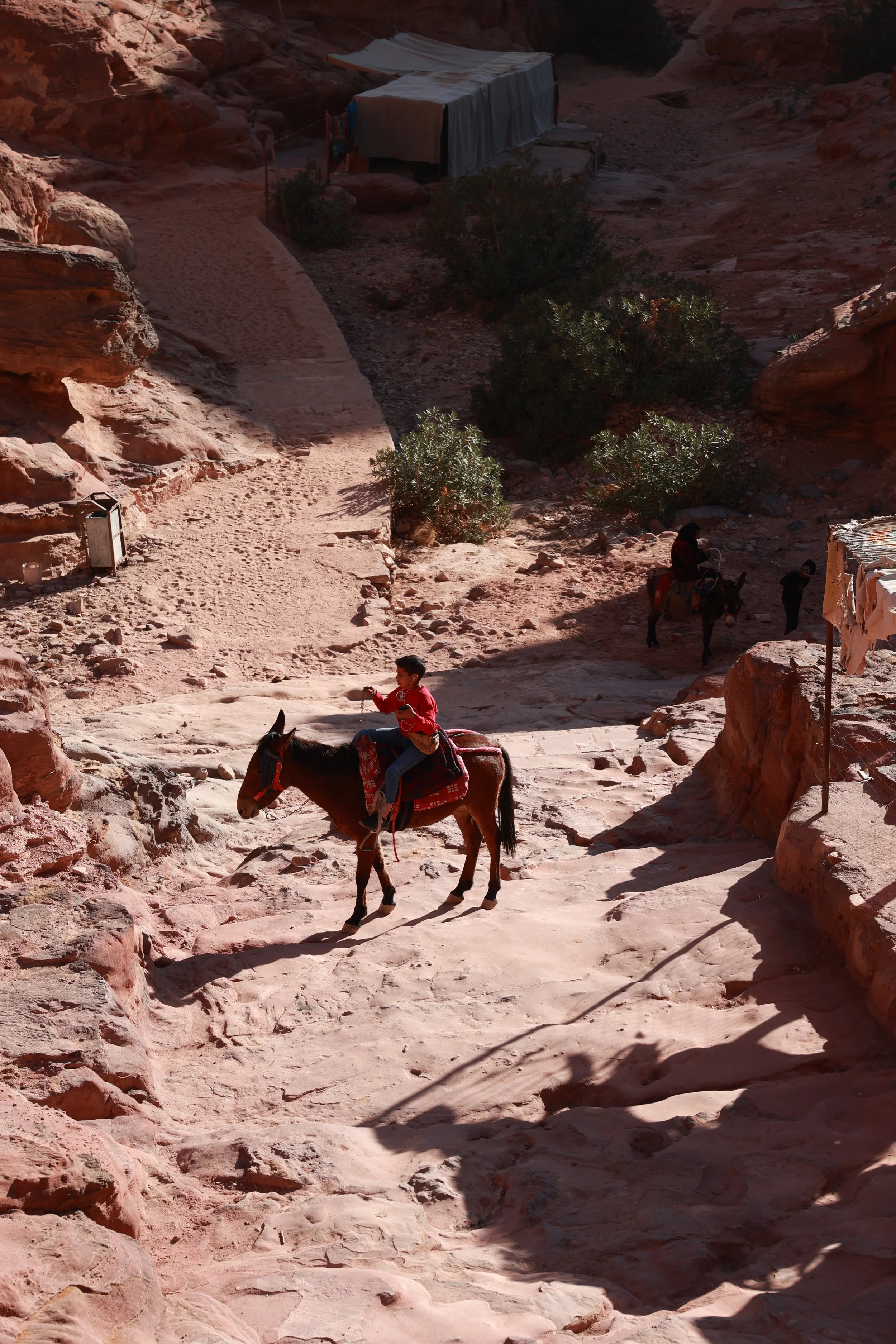
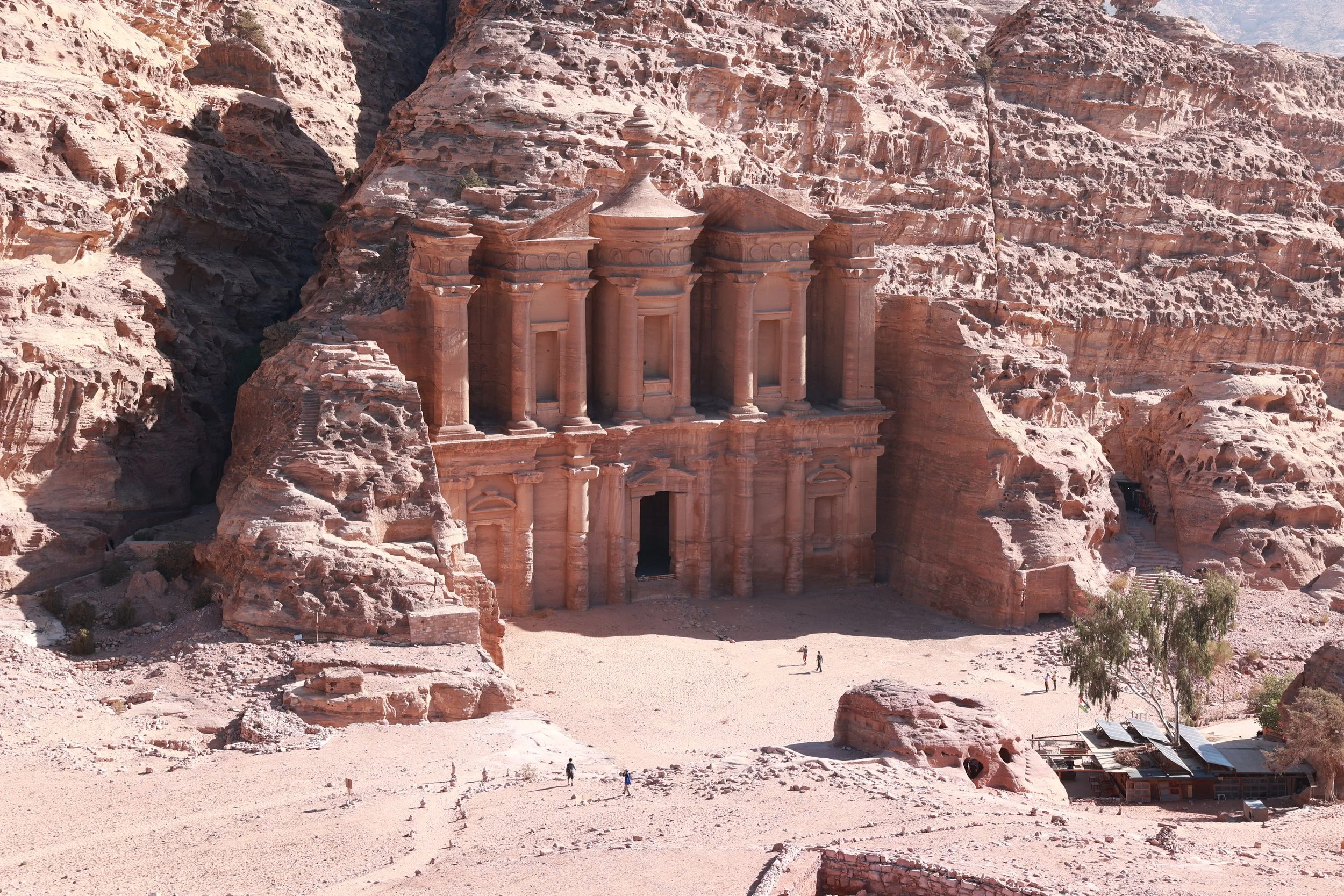
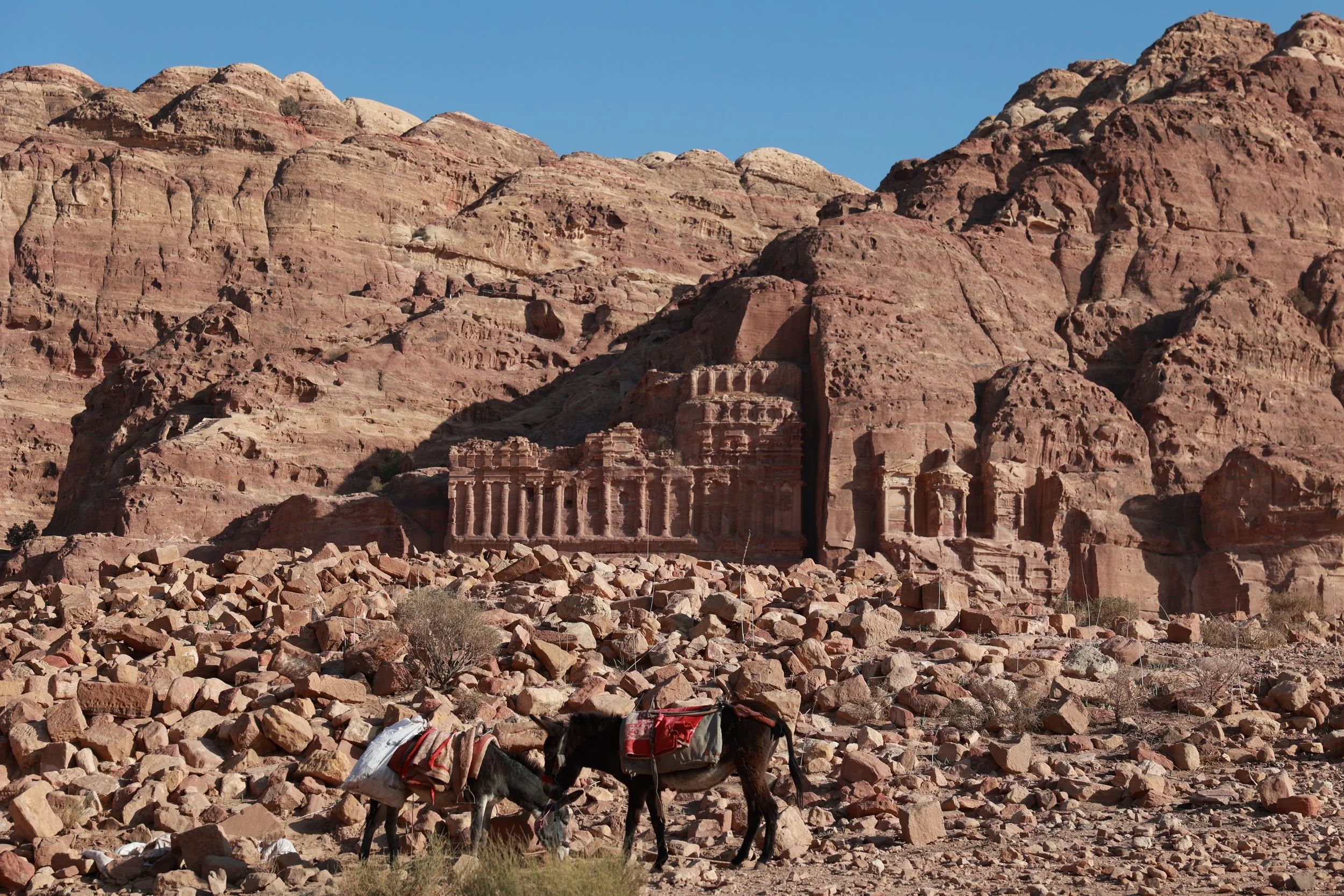
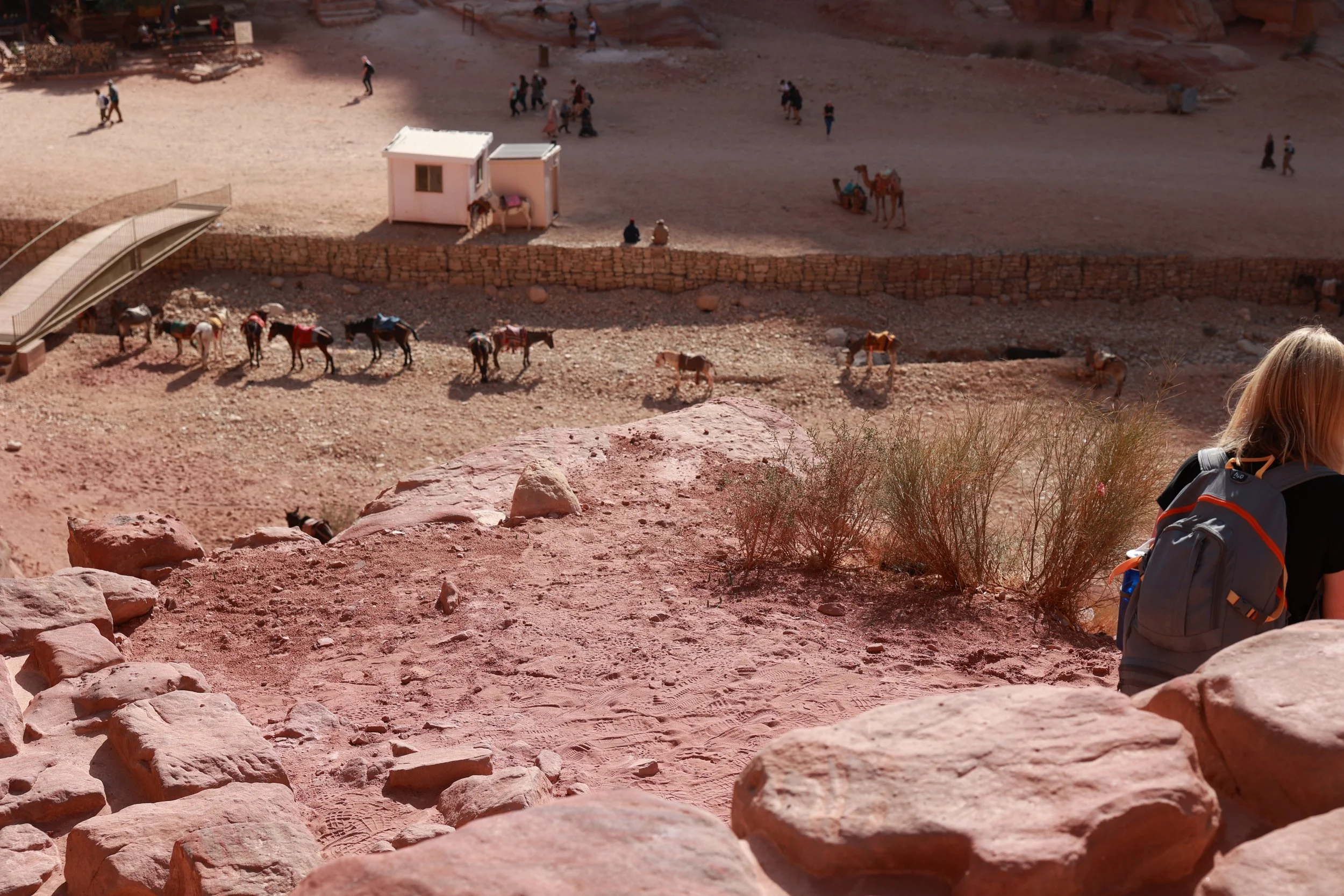
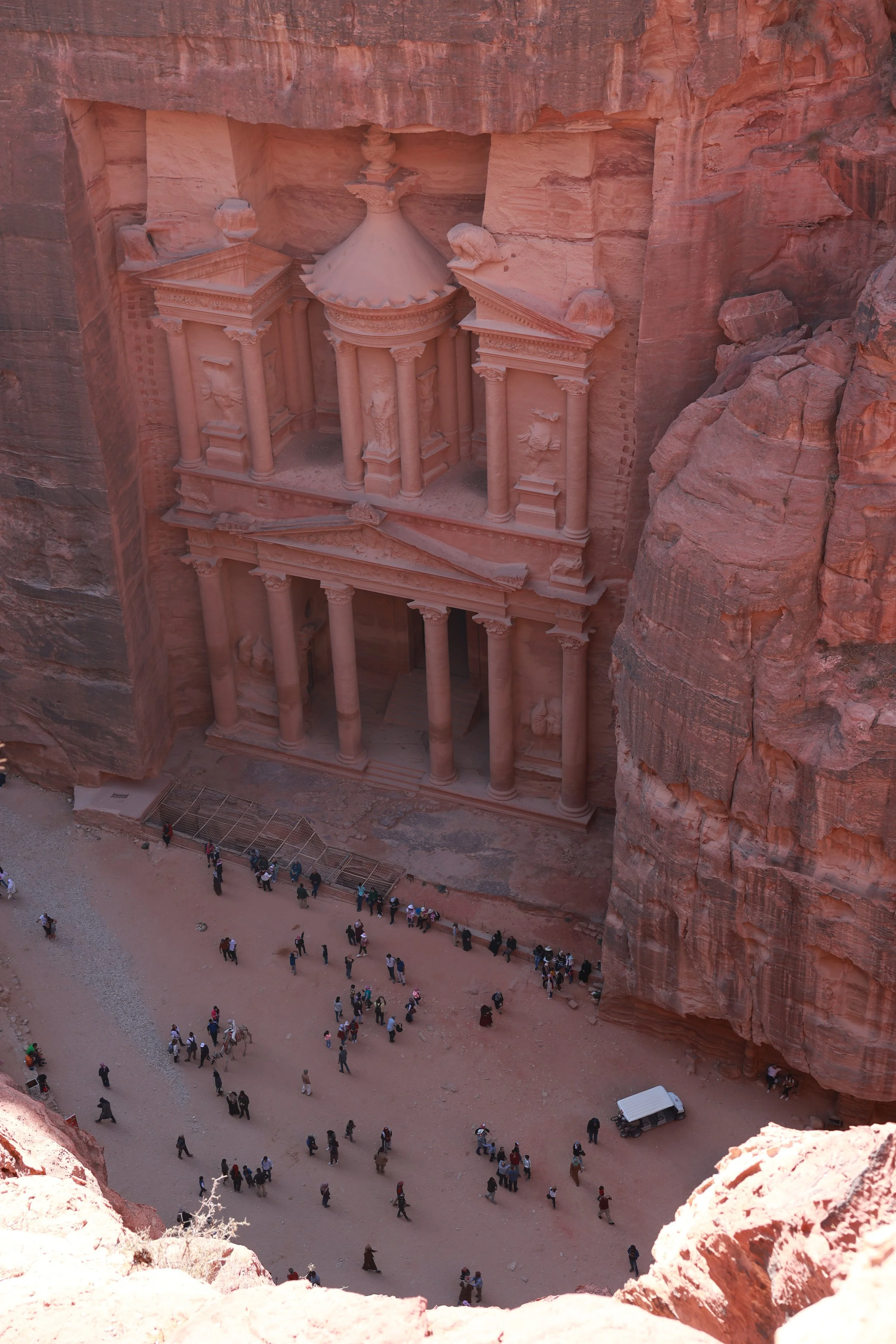
We also made the climb up to the Monastery, Ad-Deir, Petra's largest facade, tucked into the hills above the main site and reached by roughly 800 steps. Like the Treasury, it wasn't actually a monastery. It's believed to have functioned as a ceremonial and dining hall. Between the two sites we passed donkey after donkey, plenty of camels, and more offers of tea than I could keep track of. Hospitality really does seem to follow you everywhere in this country.
We ended with the Petra by Night show: walking back through the Siq lit by nothing but candlelight, ending at the Treasury for music and storytelling under the stars. It's a quieter, completely different version of the same place that overwhelmed us in daylight.
Karak, the Dead Sea, and Mount Nebo
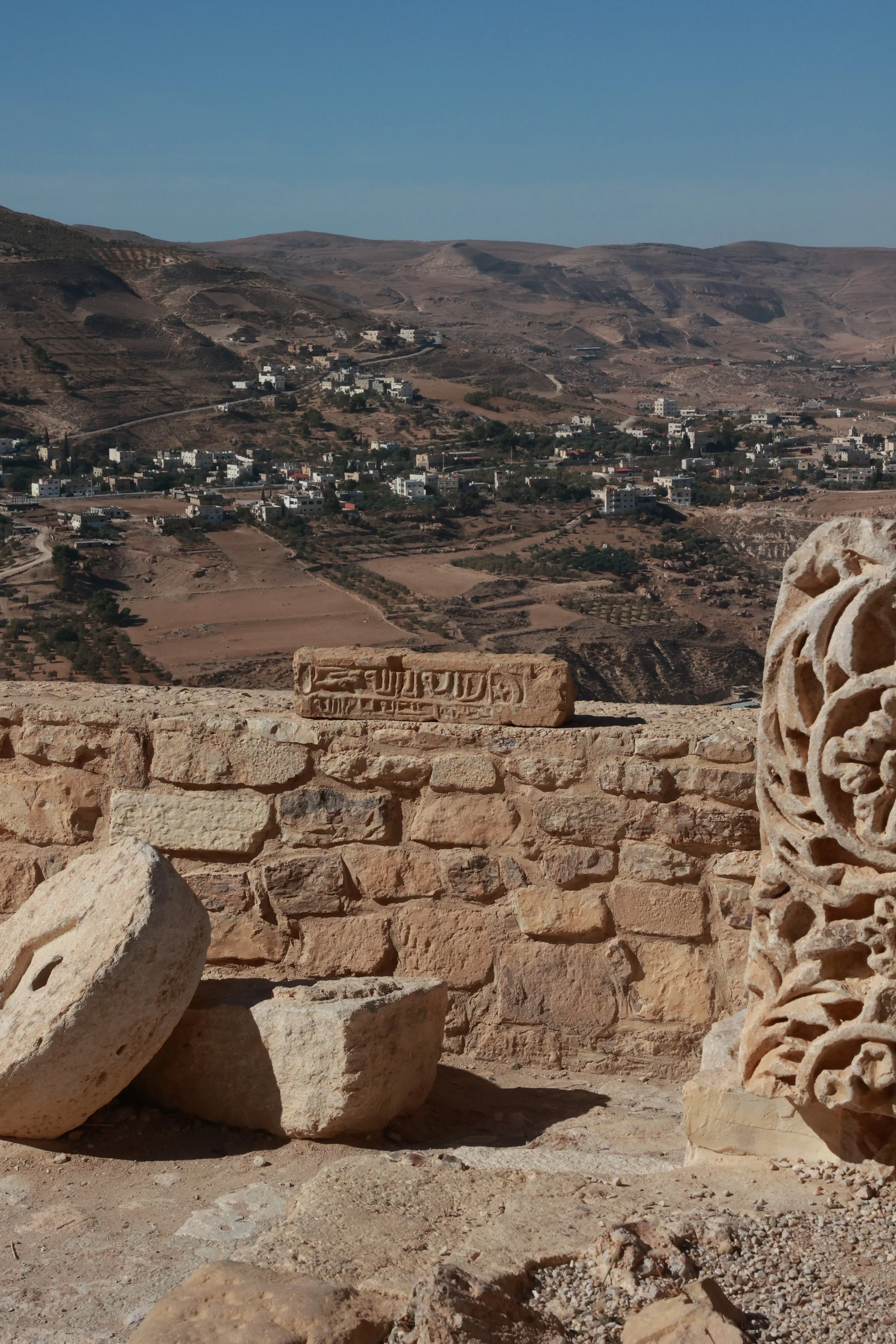
After Petra, we made our way to Karak Castle, a massive Crusader fortress that Crusaders began building in 1142, perched on a hilltop along the old King's Highway. It's one of the largest Crusader castles remaining in the Levant, and it has the scars to prove it. Saladin besieged it repeatedly through the 1180s before finally taking it late in the decade. Mamluk rulers under Sultan Baibars later renovated and reinforced it in the 13th century. Walking through it, you're moving through a maze of vaulted stone halls and dark passageways that stretch out beneath the fortress. It feels less like visiting a ruin and more like wandering the inside of a mountain.
From there we hit the Dead Sea and did exactly what everyone does: covered ourselves in mineral-rich mud and floated. It's a strange feeling that's hard to put into words. The water sits at somewhere around 34% salinity, roughly ten times saltier than a normal ocean, which makes it hard to sink even if you try. The Dead Sea also sits at the lowest point on the Earth's surface, around 430 meters below sea level.
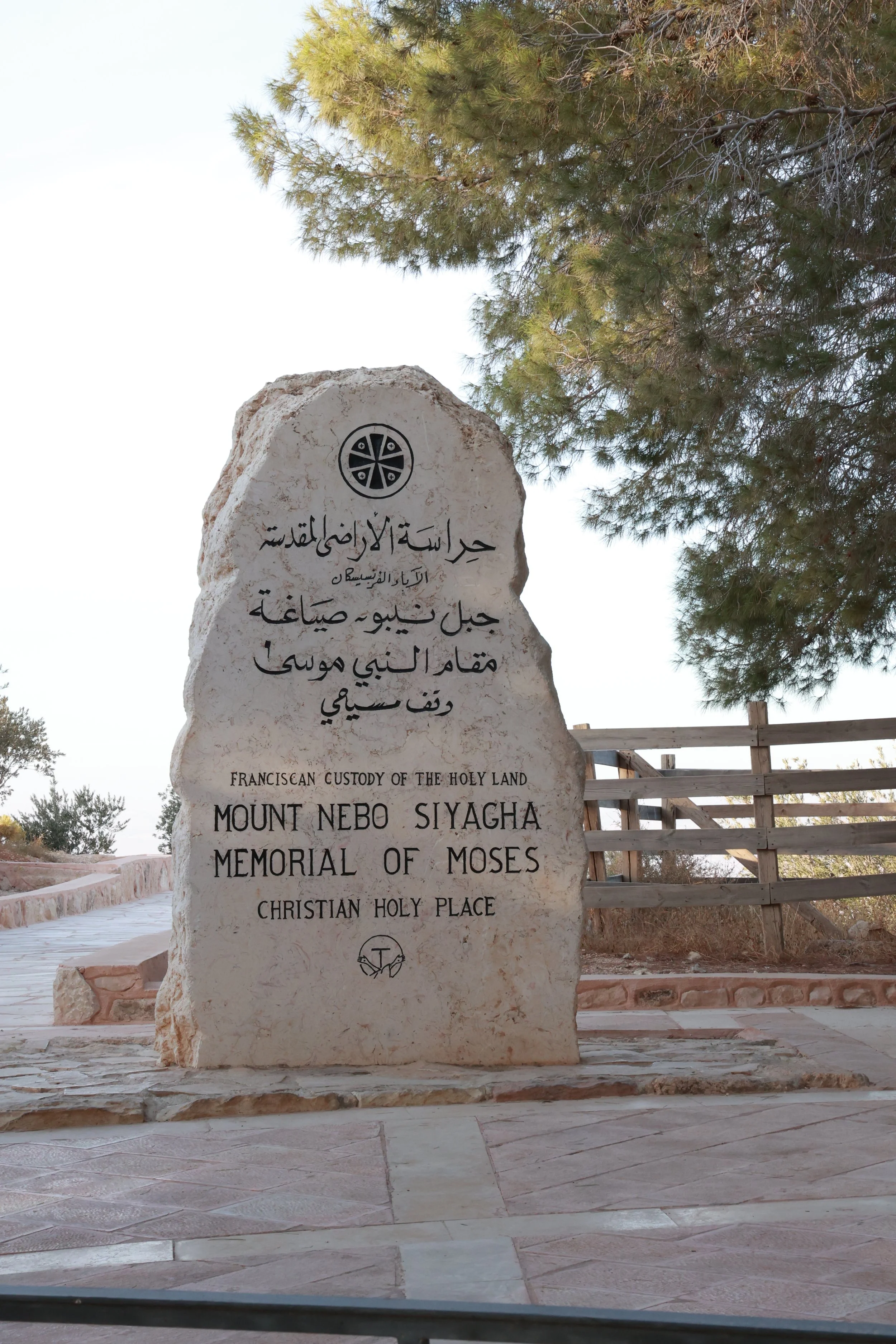
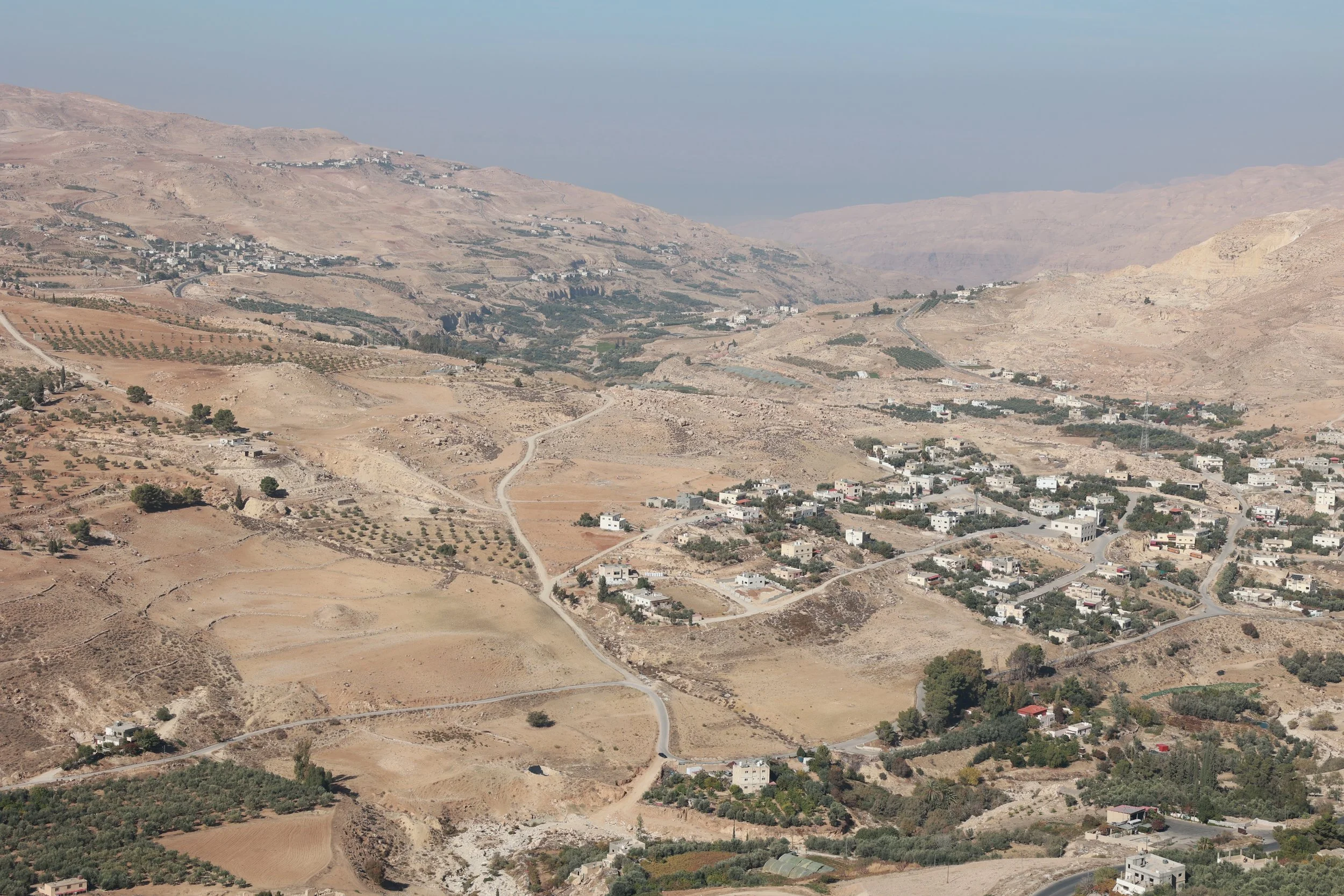
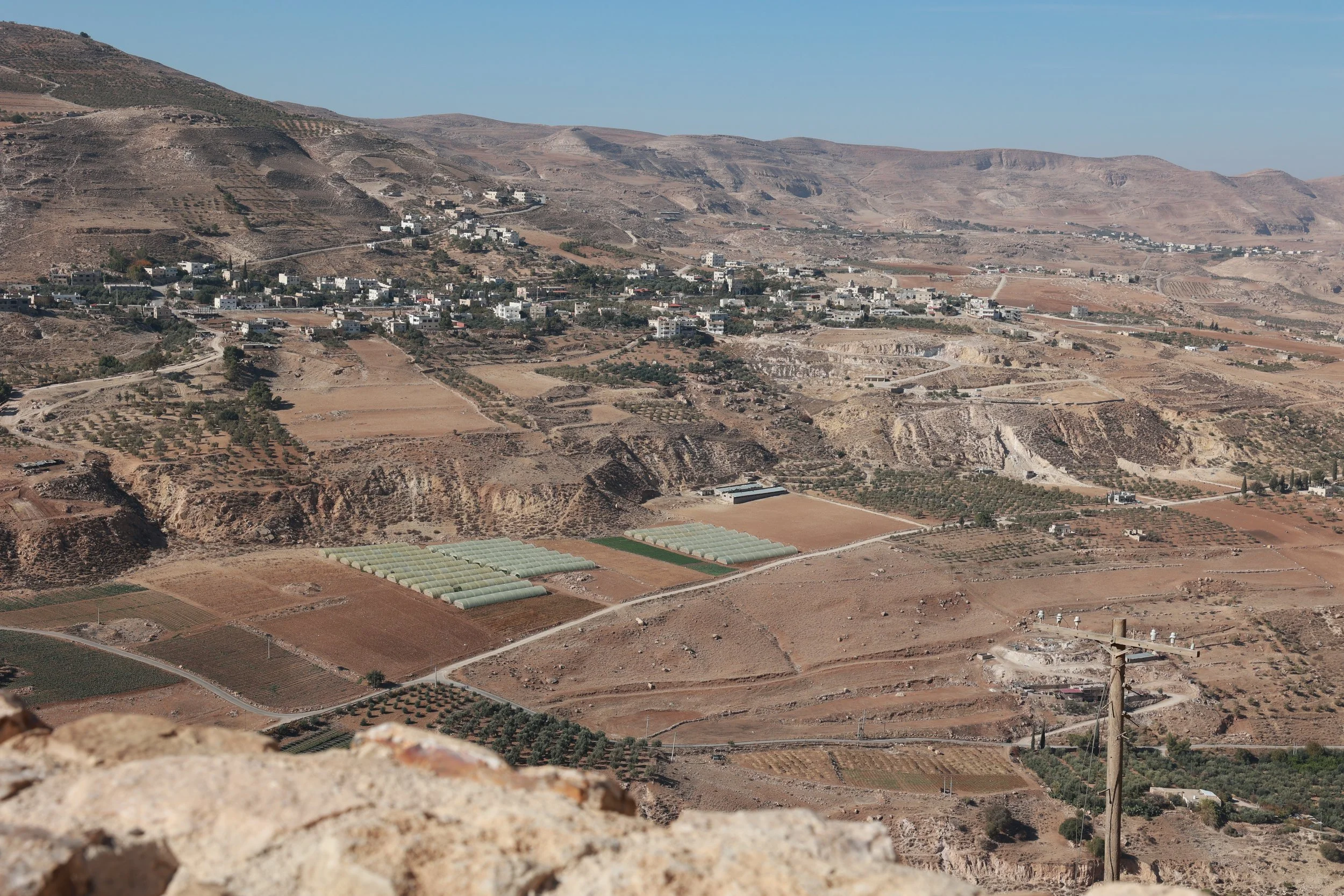
We followed that with Mount Nebo, which carries real religious weight. It's traditionally identified as the spot where Moses viewed the Promised Land before his death, described in the Book of Deuteronomy. Standing at the summit, you can look out over the Jordan Valley and, on a clear day, make out the hills near Jerusalem in the distance. There's a memorial church at the top, built by Egyptian Christian monks between the 4th and 6th centuries, with mosaic floors that have survived over a thousand years. It's quiet and contemplative, a good contrast to the sensory overload of the Dead Sea right before it.
Jerash: Rome, Rebuilt in Jordan
Jerash might be the site that surprised me most, mostly because I'd never heard of it before this trip. It's widely considered one of the best-preserved Roman ruins outside of Italy, and after walking through it, I understand why.
Jerash, known in antiquity as Gerasa, was founded under Alexander the Great in the 4th century BC and flourished under Roman rule as part of the Decapolis, a loose network of prominent Roman cities in the eastern part of the empire. At its peak it was wealthy and thoroughly Greco-Roman in its architecture: colonnaded streets, grand temples, an oval forum ringed by columns, monumental gates. Unlike a lot of Roman sites that got built over by later cities, Jerash was largely abandoned and buried after the same 749 AD earthquake that flattened the Umayyad palace back in Amman, and it stayed buried for over a thousand years until a German explorer rediscovered it in 1806.
The scale of it is what gets you. You're walking down an actual Roman street, worn smooth by cart traffic two thousand years ago, past temples dedicated to Zeus and Artemis and a theater with acoustics good enough to hear someone speaking normally from the very top row.
Worth saying plainly: some of the best Roman ruins in the world sit just across the border in Syria, most notably Palmyra, and they haven't been nearly as fortunate. Palmyra endured years of occupation and deliberate destruction during the Syrian civil war. The Temple of Bel, the Temple of Baalshamin, and the Arch of Triumph were all destroyed, and by some recent assessments the majority of the site's major monuments have suffered heavy damage. Since the fall of the Assad regime in late 2024, experts have started returning to assess what's left and talk about eventual restoration, though the region has remained unstable. It's a sobering contrast, and a reminder of how fragile all of this actually is. Jordan has managed, so far, to hold onto both its history and its stability. That's not something to take for granted.
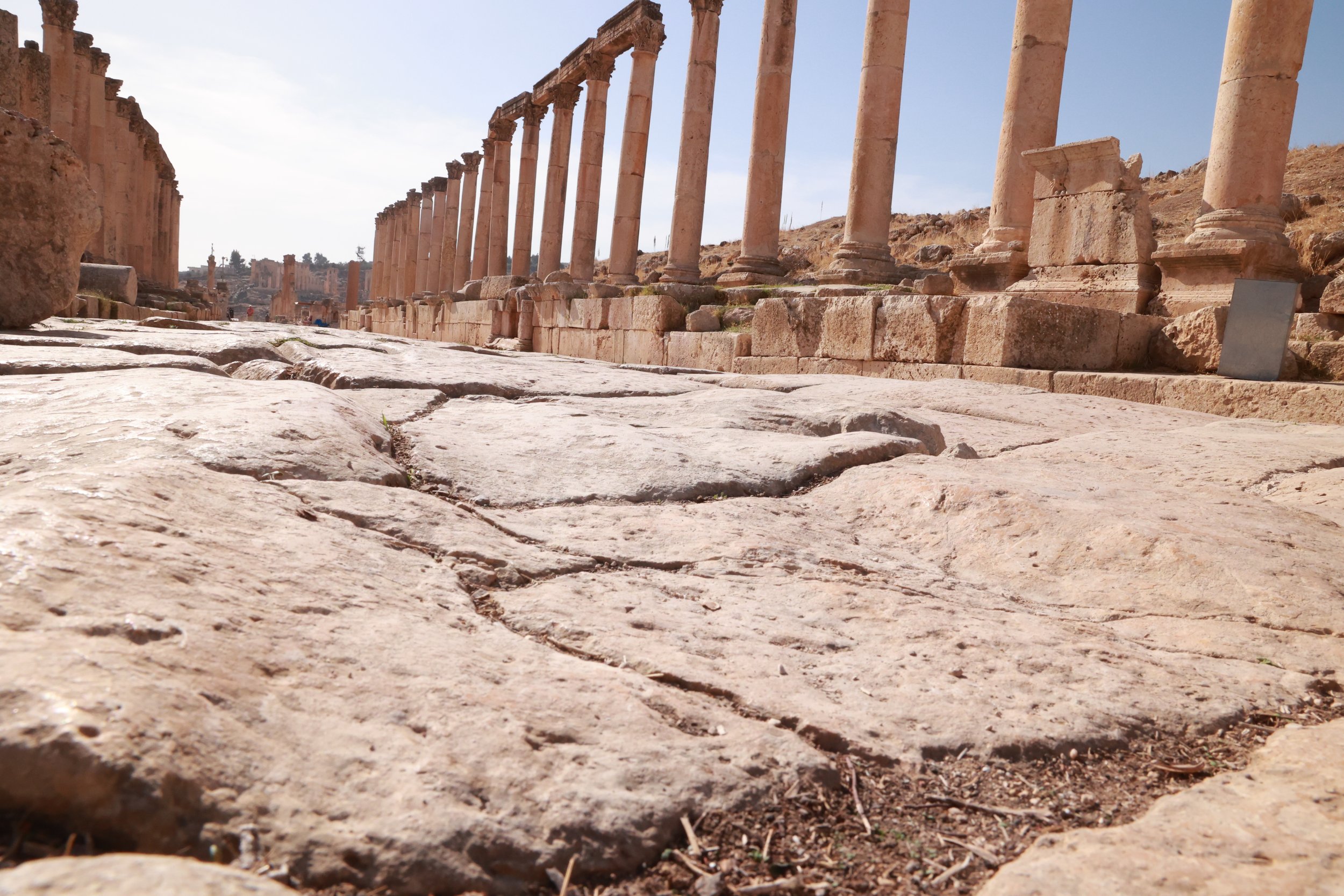
Ground-level on the Cardo Maximus, Jerash — an 800-meter Roman street that's kept its original paving stones for close to two thousand years. It started with Ionic columns in the 1st century AD, then got a Corinthian upgrade around 170 AD and 500 columns total lining both sides. There's still an underground sewer system running beneath it, with drainage holes cut right into the street — and if you look closely, you can make out the ruts worn into the stone by centuries of chariot wheels.
Madaba: A Quiet Last Night
Our final stop before heading back to Amman was Madaba, and it struck me as different from everywhere else we'd been. It was less monumental and more like a regular town just going about its life. It happens to be one of the more religiously significant towns in the country, home to a 6th-century mosaic map of the Holy Land, considered the oldest surviving geographic mosaic of its kind, set into the floor of the Church of Saint George. We happened to be there while the town was starting to celebrate the Christmas season, which gave the last night of the trip an unexpectedly warm, festive note. It was a good reminder that Jordan's Christian communities, though a minority, have deep roots here.
What I Missed Out On (So You Don't Have To)
Eight days is a solid amount of time, but Jordan rewards a slower pace than I gave it. A few things I'd do differently, or add, if I went back:
A trip to the Jordan River. We didn't make it to Bethany Beyond the Jordan, the site on the eastern bank believed by many Christian traditions to be where John the Baptist baptized Jesus. It's a short drive from Amman, not far from the Dead Sea and Mount Nebo, and I regret not building it into the itinerary given how much religious history we covered everywhere else.
More time in Petra. Two days sounds like a lot until you're actually there. Serious hikers and photographers could easily spend four or five days covering the full site, including less-visited trails like the High Place of Sacrifice.
Aqaba and the Red Sea. Our itinerary didn't include it, and I wish it had. Aqaba has excellent snorkeling and diving on real coral reefs, and it would have been a nice change of pace from the desert-heavy back half of the trip.
A second night in Wadi Rum. One night flew by. A second would have meant more time under those skies, almost zero light pollution out there, staggering stargazing.
Wandering Amman more on my own. I spent three days there, but most of it was structured around the tour and the Citadel. I wish I'd spent more time just walking the downtown souks and residential neighborhoods without an agenda.
A little more Arabic before landing. Even a handful of phrases went a long way with how warmly people responded. I wish I'd put more effort in before I got there instead of learning on the fly.
Final Thoughts
Jordan gave me the Nabataeans and Petra, the Romans and Jerash, three major religions overlapping in the same small stretch of land, some of the most striking desert landscapes I've ever stood in, and, more than anything, people who treated a stranger like family without a second thought.
It's hard not to feel the weight of what's happening in the region right now. Jordan has managed to stay a genuinely safe, stable country surrounded by a neighborhood in crisis, and that feels less like luck and more like a testament to the people who live there. I hold onto the hope that the wider Middle East finds its way back to a place where more of the world can go see it, learn its history, and meet the people who call it home. They deserve to have the rest of the world show up for them the way they showed up for me.
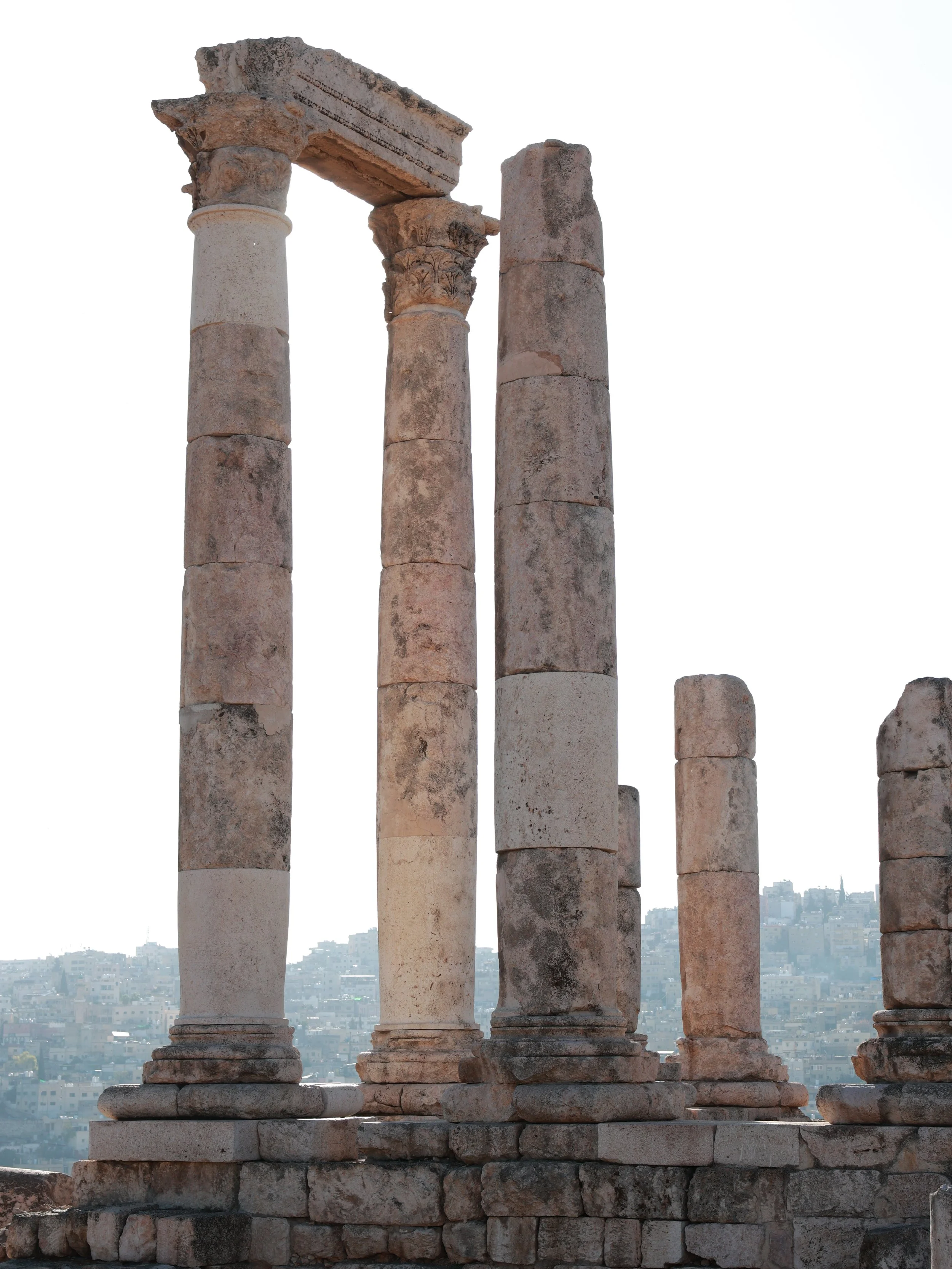
The last two standing columns of the Temple of Hercules, rising above the Amman Citadel — built by the Romans in the 2nd century AD, and still framing the sprawl of the modern city below nearly two thousand years later.
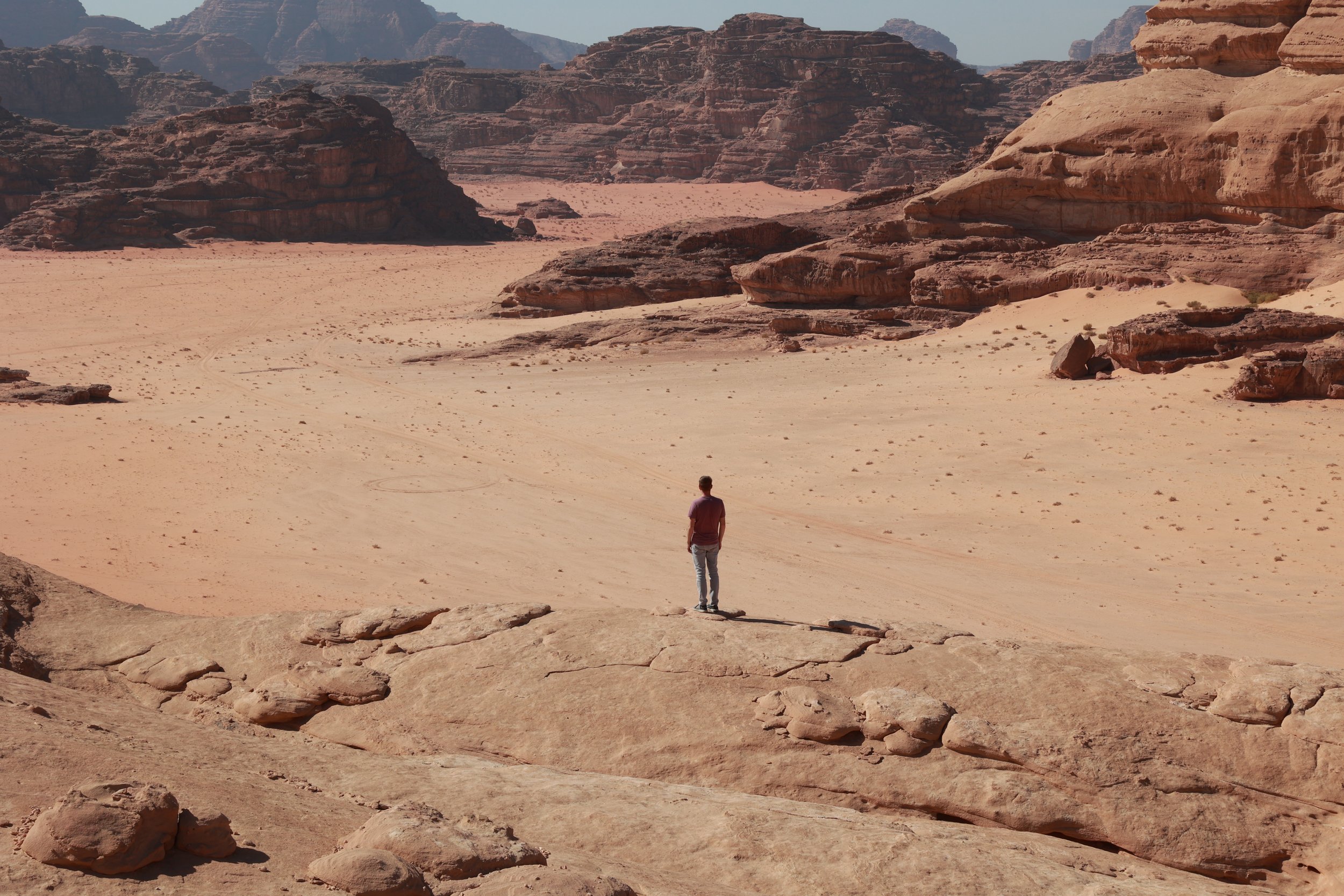
Doing my best 'lone explorer' impression in Wadi Rum — a protected desert wilderness so red and otherworldly that Hollywood keeps using it to play Mars on screen. In reality, I was just trying not to sink into the sand.
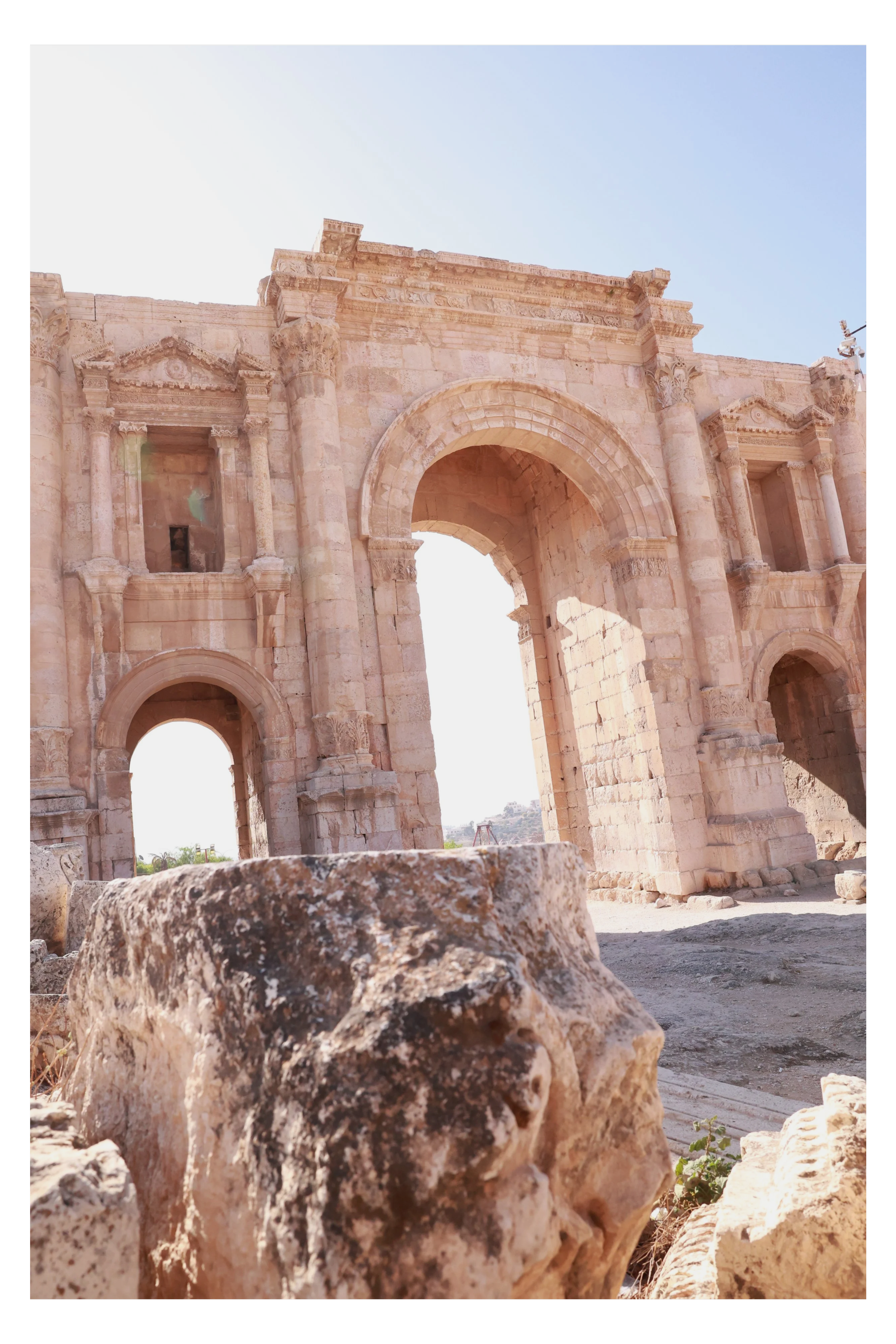
Hadrian's Arch, Jerash — built in 129 AD to welcome the Roman emperor Hadrian, and still standing nearly 1,900 years later as the grand entrance to one of the best-preserved Roman cities outside Italy.
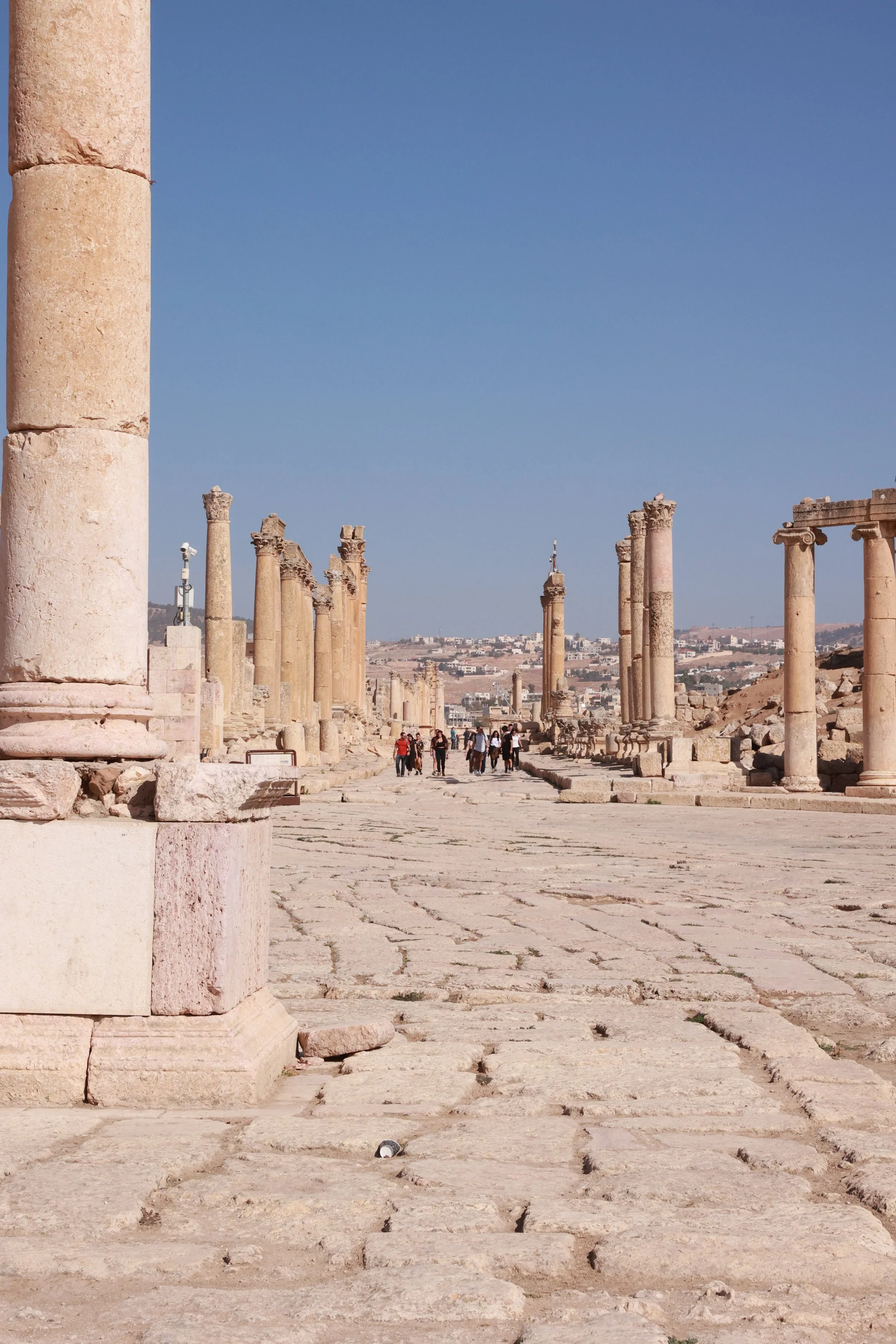
Walking the Cardo Maximus at Jerash — the main street of the ancient city, its stones still bearing the ruts worn in by chariot and cart wheels nearly two thousand years ago.